
Ad Guides · Skincare & Beauty Brands × Instagram
Instagram ads for skincare and beauty brands
The objective, the offers, influencer partnership ads and what an ad set gives up to reach under-18s, for a skincare or beauty brand on Instagram. Instagram sells one thing Facebook does not — the creator's engaged followers as an audience — and it is a custom audience, which no ad set that reaches under-18s may have. Every platform claim sourced and dated.
A skincare brand on Instagram is buying two audiences it cannot put in the same ad set.
The first is the creator's. Instagram lets you run an ad from a creator's handle and then target the people who engage with that handle — not a lookalike built from your own buyers, but their own audience, borrowed for as long as the creator leaves the permission in place. Meta calls it creator audience sharing, it is documented for Instagram only, and it is the mechanism this page is built on. For a category where the first jar sells on somebody else's skin, it is the difference between borrowing a face and borrowing the audience that face already has.
The second is the audience where Instagram's lead over Facebook is widest: people under eighteen. Pew's 2025 survey puts Instagram at about six in ten American teenagers against Facebook's 31%, and among 15- to 17-year-olds specifically it reaches three-quarters. Meta's rules for reaching them are the same on both apps — this is a question of where they are, not of what each app allows — and our skincare Instagram ad examples set out which products may be advertised to them at all.
Those two cannot be bought together, and the reason is worth pinning down before anything else. Every ad in Ads Manager sits at three levels: a campaign holds the objective, an ad set inside it holds who sees the ad, where and when — the age floor, the audience, the budget, the optimisation goal — and the ad itself holds the picture, the words and whose handle it runs under. Every decision about audience on this page is a setting on an ad set.
The creator's audience is a custom audience: one built from people who have already done something, whether bought from you, visited your site or engaged with an account. Meta's list of audience options unavailable in an ad set that can deliver to under-18s includes engagement custom audiences, which is what a creator's is, so on our reading that audience stops at 18 — and with it the lookalikes, the customer list, the purchase-window audience for the second jar, the interests, the language, and every exclusion of the people who already bought from you. One ad set has everything and stops at 18. The other reaches a sixteen-year-old with age, location and a picture.
So the account runs as two buys side by side, and this page keeps them apart throughout: the 18+ half, where the targeting does the work, and the teen half, where the picture does. The one asset that spans them is your own profile, which is the only thing you can accumulate on the teen side.
What follows is the rest of an Instagram ad strategy for a skincare or beauty brand: how creator audience sharing is built and what has to be agreed before it can be, which objective and which offers belong on each side of the age floor, where the click should go, what the creative has to do when the ad set can no longer qualify anyone, and what to count. Where our skincare Facebook guide has already worked something out — partnership ads themselves, the reorder window, the subscription checkout, the creator's brief — this page links to it instead of repeating it.
The ads here are real output rather than mockups drawn for the argument. All ten from the examples page appear in the offer table and seven are shown in full, published exactly as generated for brands that do not exist. Every price and date in them is invented. Several went wrong in ways this page uses: a before-and-after whose two panels are different ankles, an ad that draws Instagram's own interface with a question from a handle nobody owns, and a business summary that wrote “Adults and adolescents” into the audience for the one product on the page Meta will not let you advertise to adolescents.
It is not legal advice, and it is not a benchmark report. The age rules are Meta's and the claim rules below are the United States', both are floors, and there are no cost-per-purchase figures here because the only useful ones come from your own store.
Generate Instagram ads for your skincare or beauty brand
Paste your site and best-in-slot reads it (products, ingredients, prices, what you claim), then shows you the business summary it wrote before any ad exists, which is the part worth editing. Then it writes the concepts, renders 4:5 or 9:16 pictures and drafts five headlines and five captions per ad. Read every draft for a treatment claim and every label against your real pack. Partnership ads and reminder ads are Ads Manager builds. Free to start, no card.
What Instagram changes for a skincare brand: partnership ads, the creator's audience and the age floor
Partnership ads are Meta's name for influencer and creator ads — it used to call them branded content ads — and they run a creator's own post as your ad, with the partner's account, the advertiser's or both featured in the header. Our skincare Facebook guide covers what they are, what a creator's words commit you to and how to brief one, and that much carries across; the placement and objective lists there were read for Facebook and stay Facebook's. What Instagram adds is a second thing to borrow.
Meta's help centre says that when an advertiser creates partnership ads from a creator's handle, creator audience sharing “allows you to use an audience of people who have engaged with the creator's account on Instagram”, which lets you “share your partnership ads with the creator's engaged audience”. You can also build lookalike audiences from it. There is no Facebook equivalent in anything we have read: on Facebook you borrow the post and the face, and you find your own audience for it.
You build it at the ad set level, in the Audience section, in five steps: Create new beside Custom audiences; Custom audience; Instagram account, under Meta sources; the creator's name from the Source dropdown; Create audience. It is the same dialog that builds an audience from your own Instagram account, where Meta caps the retention window at 365 days and people drop out as the window rolls past their last engagement. Whether a creator's audience is capped the same way is not stated on its page.
Two conditions make or break it. The first is technical and unforgiving: “Custom audiences only work when running ads from the creator's handle on Instagram. The Instagram account selected at the ad level below Identity must match the account used for the custom audience.” An ad running under your own handle cannot use it, which means the ad your customer sees is the creator's post under the creator's name.
The second is a permission the creator grants and can withdraw. Meta's help centre requires account-level partnership ad permissions and notes that “Creators have the ability to remove this access at any time”. Account-level is the broader of the two kinds: content-level permissions cover a named post, while account-level ones let an advertiser create partnership ads and other ad types “from a partner's handle without pre-existing content”. That answers a question most brands ask first — no, they do not have to have posted about you already; the ad can be made from scratch. Requests are accepted in Partnership Ads Hub, the Instagram app or the Facebook app, and where a creator has linked their accounts, accepting once covers both platforms. Nothing we read says what happens to an ad set that is already running when the permission is removed, and the nearest documented case runs the other way — on Facebook, turning an ad code off stops new ads while “any active ads using the code will continue running”. Check the campaign yourself rather than assume either.
Now the collision, which decides the rest of this page. Engagement custom audiences are on Meta's list of audience options withheld from any ad set that can deliver to under-18s, and a creator's shared audience is an engagement audience, so on our reading it stops at 18; Meta's teens page does not mention creator audience sharing by name. Put that beside the mechanism above and the most Instagram-specific targeting available to a beauty brand cannot be used on the age group where Instagram's lead over Facebook is widest. Neither can a lookalike of it. You are not choosing between two settings; you are choosing between two buys.
The optimisation goals narrow in the same direction, and this is the part most accounts discover late. Meta's list of goals unavailable to audiences that include teenagers is “app events, video views, post engagement, value, ad recall lift, landing page views, leads, conversations and event responses”. What remains is impressions, reach, daily unique reach, link clicks, offsite conversions and Instagram profile visits. Read the two lists together and the rule is simple: below 18 you can buy a look, a click or a purchase, and nothing that opens a conversation. Lead forms, click-to-Direct, reminder ads and value optimisation are all 18 and over — which means the formats Instagram built for interaction are barred from the audience Instagram uniquely has.
The examples page has the full lists and their sources, and maps our ten ads against them.
What spans both halves is your profile. Instagram profile visits remain available as a goal when a teen audience is included, which makes them the only way to accumulate anything on that side: not an audience you can target there, but followers who will see what you post, and who are reachable later through an Instagram account custom audience of people who have engaged with you in the last 365 days — in an 18+ ad set. Whether engagement from someone who was 16 at the time shows up in that audience after their eighteenth birthday is not something we found documented.
That profile is also a hole in the age floor you set, and it is specific to this trade. The ad set's minimum age does not follow the tap. If your grid holds the acne gel, the before-and-after and the sunscreen — the three things on the examples page Meta will not let you advertise to a fifteen-year-old — then a teen profile-visit ad delivers them to it anyway. Read your own top rows against the same list you read the ad set against.
Eligibility is decided on the creator's side and it is loose. Meta's Instagram help centre says partnership ads and branded content need an Instagram professional account, or on Facebook a Page or a profile in professional mode, and an “authentic, established presence” with a “sufficient follower base”. No number is published, so treat any follower threshold as unknown and send the request.
You can run these beside your ordinary ads. Meta's guidance is that partnership ads and business-as-usual ads can sit in the same ad set, or in separate ad sets, which Meta says “must be under the same campaign and have budget fluidity” — Advantage+ campaign budget, one pot at campaign level that Meta moves between the ad sets under it. One sharp edge if you select both kinds at once: “you'll only be able to edit the first identity of the BAU and partnership ads at the same time”. And because a shared audience is tied to one handle, a campaign built on two creators is two ad sets with two identities, with the campaign budget deciding between them. Let it decide between creators; never put the two halves of the age line under one campaign budget, because it will move the money to the buy with the better-looking reported numbers, which is structurally the 18+ one.
Two mechanisms from elsewhere in the cluster apply here, and this page does not re-argue them. A restock or a drop with an hour attached can carry a reminder — a bell people tap to be notified before it starts — which Instagram gives away on an ordinary feed post and sells as a reminder ad; our restaurant Instagram guide sets out what each notifies and when the paid one is worth it. Note what the list above does to it: event responses is unavailable below 18, so the free post is the only version of that mechanism the teen half can have. The second jar is bought on a purchase-window audience, which the skincare Facebook guide builds and measures, and which is 18 and over by construction.
One product limit to plan around. best-in-slot publishes into an ad set you have already made, under your own Page and Instagram account, with a link button and a destination URL. It cannot make a partnership ad, so it cannot run from a creator's handle, and it cannot attach a reminder event or a message destination. Those are Ads Manager builds; what the tool is for is the picture and the words that go into them.
Which Instagram ad objective to buy, on each side of the age floor
The objective belongs to the campaign and does not change between the apps, so the rule from the skincare Facebook guide still decides it: buy by where the purchase happens and what has to happen first. Instagram changes the answer in two places.
The first is the age floor of the ad set underneath, because the objective you pick has to be one whose goal survives there. Offsite conversions — which is how a purchase-optimised Sales ad survives — link clicks, reach, impressions and Instagram profile visits do. Landing page views, leads, conversations, event responses and value do not. So the same offer can be a Sales ad optimised for purchases in either half; a Traffic ad optimised for landing page views at 18+ and for link clicks below it; and no ad at all on the teen side if it needs a form, a message thread or an event.
The second is Traffic, which gains a destination that does not exist on Facebook: your own profile, bought as profile visits. On the teen side it is the only objective that leaves anything on the platform; a Sales ad there still leaves you a customer and an email address.
- SalesDefault
For product ads in both halves, with your store sending Meta a Purchase event — the signal the Meta pixel on your checkout reports back — and its value. Purchases is one of the few goals that survives a teen-inclusive ad set, which makes Sales the one objective that works unchanged on both sides of 18. Partnership ads with a shared creator audience run here too, at 18 and over. One thing to check before you build on the Purchase event: Meta treats conditions and over-the-counter products for them as sensitive health data and can restrict what your pixel sends, with notice by email or in Events Manager, the screen where your pixel's events are listed. The Facebook guide has the detail.
- TrafficSometimes
For an ad that has to explain something before it can sell — a schedule, a shade quiz, a habit — and for profile visits. Optimise for landing page views at 18+, for link clicks below it, since landing page views is one of the goals Meta withholds from teen audiences. You will be paying for taps rather than arrivals, so the page has to load fast and say what the ad said.
- EngagementSometimes
The home of the reminder ad for a restock or a drop, and one of the two ways into an Instagram Direct thread for shade and suitability questions. Both are 18 and over: event responses and conversations are on Meta's list of goals unavailable to teen audiences. Never buy it for comments — under a skincare ad those are questions about somebody's skin, answered in public by you.
- LeadsRarely
For a launch or restock list, and only at 18 and over, since leads is withheld from teen audiences: an Instant Form has an age floor whatever the product is. A sign-up page bought as Traffic reaches the same people without one, and leaves you a page you own. The single Leads ad in our batch is also a warning — it came back drawing Instagram's own interface and a question from a handle that does not exist.
- AwarenessRarely
For reach on news that sells nothing on the day — a reformulation, a discontinued shade, an apology — usually to a customer list, which puts it at 18 and over. Reach does survive in a teen ad set, so a launch you want seen widely can run there, judged on what the shop does afterwards rather than on impressions.
- App promotionNo
Unless your brand sells through its own app. Paying for installs so someone can buy a lip balm is a long way round to a product page.
What to advertise, and which of the two buys it belongs in
The rows are sorted by the decision this platform forces first: whether the ad can be shown to a sixteen-year-old. The three at the top are mechanisms rather than products — the creator's audience, your own profile, and the restock, which is the one skincare offer Instagram sells a purpose-built ad for. Then five offers whose claims keep them eligible for a 13+ ad set, which is the only reason to prefer Instagram to Facebook for them. Then three that cannot go there because of what they contain, and one that cannot because of whom it is aimed at.
Each row pins who the offer is for, which angle family argues it (each is a page in our library of ad angles), which objective buys it and, where the examples page has one, the finished ad — two white pillowcases sold with an acne gel, a self-tan before-and-after, a 24-shade line-up. All ten ads from that page appear once, and the notes under each on the examples page say what went wrong with it; here the rows end on what to do. Twelve rows is not a campaign plan: pick the offer your best product earns on each side of the line.
A creator's post, run from their handle, to the people who follow them
Sales- Who it is for.
- Readers who trust a face more than a brand, and above all a face whose skin and age are like theirs.
- Angle.
- Proof & Trust — This is the offer Instagram sells that Facebook does not. Run the partnership ad from the creator's handle, then build a custom audience of the people who engage with that handle, target it, and build a lookalike from it for the same product. It needs account-level permissions the creator can withdraw at any time, and the ad's identity must be the account the audience came from, so it is 18 and over. Two things the sources do not settle. A creator whose following is young hands you an audience a slice of which your ad set cannot deliver to, and nothing we read says whether Meta filters a shared audience by age before you buy it. And what is barred below 18 is the audience, not the format: nothing we read says a creator's post cannot run from their handle in a 13+ ad set without it, which would put a real face in the one buy where the picture does all the qualifying. We could not confirm it, so treat it as worth asking Meta rather than as a plan. Choose creators by skin and age, brief them as the Facebook guide describes, and judge them on first orders and on whether those customers come back. No ad in the current batch runs it, and no generated ad can.
No example ad for this offer on the examples page yet.
Instagram profile visits, when the ad set has nothing else to leave behind
Traffic- Who it is for.
- People at the age where Instagram beats Facebook, who will not buy a routine from a stranger on first sight.
- Angle.
- Story & Founder POV — Profile visits is the one goal that survives a teen-inclusive ad set and the only thing that accumulates there, since no custom audience can be aimed at that buy. Two conditions before you buy one. The grid has to answer a stranger: what the products are, what they cost, who makes them. And the grid has to be readable by whoever the ad set can reach, because the age floor does not follow the tap — if your top rows hold an acne gel or a before-and-after, a teen profile-visit ad walks a fifteen-year-old to the thing you were not allowed to advertise to them. Then treat the followers as reach you own; reaching them again with an ad means an Instagram account custom audience, at 18 and over. No ad in the current batch runs it.
No example ad for this offer on the examples page yet.
A restock or a drop, at the hour it happens
Engagement- Who it is for.
- People who missed it last time and do not want to hear about it a day late.
- Angle.
- Scarcity, FOMO & Timing — A restock is one of the few skincare offers with an hour attached, which is what Instagram's reminder ad is for: our restaurant Instagram guide sets out the free reminder post, the paid ad's different schedule and the test for whether an offer deserves either. Two things decide how you build it. Event responses is unavailable to audiences that include teenagers, so the paid reminder is 18 and over and the free post is the only version the teen half can have — post it every time, and buy the ad when the newcomers it reaches are worth more than the stock they take from the people who already know. The card says Leads because that is how it was generated; build it as Engagement with an event, and re-render before it runs, since this one draws Instagram's own interface and a question from an invented handle.
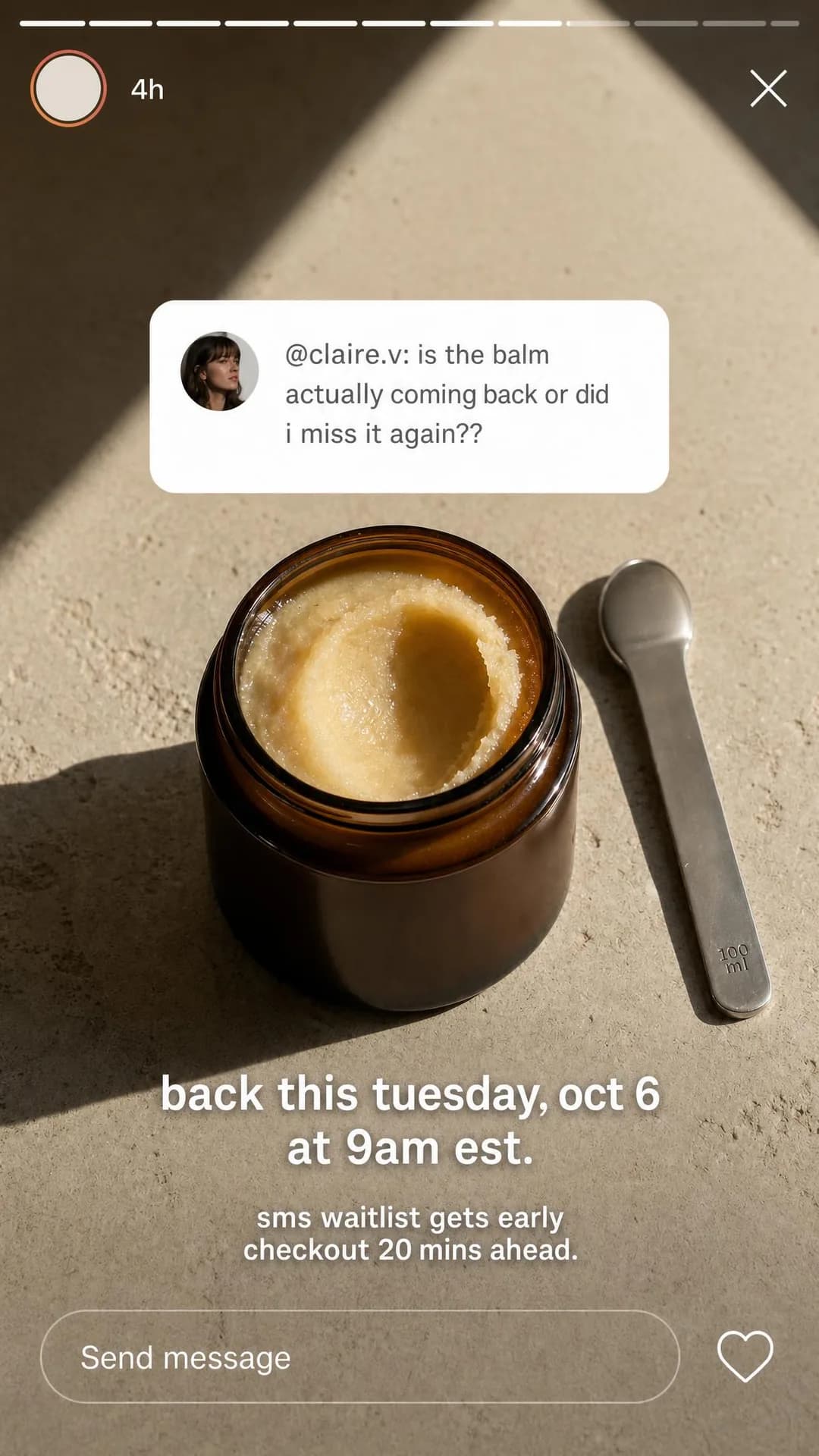 Example adRestocks Tuesday, Oct 6 at 9 AMSee the brief →
A multi-buy on a product people lose
Sales- Who it is for.
- People who buy a lip balm, lose it within the week and buy another, four times a season.
- Angle.
- Offer & Economics — Makeup is exempt from Meta's 18+ rule for cosmetics outright, which makes this the clearest candidate in the batch for a 13+ ad set, and the offer is the honest shape of the product: three for $22 against $9 each. It is also one of only two ads in the run that wrote captions the length Instagram recommends, because an argument that is one price needs no paragraph. Two consequences of running it young. Value optimisation is withheld from teen audiences, so the one offer here whose economics are basket size cannot be optimised for basket size — optimise for purchases and let the price break do that work. And shoot the shades the offer buys: the example drowns six shades in one colour.
 Example adMix & Match Any 3 for $22See the brief →
A clay mask used in company, on the night people use it
Awareness- Who it is for.
- People who would never sit under a sheet mask alone but will do a clay mask with two friends on a Friday.
- Angle.
- Identity & Emotion — A mask is one of the few skincare products used socially, which makes it shareable and makes belonging the natural argument. It is also the row where the picture decides the audience: this brief is the most teen-shaped in the batch and the render came back as three adults on a sofa, which in a 13+ ad set is the only targeting mistake still available to you. Cast it before you render it, keep the jar out of the bottom third if it is going to Stories, and check the price line — one caption prices an $18 jar at “$100ml”.
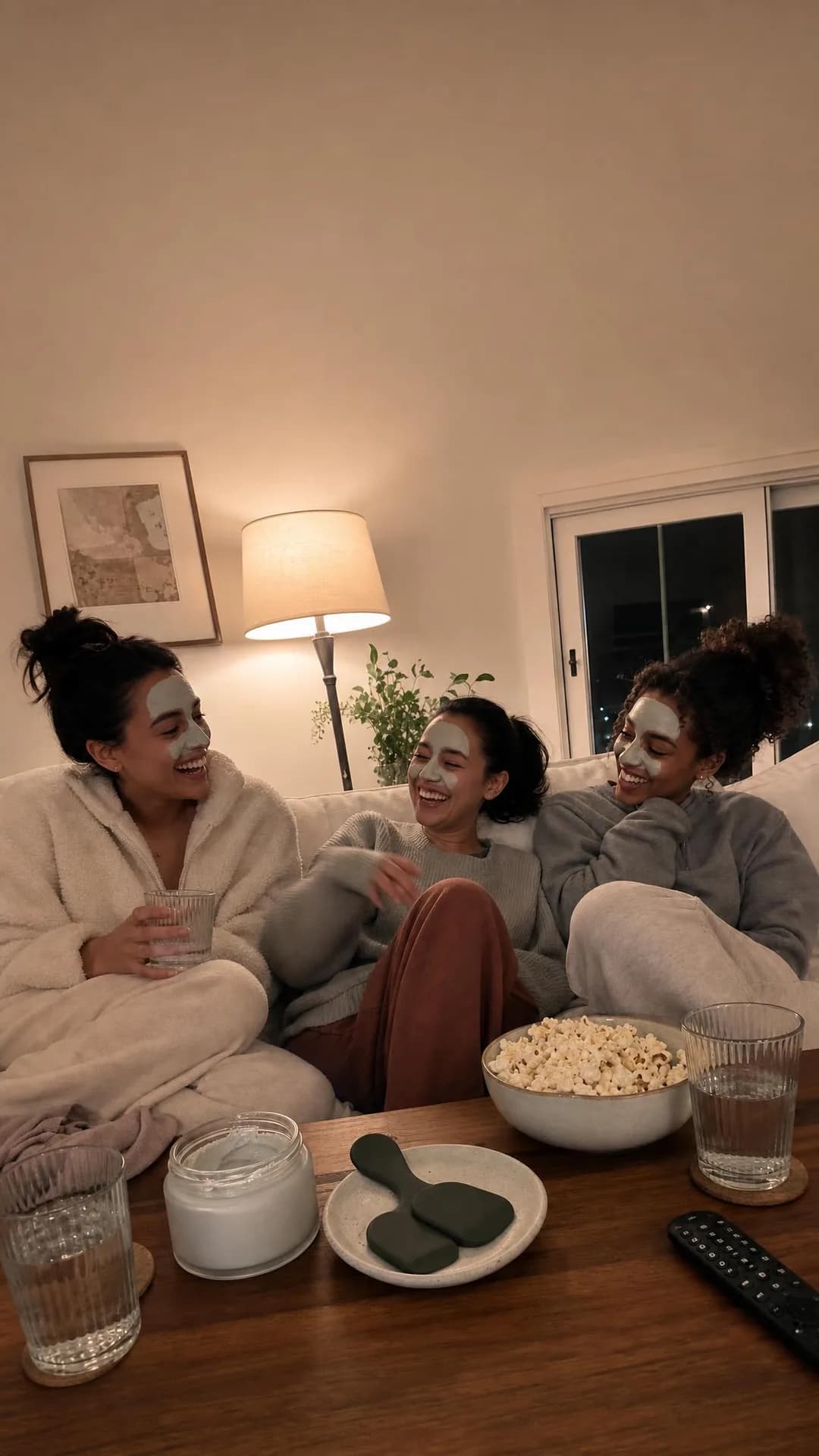 Example adThe Friday night group upgrade.See the brief →
A cleanser that does not pretend to be a treatment
Sales- Who it is for.
- People who wash after training and were taught that a good cleanser tingles.
- Angle.
- Comparison & Positioning — The cheapest way to lose the teen audience is a sentence, and a cleanser is where it happens: promise to clear breakouts and you have made a cosmetic into an acne drug and moved the ad to 18 in the same line. This example stayed clean on that count — none of its five captions mentions acne — and then told the reader their skin is doing something anyway, in type set at the top of the poster, which is a re-render rather than a caption edit. Argue what the product does not do, and check the villain is real before you name it: the menthol this ad argues against came from a summary, not from the brief.
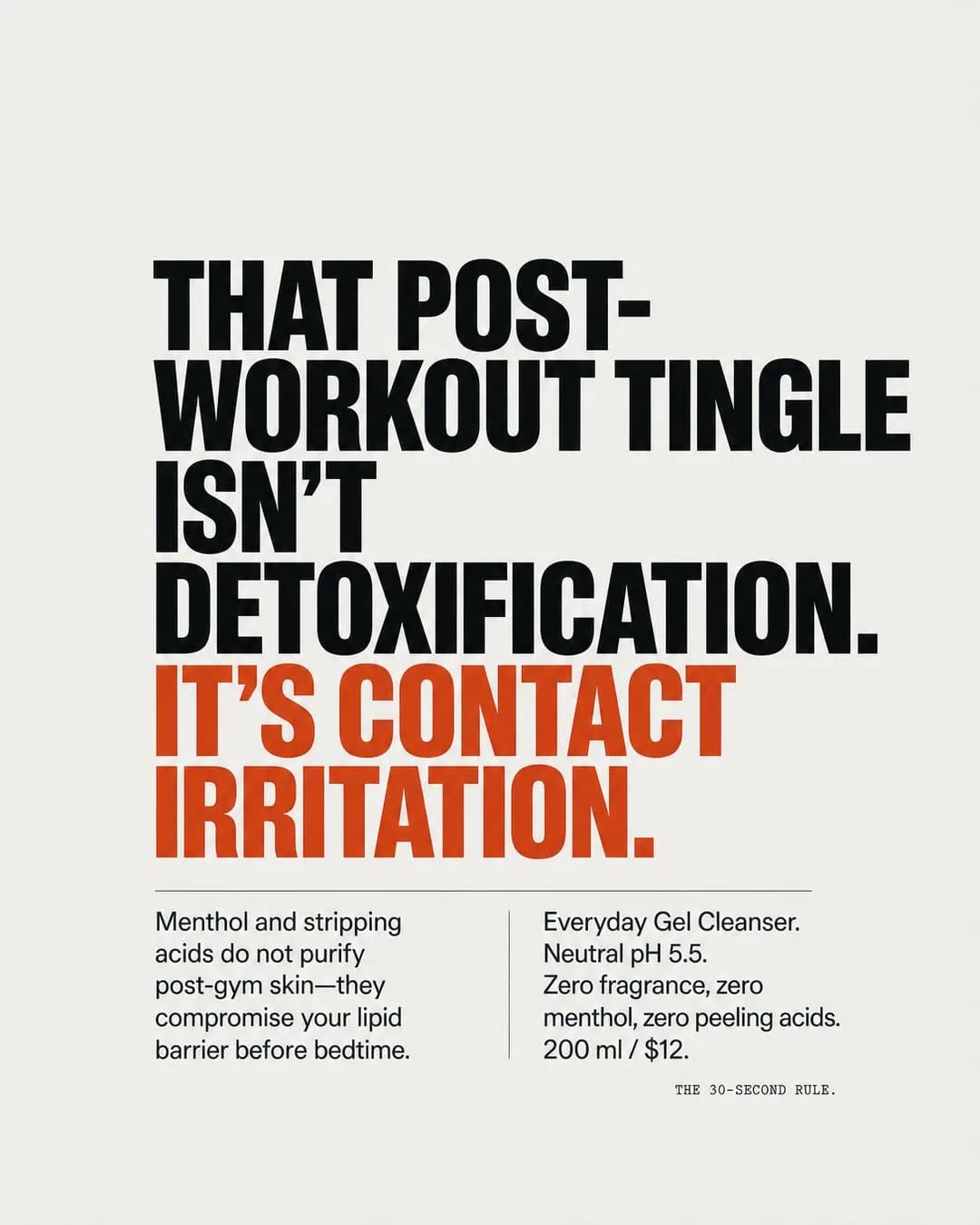 Example adClean skin doesn't need to tingle.See the brief →
A shade range, and what happens when you get it wrong
Traffic- Who it is for.
- People who have already bought the wrong shade online once and will not do it again without help.
- Angle.
- Objection & Risk Reversal — Fit is the objection that stops a complexion sale, so the ad's job is to remove the risk; praising the range does not. Show every shade and lead with the policy — and state the policy you have. The brief gave a free first exchange and the copy sold a guarantee, “Zero Guesswork” and “completely mistake-proof”; the FTC's guides put material limits on that word, and an exchange is not a refund. Send it to the shade quiz rather than the product page, optimise for link clicks if the ad set includes under-18s, and describe the range rather than the reader: “24 shades” belongs in the ad, “your natural undertone” does not.
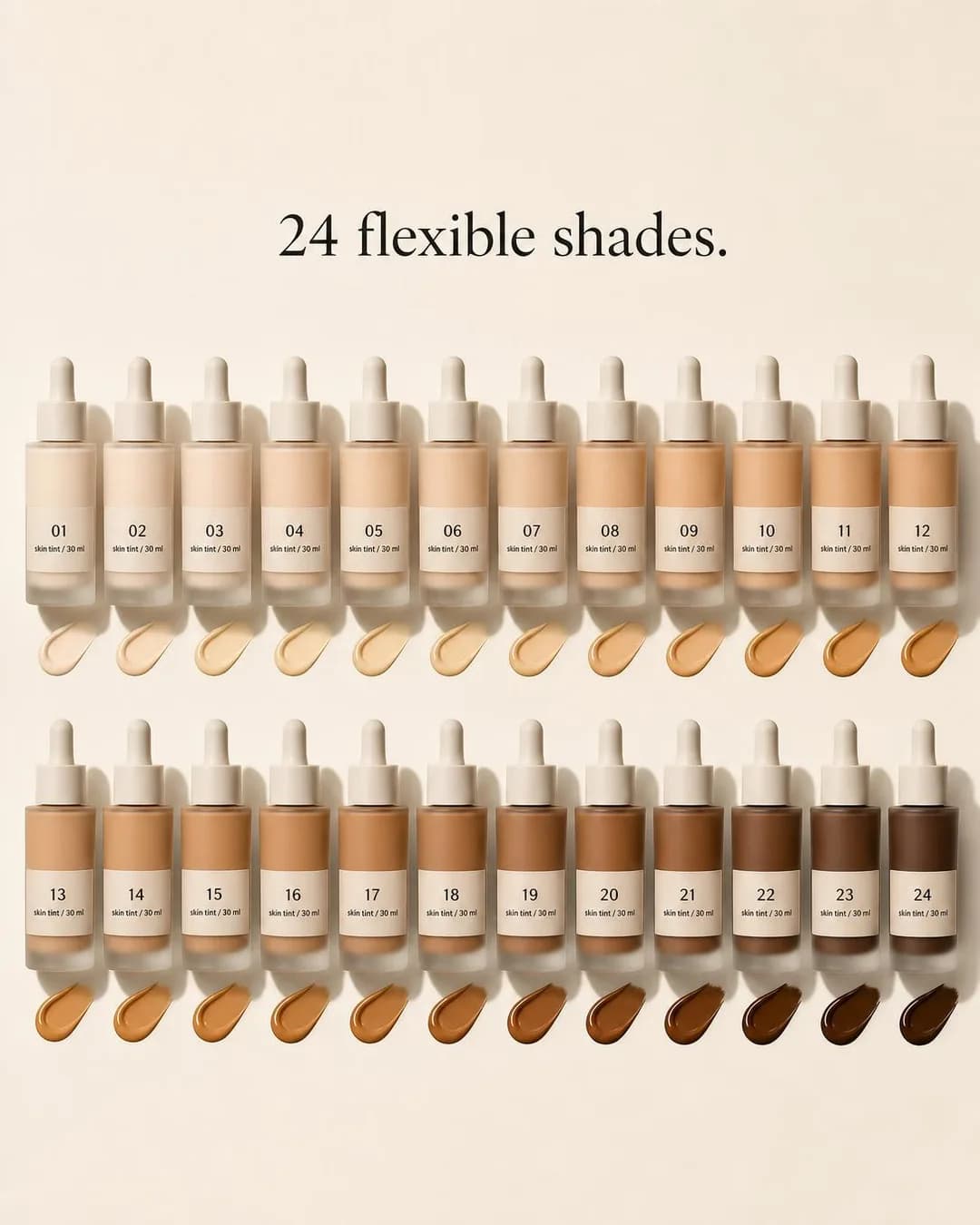 Example adMatch Your Old Shade in 3 StepsSee the brief →
An acid toner sold on a schedule, not a promise
Traffic- Who it is for.
- People who quit an acid or a retinoid because using it every night made their skin worse.
- Angle.
- Product & Mechanism — Twice a week beating every night is a real argument and a cosmetic one, and the label the picture drew is accurate to the business summary. Watch the drift, because it goes one way: the copy reached for “renewal”, “barrier-safe resurfacing” and acid that works “at a molecular level”, which is the FDA's line rather than Meta's. Smoother and more even sells the same bottle. Cut the two absolutes before it runs — “zero redness” on a product whose own summary buffers it, and an overnight result — and put the sun warning on the landing page: the FDA asks alpha hydroxy acid products to tell people to use sunscreen while using them and for a week afterwards, and this ad mentions the sun nowhere.
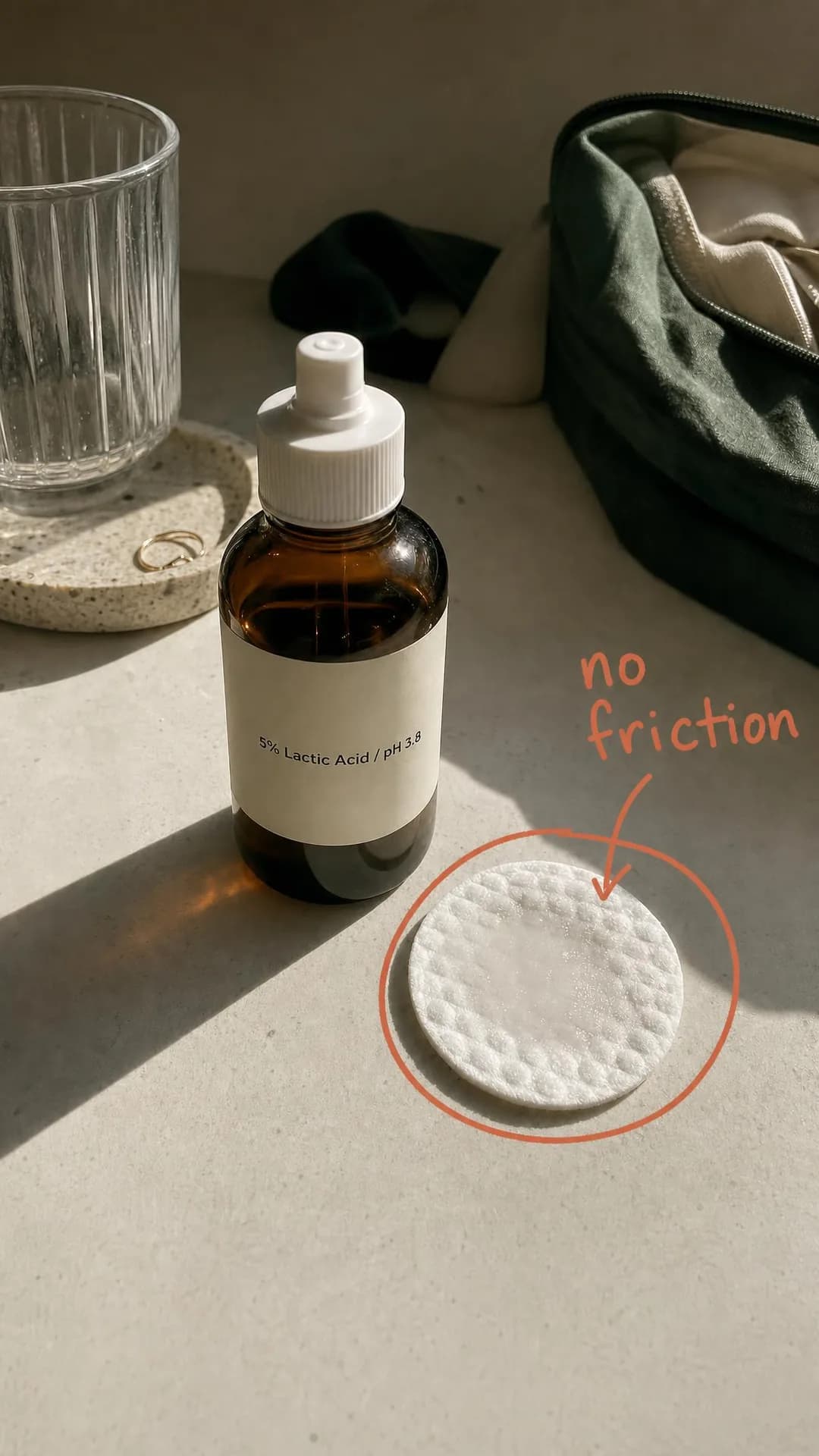 Example adDissolves dead cells without friction.See the brief →
An acne product, and the audience it costs you
Sales- Who it is for.
- People who have given up on a treatment because of what it did to their sheets and towels.
- Angle.
- Problem & Pain — This offer comes out of a drug label: the monograph warns that benzoyl peroxide may bleach dyed fabric, so the gel ships with two white pillowcases. It is also the ad that cannot have the audience it was built for. Acne is a disease in the FDA's definition and a treatment for it is an over-the-counter drug, which puts the ad set at 18 and over on our reading of Meta's standard — and the business summary wrote its audience as “Adults and adolescents”, for the one product Meta will not let you advertise to adolescents. Since the ad set is 18+ anyway, use everything it keeps: exclude recent buyers, retarget the people who read the page and did not buy. Take the reader's skin out of the copy and let the pillowcases argue, and put the monograph's own direction — apply sunscreen when going outside — on the landing page.
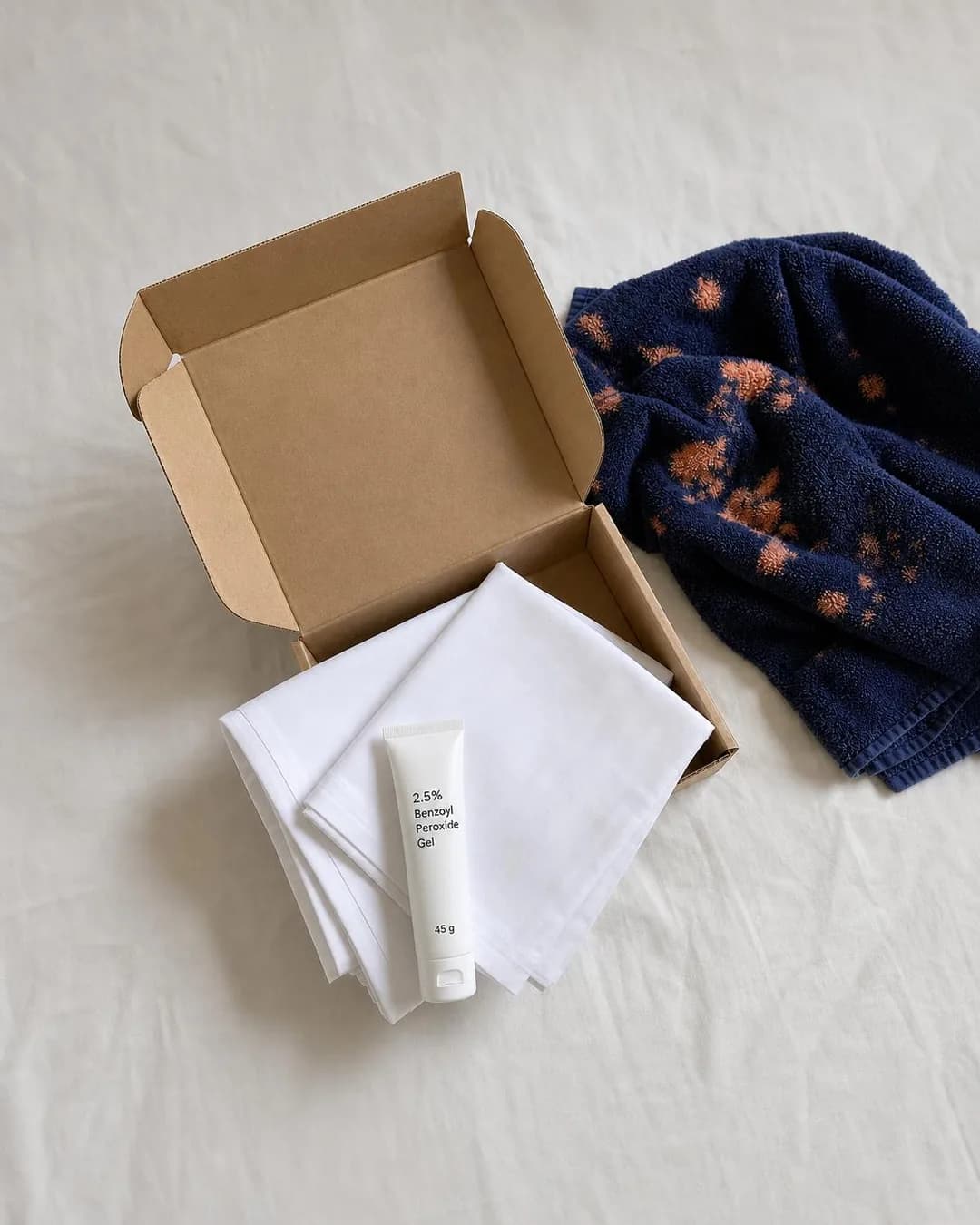 Example adRetire the bedtime towel wrap.See the brief →
A sunscreen that solves the second application, not the first
Sales- Who it is for.
- People who apply sunscreen at 8 a.m., are outdoors at 1 p.m., and are not going to wash their face to reapply.
- Angle.
- Benefit & Outcome — Reapplication is the real problem, so sell the stick's moment: hands, a mirror, a café table in full sun. In the United States a sunscreen is a drug, so target 18 and over as the safe default, and keep the claims to what a label can carry — no “sunblock”, no “waterproof”, water resistance only as 40 or 80 minutes. Fix two things before it runs. The render drew an opaque stick for a product the copy calls invisible, and the pack carries no SPF, no broad-spectrum statement and no water-resistance claim at all, in a drug ad. Then treat its buyers as a reorder list: a stick carried for daily reapplication runs out.
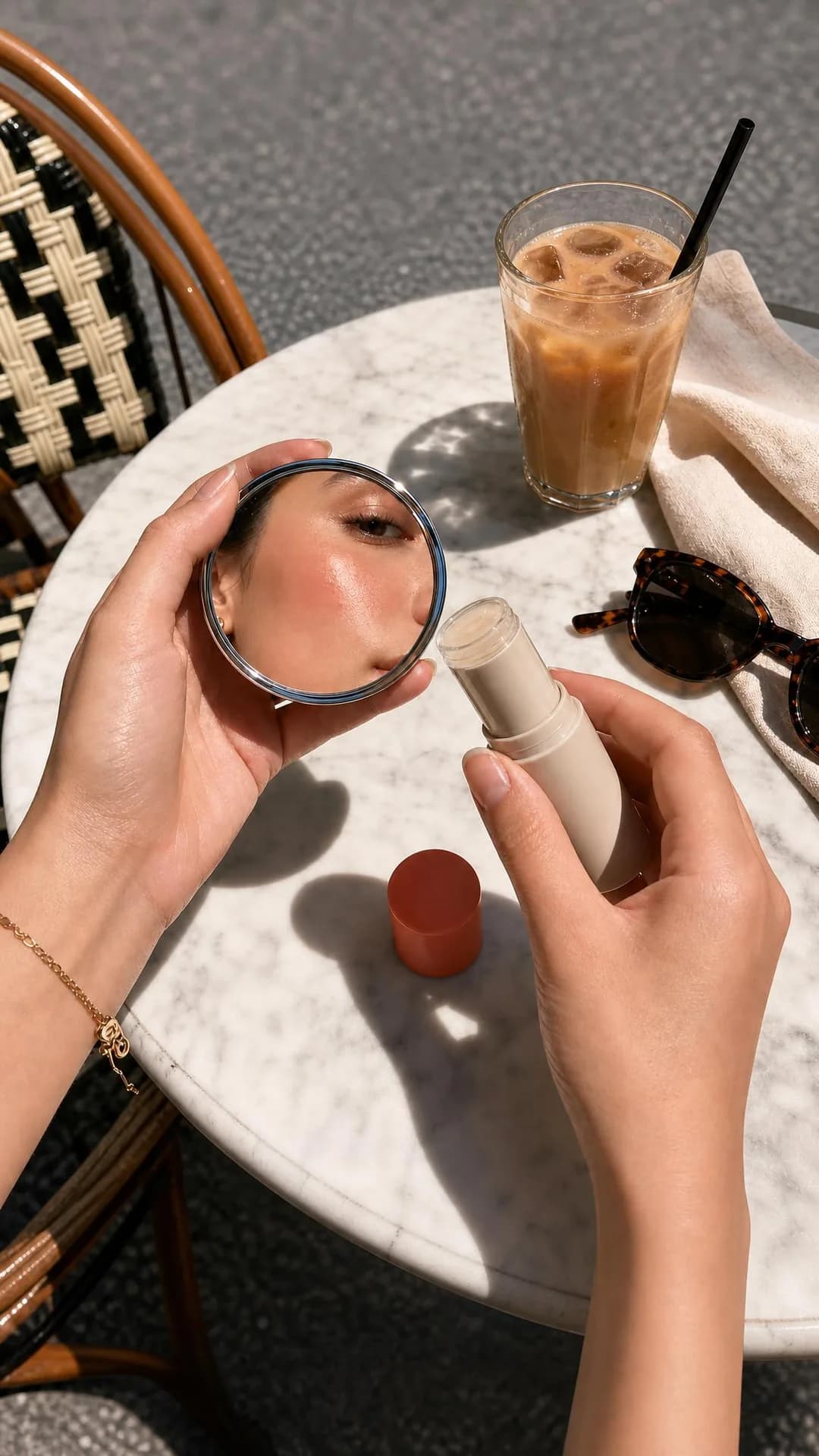 Example adReapply SPF Over Makeup in 30sSee the brief →
A before-and-after, once it is two photographs of one person
Sales- Who it is for.
- People who have had a bad result with the category — streaks, patches, a colour that went wrong.
- Angle.
- Proof & Trust — This is the category's native proof and the one thing a generator cannot supply: in our batch the two panels are different ankles. Meta lists before-and-after imagery for cosmetic products under 18+ and does not say which rule wins when the product is also an exempt cosmetic, so 18 is the safe default; the FTC reads a customer's result as what buyers will generally get, and the person shown has to be a real user. So shoot several real customers to one protocol with written consent, turn creative enhancements off in Ads Manager before it runs — brightness, contrast and touch-ups are exactly what this ad is about — and put back the safety line the copy dropped: this product contains no sunscreen, which its own business summary quoted in full.
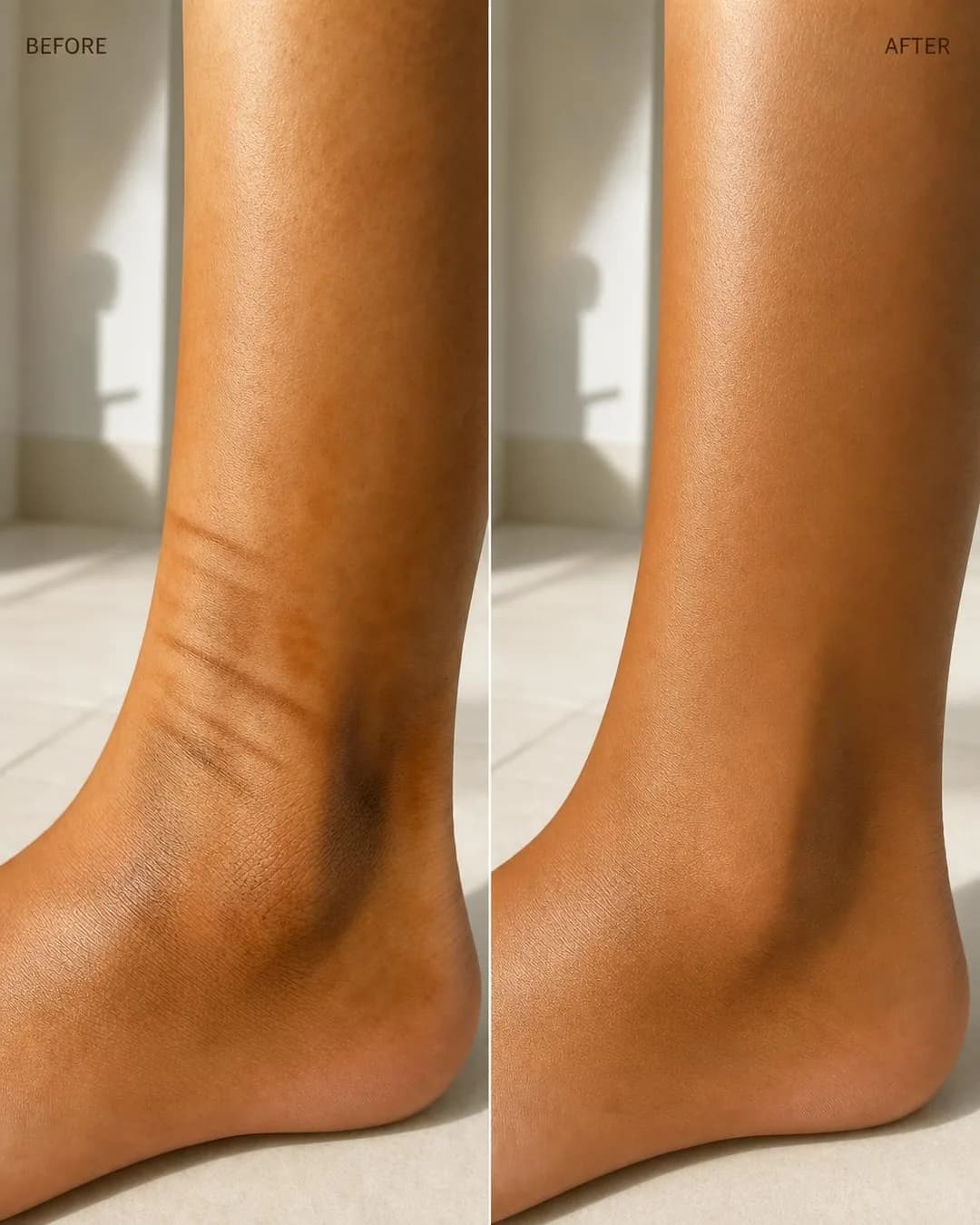 Example adStreak-Free Ankles, Every Time.See the brief →
A refill, to the people who already own the jar
Sales- Who it is for.
- Customers who bought the heavy glass jar and would rather not buy the glass again.
- Angle.
- Offer & Economics — This one's minimum age has nothing to do with what it says. It works only against a customer list, and every custom audience is unavailable in an ad set that includes under-18s, so the targeting sets the floor even though the cream is a cosmetic and the copy is clean. That is the shape of the problem for a replenishment brand: on the teen half this ad simply does not exist — no refill, no reorder window, no lookalike of jar buyers — so that audience can only ever be a first purchase. Before it runs, cut the mechanics nobody built: the example promises a batch code at checkout in one caption and an automatic unlock in another, and prints a freight calculation on the pouch.
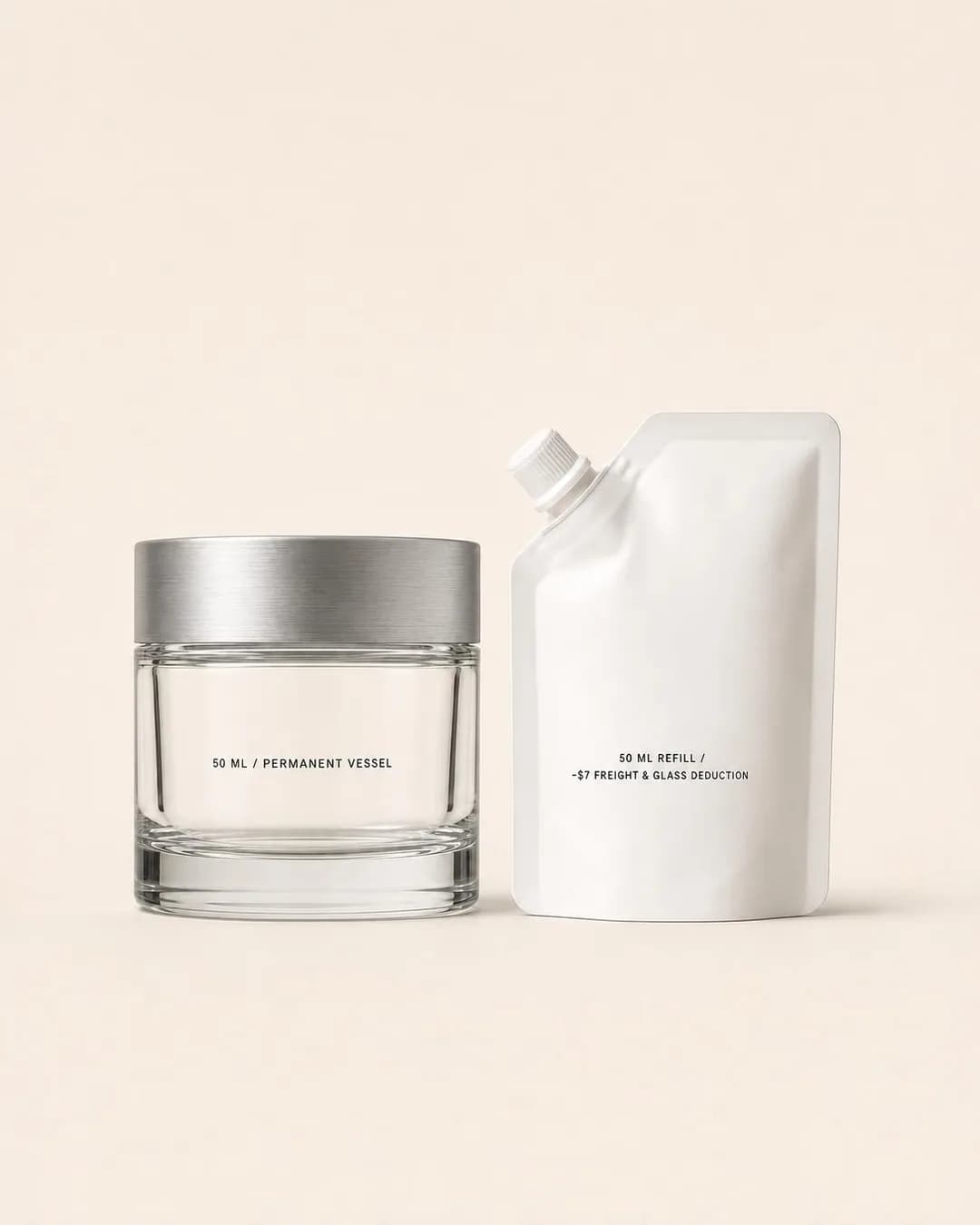 Example adDon't buy a second jar. Pay $21.See the brief →
Browse Instagram ad examples for a skincare or beauty brand →
Targeting, the minimum age, and what an ad set gives up to reach under-18s
Health is not one of Meta's special ad categories, so nothing here is category-restricted. What binds a skincare ad set on Instagram is the age floor its ads require, and that floor decides which of the levers below exist at all.
Decide it product by product rather than account-wide, and ask what the strictest ad in the ad set needs. A cosmetic can run from 13; an over-the-counter drug, a before-and-after and an ad aimed at a customer list cannot. Those rules are the United States' and Meta's — other countries draw their own lines, and Meta's own minimum is 16 in Australia — so a brand shipping beyond the US should read its markets before it sets a number.
If the answer is no, run the whole account at 18 and over and use everything. Advantage+ audience on for prospecting, which obeys your location, minimum age, language and custom-audience exclusions strictly while treating interests and included audiences as suggestions it may go beyond. The creator's engaged audience and a lookalike of it in their own ad set, under the creator's identity. The purchase-window reorder audience from the Facebook guide. Your customer list as an exclusion on everything meant to find new people. And on any Sales ad set built on a custom audience, “Further limit the reach of your ads”, because Meta otherwise treats an included custom audience as a suggestion and may deliver past it.
If the answer is yes, build it as a separate buy and expect it to be blunt. Advantage+ audience has to be off, because the youngest minimum age it accepts is 18. What is left is age and location. The location has to be city level or larger with the EU, the EEA and Switzerland taken out entirely, since ads there cannot deliver to under-18s. There are no exclusions, so your own customers are in it. There is no language setting. And the optimisation goal must be one Meta keeps available — purchases, link clicks, reach, impressions, profile visits — which rules out a lead form, a message thread, an event and value optimisation.
Then reason about the top of the range as well as the bottom, which is the half of this lever most accounts forget. Age is one of only two things left in that ad set, and it has two ends. Capping it at 17 makes the buy a clean test of the audience you opened it for, and shrinks the customers-you-cannot-exclude problem to the share of your customers who are minors. Raising the floor is worth as much: Pew puts Instagram at three-quarters of 15- to 17-year-olds against 44% of 13- to 14-year-olds, so a floor of 15 or 16 costs little of the reach you came for and drops the band where a skincare ad is hardest to defend.
Whether to open it at all is a separate question from whether you may, and it is a budget question. An ad set has to be fed: Meta says one usually leaves the learning phase after about 50 results in a week, so a teen Sales buy has a weekly floor of roughly 50 × what a purchase costs you. A brand shipping across Europe also has to split its map before it can touch the age lever, which is another ad set with its own 50 results to find. If that arithmetic does not clear, the honest answer is that the audience is real and the buy is not — run the profile-visit line instead and let the grid do the work.
In the 18+ ad set the targeting does the qualifying and the creative does the persuading. In the teen ad set the creative does both. That is why the teen buy wants more ads inside one ad set rather than more ad sets beside it, and why the render is the thing to check hardest before it runs.
- Minimum and maximum ageDecide both ends per ad set
- 13 for non-permanent cosmetics — creams, makeup, hair products — and on our reading a cleanser, a mask or an acid toner. 18, on our reading of Meta's standard, for an over-the-counter drug such as an acne treatment or, in the United States, a sunscreen; 18 as the safe default for any before-and-after, since Meta does not say which rule wins when the product is also an exempt cosmetic; and 18 for anything targeted with a customer audience. Meta's own floor is 16 in Australia. Capping the teen buy at 17 keeps it a clean test.
- Advantage+ audienceUse it at 18+, impossible below it
- Accepts a minimum age “between 18 to 25 only” and treats minimum age as a non-negotiable constraint, so it is not the way to reach a teenager. Meta's reference does not say how far below 18 it delivers when you set no minimum, so check the audience section. Obeys location, minimum age, language and custom-audience exclusions; expands everything else.
- Creator audience sharingUse it — the reason to run partnership ads here
- A custom audience of people who engage with the creator's Instagram account, built under Meta sources → Instagram account. Needs account-level partnership ad permissions, which the creator can remove at any time, and the ad's identity must be that creator's handle. 18 and over, being a custom audience.
- Lookalikes of the creator's audienceSometimes — worth testing against a lookalike of your buyers
- Meta allows a lookalike from a creator's custom audience. The two seeds are modelled on different things: who likes the creator, and who buys the product.
- Your own Instagram engagement audienceUse it — what the profile buys you back
- People who have engaged with your account, retention up to 365 days, rolling. This is how profile-visit spend becomes reachable again, and it is 18 and over. Whether engagement from someone under 18 appears in it later is not documented.
- Website custom audience on Purchase (the reorder window)Use it at 18+ — built in the Facebook guide
- Include everyone who bought in the last 70 days, exclude everyone who bought in the last 45, filtered by product. Our skincare Facebook guide builds it, keeps it inside its limits and measures it against a holdout.
- Customer-list exclusionsUse it at 18+ — unavailable below
- Recent buyers out of everything meant to find new customers. No exclusion of any kind exists in a teen-inclusive ad set.
- LocationCareful — it changes with the age floor
- Anywhere you ship and where your claims were checked. Below 18, cities or larger only, and ads with locations in the EU, the EEA or Switzerland cannot deliver to under-18s at all, so a multi-country account has to split its map before it can touch the age lever.
- Detailed targeting (interests)Rarely
- Unavailable in a teen-inclusive ad set, and only a suggestion under Advantage+ audience above it. In this trade an interest in skincare describes almost everyone; the purchase event and the picture select better.
- “Further limit the reach of your ads”Use it on every custom-audience ad set
- Including a custom audience in a Sales, Leads or App promotion ad set makes it an Advantage+ suggestion automatically, and delivery can go beyond the audience you chose. This setting holds it inside.
- Special ad categoryNone
- Housing, employment, financial products and services, and social issues, elections or politics. Skincare is none of them; what binds it is the claim in the ad and the age floor that claim sets.
Where the click goes: product page, profile, DMs or form
The default is the same as on Facebook: the product page, written in the same cosmetic words as the ad, with the size, how long it lasts and the full ingredient list as text, and a Purchase event carrying its value. The FDA counts claims made “in advertising, on the Internet”, so a page that says more than the ad does is the version that gets read back to you.
A partnership ad is the exception worth planning for, and it matters more on Instagram than on Facebook: the ad runs under the creator's handle, so the profile a curious reader taps first is theirs, not yours. If the ad is doing the work of introducing your brand, the destination has to finish the introduction, because the header did not.
For an ad that has to explain first — a schedule, a shade quiz, a habit — send it to a page under your own name that makes the argument, optimised for landing page views at 18+ and link clicks below. A lead form is not an option below 18 at all, so a restock list aimed at younger buyers is a sign-up page bought as Traffic.
Your profile is a destination in its own right, and the only one that leaves anything behind in a teen ad set. Buy the visit when the grid can answer a stranger's questions and survive the age floor the ad set was set to, as the offer row above describes.
Instagram Direct messages are where shade and suitability questions belong, through Engagement or Leads — and at 18 and over, since conversations is withheld from teen audiences. Open it only when someone is answering, and write the replies in advance in cosmetic terms. A reply is your writing as much as a post is, and “will this help my rosacea?” invites a yes that is a drug claim, typed by your brand, in public.
For a subscription, the rules are federal and Meta's, and the skincare Facebook guide sets both out: the price and interval in the ad, the material terms and express consent before the checkout takes a card.
The recommendation: A product page in the same cosmetic words as the ad, with the ingredient list as text and a Purchase event carrying its value. An argument page under your own name for anything that has to change a habit — optimised for landing page views at 18+, link clicks below it. Your profile only when its top rows would survive both a stranger and the age you set. A form, an event or a message thread only in an 18+ ad set. And on a partnership ad, a destination that introduces the brand the header did not.
Creative direction: below 18 the picture does the targeting
Every brief in our batch named an audience — people who wash after training, people who lose a lip balm a week, people who have bought the wrong shade online. In a 13+ ad set not one of those is expressible as targeting. They become creative direction: the picture and the first line have to find the person the ad set can no longer ask for. That is the biggest difference between writing for this platform and writing for Facebook, and the clay mask shows what it costs. Its brief was a mask, $18, with friends on a Friday night. Its render is three adults on a sofa, and in an ad set with age and location only, the render is the targeting.
So cast the ad: decide who is in the frame, what they are doing and at what time of day, and check the render against that decision. Where nobody was described, our batches keep drawing the same person — both undescribed faces in the Facebook run came back light, and so did the hands in this one.
Casting young is the hard case, and this trade has no easy version of it. A generated teenager is the FTC problem the ankles and the invented handle already are: a person shown using a product has to be a real user. A real one needs consent a parent gives. The clean answers are the product alone, hands, or a real customer photographed with permission — and if none of those is available, the honest conclusion is that the ad is for the 18+ buy.
The claim rules decide the age floor, so read every draft for the two sentences that move it: a treatment claim that turns a cosmetic into a drug, and a comparison shown as a before-and-after. Then read for the sentence that points at the reader. Four of the ten ads told the reader what was happening to their own skin — “your lipid barrier”, “If your face feels tight after showering at the gym”, “your rough skin” — which is the shape Meta's personal-attributes standard is written about, though it does not say whether cracked or breaking-out skin counts as physical health. Treat those lines as a risk. Move the condition into the product description and describe the reader by what they do.
Check where the sentence lives before you plan to fix it. In the cleanser ad the diagnosis is set in type at the top of the poster, in the accent colour, so a caption edit does not touch it. Anything burned into a picture — a claim, a price, a date, a label — is a re-render, and it is worth reading the render for those before the copy is written.
Read the labels. The tool draws packaging with words on it, and across two batches it has printed an ingredient list nobody chose, an internal freight calculation, a treatment name and a jar volume on a spatula. On the sunscreen the opposite problem cost more: the stick came back with no SPF, no broad-spectrum statement and no water-resistance claim at all, in a drug ad. Match every rendered label to your real pack.
For a creator's ad the brief is the Facebook guide's and none of it changes here: what the product does in cosmetic words, what they may say about their own skin, how long they will have used it, and the words that are off limits. Instagram adds two things. Their post is the creative, so it has to be in a format Meta accepts for a partnership ad, and the ad is reviewed before it runs. And because the ad carries their identity, the first 125 characters read as theirs — which is where the FTC's disclosure advice bites hardest: add your own, at the start, whatever the header shows.
Then the shapes and the lengths, which the examples page measured: 4:5 for the feed, 9:16 for Stories and Reels with the top 14%, the bottom 35% and 6% at each side kept clear, and a caption whose first 125 characters have to work as the whole ad. Ten of our fifty captions fit that, all from the two ads whose argument was a single fact. None of the fifty was short enough for an image ad in Reels, so either write a second caption for that placement or leave it out of the ad set.
- Cast the ad: decide who is in the frame, doing what, at what time of day, and check the render against that decision. Below 18 the render is your targeting.
- If the only honest picture for a teen ad set is a real minor, the ad belongs in the 18+ buy or in a frame with no face in it.
- Read every draft for a treatment claim. A cleanser that promises to clear breakouts is an acne-drug ad, at 18 and over, on the strength of one sentence.
- Take the reader's skin out of the copy. Put the condition in the product description and describe the reader by what they do.
- Find where the claim lives. A sentence set into the picture is a re-render, not an edit.
- Match every rendered label to your real pack — and check that a drug's pack carries what it must: SPF, broad spectrum, water resistance as 40 or 80 minutes or none.
- Put the qualifiers back. Across both skincare batches the model removed them: “most” became “clears”, “approximately seven days” became “seven full days”, “often” disappeared.
- Check the arithmetic in the caption and in the picture. An $18 jar was priced at “$100ml” in this batch, and in the Facebook one a division was presented as a fact about skin (“skin saturation happens at precisely 0.33 ml”).
- Run any before-and-after at 18 and over as the safe default, from photographs of one real customer taken the same way, with written consent, and turn creative enhancements off in Ads Manager first.
- Keep the product out of the bottom 35% of a 9:16 frame, where the button and the account name land.
- Write the first 125 characters as if they were the whole ad, and write a separate 44-character caption for Reels or leave that placement out.
- Brief creators as the Facebook guide describes, then add the Instagram parts: an eligible format, Meta's review, and your own disclosure at the start of the text.
- An ad may say who it is for — “A service for teens” is Meta's own allowed example. It may not tell a teenager what their skin is doing.
Campaign structure: four lines, split by the age floor
The age floor splits the account, so the structure has four lines rather than three: the borrowed audience, ordinary prospecting, the teen buy if you want it, and the customers. The first, second and fourth are 18 and over by construction. The third is a separate buy with its own job, because nothing in it can be compared with anything in the others — and if you have no creator yet, the first line simply does not run and the second carries the prospecting until it does.
The borrowed audience (18+)
One creator's fee plus 50 × your cost per purchase, a week, per ad setAudience. People who engage with the creator's Instagram account, plus a lookalike of them, in an ad set whose identity is that creator's handle, with “Further limit the reach of your ads” on and your recent buyers excluded.
Running. The creator's post as a partnership ad, on the hero product or the routine set. One ad set per creator, since the audience is tied to one handle — and one post, so watch frequency: a new creative here means going back to the creator.
Judged on. First orders in your store from that ad set, and whether those customers reorder when the jar runs out. To learn what the creator adds rather than what Meta chose to show, alternate the ad set on and off.
Prospecting: everyone else at 18 and over
50 × your cost per purchase, a week, per Sales ad setAudience. Broad, Advantage+ audience on, minimum age set by the strictest ad in the ad set, recent customers excluded.
Running. Sales on the products that carry a drug claim or a before-and-after, and on everything the teen buy is not for; Traffic for the ads that have to explain first.
Judged on. Ads Manager's cost per purchase within days; your store's cost per first order, and the reorders a product life later.
The youngest buyers (13+), if the products allow it
Its own budget line, funded as discovery for a fixed periodAudience. Age and location only, Advantage+ audience off, cities or larger, the EU, the EEA and Switzerland out, and a maximum age if you want the buy to stay a clean test. No exclusions, no custom audiences, no interests, no language.
Running. Only ads whose claims permit it — in our batch the lip balm, the skin tint, the clay mask, the cleanser and the toner. Sales optimised for purchases, Traffic optimised for link clicks, or profile visits. More ads in the one ad set rather than more ad sets beside it, because the creative is the only qualifying left.
Judged on. New customers in your store, not the ad set's reported purchases, which include the existing customers it cannot exclude. Never against an 18+ ad set: they differ on four axes at once.
Customers (18+)
Sized by the window; watch frequencyAudience. The purchase-window audience per product from the Facebook guide, your customer list, and your own Instagram engagement audience, each kept inside its limits.
Running. The refill and the reorder, the restock reminder ad, the products a customer has not bought yet, and news that sells nothing on the day.
Judged on. Margin per customer against a held-out half, over two jars' life, as the Facebook guide measures it. Never the purchases Ads Manager reports.
Budget and measurement: funding two buys and one profile
Start where the Facebook guide starts, because the arithmetic does not change between apps: a new customer is worth the margin on their first order, plus the share who reorder times the margin on a reorder times the reorders a returning customer makes over a period you are willing to wait for. That figure is the ceiling on what you can pay for a first order, and it is worked out in full there.
The teen buy needs a second ceiling, and the reason is structural rather than behavioural. A teenager who buys a lip balm may well buy another; what you lose is the channel for prompting it, because that customer cannot be put in a reorder window, a customer list or a lookalike until they turn 18. The refill ad is the clearest case — an ad that is nothing but a customer list — and on that side of the line it does not exist. So price the buy on the first order's margin plus what your email and your profile recover. If you are already running the reorder holdout the Facebook guide describes, you have a live measurement of the second half of that: the held-out customers are your own margin per customer without paid retargeting.
Read that ceiling against the right number. An ad set that includes under-18s will show your first-order ad to existing customers it cannot exclude, so its reported purchases flatter it. The test is new customers in your store, not purchases in Ads Manager.
Then count the ad sets, because each has to be fed. Meta says an ad set usually leaves its learning phase after about 50 results in the week following its last significant edit, so plan on roughly 50 times your cost per purchase per Sales ad set per week. A creator ad set, a prospecting ad set, a teen ad set and a reorder ad set is four; a second creator makes five; shipping across Europe makes six, since the teen buy's map has to be split. A brand that cannot feed them should run fewer rather than starve them all, and the teen buy is the one to defer, because it is the only line whose number you cannot borrow: you may not import a cost per purchase from an 18+ ad set that differs from it on four axes. Fund it as a fixed discovery budget for a fixed period, decided before it starts.
Creator audience sharing also changes what a creator's fee is buying. You are paying for the post and for reach into an audience that already trusts them, and you are paying it in a form you cannot keep: the audience is theirs, the permission can be withdrawn at any time, and the ad has to run under their handle for the targeting to work. Two consequences. What you keep from the campaign is the customers it produced and whatever they left on your own profile, not the audience. And on our reading, every paid impression you buy under their handle feeds the rolling engagement audience you are renting — which is also why an inactive creator's audience shrinks while you are paying for it.
Then judge the creator on the store rather than on the comparison Meta offers you. As the Facebook guide puts it, you do not choose how much each ad in an ad set is shown, so a creator's ad beside your own is a record of what the system chose to show, not a test. Give them their own ad set, alternate it on and off over equal periods — each long enough to produce a readable number of orders in your store — and look at the second order as well as the first.
The profile is the one line with no reported value attached, and on the teen side that is not a gap but the point: for a buyer you cannot retarget for years, the follow is the retargeting. Ads Manager will tell you what a visit cost. What it is worth is two numbers of your own — followers gained, and what your account's traffic does to store sessions and first orders in the weeks after. Agree in advance how long you will fund it before that second number has to move.
The reorder line is measured with the holdout the Facebook guide builds, and nothing about Instagram changes it — except that no version of it is available on the teen side, where you cannot hold anyone out in the first place.
One last caution on reading the numbers. A partnership ad's likes and comments land on a post under someone else's handle, so that engagement is not yours to count as brand lift; the orders are.
- Test the creator, the offer and the picture, in that order.
- Run each creator in their own ad set, alternate it on and off over equal periods, and judge it on new customers in your store.
- Compare a lookalike of the creator's audience against a lookalike of your own buyers.
- Read a caption test at 125 characters as well as in full, since that is where Meta recommends the argument land.
- Before blaming the creative on a Sales ad set, check whether it ever left learning and when it was last edited.
- For the reorder line, use the holdout from the skincare Facebook guide rather than Ads Manager's purchases.
Seven of these ads, in full
Every ad below was generated by best-in-slot for a skincare or beauty brand that does not exist, with its audience, angle and objective pinned before the run — and published exactly as it came back. They are seven of the Instagram examples for a skincare or beauty brand; the rest, with the full brief and the alternate headlines behind each one, are on that page.
Offer & Economics · 4:5 · Sales
Mix & Match Any 3 for $22
Written for: People who lose a lip balm a week.
The full brief and why it works →
Objection & Risk Reversal · 4:5 · Traffic
Match Your Old Shade in 3 Steps
Written for: People who have bought the wrong shade online.
The full brief and why it works →
Identity & Emotion · 9:16 · Awareness
The Friday night group upgrade.
Written for: People who do face masks with friends.
The full brief and why it works →
Problem & Pain · 4:5 · Sales
Retire the bedtime towel wrap.
Written for: People who have bleached a towel without meaning to.
The full brief and why it works →
Benefit & Outcome · 9:16 · Sales
Reapply SPF Over Makeup in 30s
Written for: People who put sunscreen on once, before 8 a.m..
The full brief and why it works →
Story & Founder POV · 4:5 · Sales
Don't buy a second jar. Pay $21.
Written for: People who bought the jar this spring.
The full brief and why it works →
Scarcity, FOMO & Timing · 9:16 · Leads
Restocks Tuesday, Oct 6 at 9 AM
Written for: People who found it sold out in August.
The full brief and why it works →
Browse Instagram ad examples for a skincare or beauty brand →
Mistakes specific to skincare on Instagram
The first four are about the age floor and what people assume it costs. The next three are about the borrowed audience, which is rented rather than owned. The last two are about words that go out unread, in a picture and in a message thread.
Assuming an Advantage+ ad set reaches the audience you came for
With Advantage+ audience on, the youngest minimum age Meta accepts is 18, and minimum age is one of the constraints it will not expand past. A brand that leaves it on and believes it is reaching sixteen-year-olds is reaching adults with copy written for teenagers — which is roughly what the clay mask ad did to itself in the picture, briefed for a Friday night with friends and rendered as three adults on a sofa.
Losing the teen audience in a sentence nobody reviewed
A cosmetic cleanser whose copy promises to clear breakouts has made itself an acne-drug ad, which on our reading of Meta's standard is 18 and over. The product did not change; the claim did. Read generated copy for treatment words before you read it for anything else.
Expecting a teen-inclusive ad set to keep your customers out
Every kind of custom audience is unavailable there, and exclusions are custom audiences. Your first-order ad will be shown to people who bought last week and no setting stops it. The ad that is nothing but a customer list — the refill — cannot run on that side at all. Budget for the waste and judge the buy on new customers in your store.
Treating 13-versus-18 as an A/B test
Moving the floor changes the optimisation goal, the detailed targeting, the custom audiences and the geography at the same time. Whatever the two ad sets report, the difference is not the age. Give the younger buy its own job, its own budget line and its own target cost per first order.
Building the creator's audience and running the ad from your own handle
Meta is explicit: the custom audience only works when the ad runs from the creator's handle, and the Instagram account selected under Identity has to match the account the audience came from. Get that wrong and you have an ordinary ad set with an audience that will not do what you think it is doing.
Planning as though the creator's audience were yours
It is theirs, it is reachable only through account-level permissions they can remove at any time, and nothing we read says what happens to a running ad set when they do. Build the campaign so its value is the customers it produces, check it yourself when a relationship ends, and keep your own engagement audience and customer list growing beside it.
Asking for account-level permission as though it were a favour
It is broader than permission to boost one post: it lets an advertiser create ads and marketing messages from that handle without pre-existing content. Say what you will use it for and for how long, in writing, alongside the end date and the terms the Facebook guide's creative section already asks you to agree.
Letting the tool draw Instagram, or a person who does not exist
One ad in our batch renders the app's own chrome, a dead message field and a reply from an invented handle; another shows a before-and-after of two different ankles. The FTC treats a format that implies the content came from someone other than the advertiser as deceptive, and a person shown endorsing a product has to be a real user. Re-render both, or shoot the real thing.
Answering a skin-condition question in Direct
Opening a message destination means somebody will ask whether the product will fix their rosacea, their eczema or their acne. A yes is a drug claim written by you, and the FDA has quoted a skincare company's own Instagram posts back to it in a warning letter, the oldest more than two years old. Write the cosmetic answers before you open the door, and send anything medical to a doctor.
Questions
- How do I run Instagram ads for a skincare brand?
- Decide the age floor first, because it decides everything else. At 18 and over you can use the mechanism Instagram sells that Facebook does not: run a creator's post as a partnership ad from their handle, then target a custom audience of the people who engage with that handle, and a lookalike of them. Add broad prospecting with Advantage+ audience, and the purchase-window reorder audience our skincare Facebook guide builds. If your products are cosmetics and you want the audience Instagram reaches best — teenagers — that is a separate buy with Advantage+ audience off, age and location only, and a shorter list of objectives. Judge the two separately; they cannot be compared.
- How do I find creators for a skincare brand, and what if I don't have one?
- Meta sets a low bar and publishes no number: a creator needs an Instagram professional account with what it calls an authentic, established presence and a sufficient follower base, so the only way to know whether a particular creator qualifies is to send the request in Partnership Ads Hub. Ask for account-level permission rather than permission for one post — that is what creator audience sharing needs, and it also means they do not have to have posted about you already, since an ad can be made from scratch. Fees are between you and them and vary too much for a figure to be useful here. If you have no creator yet, nothing on this page stalls: run ordinary prospecting and the profile-visit line, and add the borrowed-audience ad set when a relationship exists.
- Can skincare ads target under-18s on Instagram?
- Some of them, in an ad set built for it. Meta's minimum age is 13 (16 in Australia; in the EU, the EEA and Switzerland ads cannot deliver to under-18s at all), and its Health and Wellness standard exempts non-permanent cosmetics such as creams, makeup and hair products from the 18+ rule it applies to cosmetics generally. But an over-the-counter drug — an acne treatment, and in the United States a sunscreen — is 18+ on our reading of Meta's standard, and a before-and-after is listed under 18+ without Meta saying which rule wins when the product is also an exempt cosmetic, so 18 is the safe default there too. With Advantage+ audience on the youngest minimum age Meta accepts is 18, so reaching teenagers means switching it off and setting the range by hand, and that ad set keeps only age and location.
- Can you advertise acne products on Instagram?
- Yes, to people 18 and over. In the United States an acne treatment is an over-the-counter drug: the FDA's monograph defines acne as a disease of the oil glands and hair follicles and sets out the claims such a label may make. Meta says it doesn't allow targeting for over-the-counter medicine to people under 18, and its examples name anti-inflammatories and antiseptics rather than acne gels, so this is our reading of the standard rather than a line Meta has written. Plan for the consequence either way: a cosmetic cleanser whose copy promises to clear breakouts has made itself a drug ad and given up the audience Instagram had over Facebook, in the same sentence.
- Why can't I retarget younger customers on Instagram?
- Because every kind of custom audience — website, customer list, engagement, lookalike — is unavailable in an ad set that includes under-18s, and retargeting is a custom audience. The same rule takes away exclusions, so you cannot keep existing customers out either, and it takes away the creator's shared audience. For a brand built on refills and reorders this is the decisive fact about the platform: on that side of the line every customer is a first purchase, and the buy has to pay for itself on the first order's margin.
- Why was my skincare ad rejected on Instagram?
- The three standards that reach these ads are the ones to read first. Privacy Violations and Personal Attributes stops copy that asserts or implies the reader's age or physical health, which catches the “your skin is doing X” sentence generated copy keeps writing. Health and Wellness requires cosmetic products to be advertised 18+, exempts non-permanent ones, lists before-and-after imagery at 18+ and prohibits timed promises without qualifiers. Drugs and Pharmaceuticals puts over-the-counter medicine at 18+. Where this page says “on our reading”, Meta has not written the line down and its reviewers may read it otherwise, so check the claim, the age floor and any text inside the image — and remember that a sentence set into a picture needs the picture made again, not the caption edited.
- What is creator audience sharing on Instagram?
- It lets an advertiser running a partnership ad from a creator's handle build a custom audience of people who have engaged with that creator's Instagram account, and lookalikes from it. You create it at the ad set level under Meta sources → Instagram account, choosing the creator as the source. It needs account-level partnership ad permissions, which the creator can remove at any time, and the Instagram account selected under Identity on the ad has to match the account the audience came from. Because it is a custom audience, the ad set is 18 and over.
- What size should a skincare Instagram ad be, and how long should the caption run?
- Render 4:5 for the feed (Meta recommends 1440 × 1800; best-in-slot exports 1080 × 1350) and 9:16 for Stories and Reels, keeping roughly the top 14%, the bottom 35% and 6% at each side clear of anything that matters. Meta recommends 125 characters of primary text and a 40-character headline in the feed, and 44 characters of primary text for an image ad in Reels. Generated copy runs long: ten of the fifty captions in our batch fit 125 and none fitted 44, so read the first 125 characters as the whole ad and write a shorter one for Reels or leave that placement out.
- Is Instagram or Facebook better for a skincare brand?
- It depends on the age of the customer you want and on what your ads have to say. Pew's 2025 figures put Instagram ahead among 18- to 29-year-olds (80% to 68%) and among teenagers, where it reaches roughly twice Facebook's share, while Facebook leads from 30 upwards. Instagram's own advantage is creator audience sharing, which has no Facebook equivalent we have found. Meta's age rules are platform-wide, so Facebook's advantage is not looser rules but an older audience: you rarely have to buy the stripped-down ad set to reach the customers you want. Many brands should run both, with the creator ad sets on Instagram and the reorder machinery wherever the customers are.
Sources
Every platform claim on this page was read against these on . Meta’s policies move; if one of these disagrees with this page, it is right and we are stale.
- Instagram Help Centre — Use creator audience sharing for partnership ads: “creator audience sharing allows you to use an audience of people who have engaged with the creator's account on Instagram”; “Custom audiences only work when running ads from the creator's handle on Instagram. The Instagram account selected at the ad level below Identity must match the account used for the custom audience”; built under Meta sources → Instagram account → the creator as Source; “You can also use a custom audience from a creator's account to create lookalike audiences”; requires account-level permissions and “Creators have the ability to remove this access at any time”. Read 20 September 2026
- Meta Business Help Centre — About partnership ad permissions: content-level permissions cover specific content; account-level permissions let advertisers “create partnership ads, other ad types and marketing messages from a partner's handle without pre-existing content”; requests are accepted in Partnership Ads Hub, the Instagram app or the Facebook app, one acceptance covers both platforms where accounts are linked, and “Creators and other partners can revoke these permissions at any time”. Read 20 September 2026
- Instagram Help Centre — Eligibility requirements for partnership ads and branded content: Instagram professional accounts, or Facebook Pages or profiles in professional mode; “an authentic, established presence on Instagram or Facebook” with a “sufficient follower base” (no threshold stated); current elected and appointed officials, candidates, parties, political committees and government agencies cannot run branded content. Read 20 September 2026
- Instagram Help Centre — Add partnership ads to BAU campaigns: partnership and business-as-usual ads can share an ad set or run in separate ad sets “under the same campaign and have budget fluidity” (Advantage+ campaign budget); “If both BAU and partnership ads are selected, you'll only be able to edit the first identity of the BAU and partnership ads at the same time”; the content must be in an eligible format and is reviewed by Meta. Read 20 September 2026
- Instagram Help Centre — About partnership ads: “advertisers run ads with partners: creators, brands, and other businesses. The partner and/or advertiser accounts are featured in the ad's header”; branded content ads are now called partnership ads. Read 20 September 2026
- Meta Business Help Centre — Create an Instagram account custom audience: “Add the Audience retention you want to include when finding people who have engaged with your account. (Maximum of 365 days.)”; the audience is rolling, and someone who does not engage again drops out once their engagement is older than the window. Read 20 September 2026
- Meta Business Help Centre — About advertising to teens: the audience options “not available to show ads to teens” include gender, ZIP code or locations smaller than cities, detailed targeting, language, website, mobile app, customer list, engagement and offline activity custom audiences and lookalikes; the unavailable optimisation goals are “app events, video views, post engagement, value, ad recall lift, landing page views, leads, conversations and event responses”, while “app installs, impressions, reach, daily unique reach, link clicks, offsite conversions” and Instagram profile visits remain; “Ads with locations in the EU, the EEA or Switzerland can't deliver to audiences under 18 (since November 2023)”. Read 20 September 2026
- Meta for Developers — Advantage+ audience (Marketing API): “When Advantage+ audience is enabled, advertisers can pass age_min values ranging between 18 to 25 only”; “Non-negotiable business constraints are NOT expanded, these include location constraints, minimum age, language, and custom audience exclusions”. Read 20 September 2026
- Meta Business Help Centre — About age-based targeting: “The minimum age on Facebook and Instagram is 13”; higher in some jurisdictions, “the minimum age in Australia is 16”. Read 20 September 2026
- Meta Business Help Centre — Advantage+ custom audience: an included custom audience can reach people “beyond the original selected audience”; applied automatically for Sales, App promotion and Leads; “Further limit the reach of your ads” restricts it. Read 20 September 2026
- Meta Advertising Standards — Health and Wellness (change log July 2026): cosmetic products “must be targeted to people at least 18 years or older”; age restrictions don't apply to “Non-permanent cosmetic and beauty products such as creams, makeup, hair products, and digital editing apps”; “General cosmetic products, procedures, surgeries depicting before and after transformation” listed under 18+; timed promises without qualifiers prohibited. Read 20 September 2026
- Meta Advertising Standards — Drugs and Pharmaceuticals: “Meta doesn't allow targeting for over-the-counter medicine to people under the age of 18”. Read 20 September 2026
- Meta Advertising Standards — Privacy violations and personal attributes: a “passing reference to a personal attribute” including age groups is allowed (“A service for teens”); asserting or implying the reader's attributes is not (“Ready to upgrade your skin to look younger?”, “Do you have diabetes?”). Read 20 September 2026
- Meta Business Help Centre — About the learning phase: exit “usually occurs after about 50 results in the week after the ad set's last significant edit”. Read 20 September 2026
- Meta Business Help Centre — About creative enhancements: brightness and contrast adjusted, visual touch-ups “auto-generates new pixels”; “Some enhancements may be turned on by default, but you can turn them off at any time”. Read 20 September 2026
- Meta ads guide — Instagram Feed image ads: 4:5 at 1440 × 1800, primary text 125 characters, headline 40, minimum width 500. Read 20 September 2026
- Meta ads guide — Instagram Stories image ads: 9:16 at 1440 × 2560; keep about 14% top, 35% bottom and 6% at each side clear. Read 20 September 2026
- Meta ads guide — Instagram Reels image ads: 9:16 at 1440 × 2560, primary text 44 characters. Read 20 September 2026
- FDA — OTC Monograph M006, Topical Acne Drug Products: acne is “A disease involving the oil glands and hair follicles of the skin”; benzoyl peroxide 2.5 to 10 percent; labelling “Clears up most acne blemishes”; the warning that it may bleach “hair and dyed fabrics”; the direction to apply sunscreen when going outside. Read 20 September 2026
- FDA — Is It a Cosmetic, a Drug, or Both? (Or Is It Soap?): intended use is established by claims “stated on the product labeling, in advertising, on the Internet, or in other promotional materials”. Read 20 September 2026
- FDA — Warning letter to Matte Beauty, 25 July 2024: the FDA reviewed the company's Instagram account and quoted posts from March 2022 onwards as evidence of drug intended use. Read 19 September 2026 for the skincare Facebook guide
- FDA — Sunless Tanners & Bronzers: tanning products without sunscreen must carry “Warning—This product does not contain a sunscreen and does not protect against sunburn…” (21 CFR 740.19). Read 20 September 2026
- FDA — Alpha Hydroxy Acids: the recommended Sunburn Alert tells users to use a sunscreen and limit sun exposure “while using this product and for a week afterwards”. Read 20 September 2026
- FDA — Questions and Answers: new requirements for OTC sunscreen products: water resistance stated as 40 or 80 minutes; no “waterproof”, “sweatproof” or “sunblock”. Read 20 September 2026
- 16 CFR 255.1 — FTC Endorsement Guides: an endorsement “may not convey any express or implied representation that would be deceptive if made directly by the advertiser”; an endorser represented as a user must be a bona fide user. Read 20 September 2026
- 16 CFR 255.2 — FTC Endorsement Guides: an ad relating a consumer's experience “will likely be interpreted as representing that the endorser's experience is representative of what consumers will generally achieve”, with a before-and-after example. Read 20 September 2026
- Meta Marketing API — Special Ad Categories: HOUSING, FINANCIAL_PRODUCTS_SERVICES, EMPLOYMENT, ISSUES_ELECTIONS_POLITICS or NONE. Read 19 September 2026 for the skincare Facebook guide
- 16 CFR 239.3 — FTC Guides Against Deceptive Advertising of Guarantees: use “Money Back Guarantee” or similar only if the full purchase price is refunded at the purchaser's request, with material conditions disclosed. Read 20 September 2026
- FTC — Enforcement Policy Statement on Deceptively Formatted Advertisements (22 December 2015): deceptive if the format implies the ad “comes from a party other than the sponsoring advertiser”. Read 20 September 2026
- FTC — Disclosures 101 for Social Media Influencers: “Don't assume that a platform's disclosure tool is good enough”. Read 20 September 2026
- Pew Research Center — Teens, Social Media and AI Chatbots 2025: about six in ten US teenagers use Instagram against Facebook's 31%; three-quarters of 15- to 17-year-olds against 44% of 13- to 14-year-olds. Read 20 September 2026
- Pew Research Center — Social media fact sheet (2025): Facebook 71% of US adults against Instagram's 50%, with Instagram ahead only at 18 to 29. Read 20 September 2026
That is the playbook. Now make the ads.
Paste your site. The AI reads your products, your ingredient lists and what you claim, then writes the concepts, draws the images and drafts the copy. In our skincare examples its claims about skin drifted one way, from how skin looks towards what the product does to it, so before any ad runs, read it for the words that turn a cream into a drug.
No credit card · 50 free credits (about 5 ads or Instagram posts)
Every angle recommended above is documented in the best-in-slot ad angle library, and the ads are from Skincare Instagram ad examples. For the same trade on Facebook, read Facebook ads for skincare and beauty brands. More industries are at all ad guides.