
Ad Guides · Skincare & Beauty Brands × Facebook
Facebook ads for skincare and beauty brands
The objective, the offers, influencer partnership ads and retargeting timed to the reorder, for a skincare or beauty brand on Facebook, with every platform and regulatory claim sourced and dated.
A skincare customer buys the same jar twice, for different reasons. The first time they are trusting someone else's skin: a face in a photograph, a friend's recommendation, a stranger's review. The second time they are trusting their own, because they have used the jar for two months and seen what it does. A Facebook ad has to win the first jar. If your first order barely covers the ad that won it, the second jar decides whether the ad paid, and that ad's report will never show it: Meta counts a purchase made within one or seven days of a click, and the second jar is bought two months later.
Facebook sells a mechanism for each purchase, and this page is built on them. For the first jar, partnership ads: a creator's post run as your ad, with their account, yours or both in the header. For the second, audiences built from your store's purchases. Include everyone who bought in the last 70 days, exclude everyone who bought in the last 45, and the audience holds the customers whose two-month jar is nearly empty or has just run out.
Both mechanisms answer to two referees who read different words. Meta reads what an ad says about the reader. In the United States the FDA reads what it says about the skin, and decides from those claims whether the product is a cosmetic or a drug. On our reading of Meta's examples, a creator writing in the first person can say what your copy may not: “At 58, this is what my cheeks do in January” describes their skin, not the reader's. The same creator writing “it cleared my rosacea” makes a drug claim, and once you pay to run their post, it is your claim.
Neither mechanism is something an ad generator can supply. When the skincare Facebook examples page asked ours for a before-and-after, it drew a convincing one of a person who does not exist and captioned it “unedited morning daylight”. An ad that shows someone using a product has to show someone who really did, so that one cannot run as it stands. Nor can a model know when a real customer's jar runs out. What a generator can do is draft what goes around them, the argument, the copy and a newly drawn picture of the product, each to be checked against the real jar.
What follows is a Facebook ad strategy for a skincare or beauty brand: which objective to buy, which offers to advertise and the argument for each, how to target new customers and time the reorder, where each click should land (a subscription checkout included), what a creator's post has to pass before it runs, how to structure the account, what a first order is worth when the second one pays, and how to measure what the reorder ads add. The platform and regulatory claims are footnoted at the bottom and dated.
The ads on this page are real output rather than mockups drawn for the argument. Each was generated from a written brief, a product, an audience and an angle pinned before the run, and the examples page prints each brief beside its ad. All ten appear in the offer table below and seven are shown in full, published exactly as generated for brands that do not exist. Every price is invented ($74 for $82 of products, 42 cents a night, 3,000 tins at $24) and marks where your own number goes. Several went wrong in ways this page uses: a moisturiser whose copy promises to rebuild the skin, a hand-cream tube printed with an ingredient list nobody wrote, and that invented face.
Two things this page is not. It is not legal advice: the FDA and FTC rules below are United States rules, they are the floor, and other countries have regulators of their own. And it is not a benchmark report. There are no cost-per-purchase or reorder-rate figures here, because the only useful versions come from your own store, and the budget section shows how to get them.
Generate Facebook ads for your skincare or beauty brand
Paste your site and best-in-slot reads it (products, ingredients, prices, what you claim) and shows you the business summary it wrote, which you can edit, before any ad is made. Then it writes the concepts, renders the images and drafts the copy. Read every draft for repair and renewal, and every label against your real one; the faces have to be your customers' or your creators'. Free to start, no card.
What you are actually buying by choosing Facebook
Start with who reads it. Pew's 2025 survey puts Facebook ahead of Instagram in every American age group from 30 up, and at 50 to 64 it reaches 74% against Instagram's 40%; the Facebook examples page has the full split. If your customers skew older, Facebook is where more of them are, and that changes what proof has to look like. On our reasoning, readers judge a result by whether the skin in it is like theirs, and a 26-year-old's cheek tells a 58-year-old little about what a moisturiser will do to their skin in January.
The copy cannot close that gap. Meta's personal-attributes standard forbids asserting or implying the reader's age, and “Ready to upgrade your skin to look younger?” is one of its rejected examples. A person in the ad can close it. Meta's examples turn on the word that points at the reader, so a customer who says “At 58, this is what my cheeks do in January” is describing their own skin. That is our reading of Meta's examples, and it is why a real person talking about their own face can say what your copy cannot.
It is also where this trade's creators run into the second referee. The same person who can say “at 58” can write “it cleared my rosacea”, a drug claim, and in your ad it is your claim. The FTC's endorsement guides say an endorsement “may not convey any express or implied representation that would be deceptive if made directly by the advertiser”. In their own example an influencer writes “This lotion cures eczema”, and the advertiser who lacks substantiation “would be liable regardless of the liability of the endorser”. The FDA counts claims wherever a brand makes them: a July 2024 warning letter to a skincare company quoted three of its own Instagram posts, the oldest from March 2022, promising to help “acne and rosacea” and “increase collagen production”.
Meta sells the borrowed face as a format. Partnership ads, Meta's name for influencer and creator ads (it used to call them branded content ads), let an advertiser “run ads with partners: creators, brands and other businesses”. On Facebook they run in Feed, Reels, Stories and Marketplace, under all six objectives.
The creator shares a partnership ad code generated from one of their published posts; on Facebook it comes from the post's three-dot menu. In Ads Manager you turn on the partnership ad toggle at the ad level, paste the code, the post ID or its URL, and choose whether the header shows both accounts, only the first, or lets Meta pick (Marketplace and Stories always show both). Then either boost their post as it stands or create a new ad and write the text yourself.
Two planning notes. Our publisher posts under your own Page only, so a partnership ad is built in Ads Manager. And we could not confirm in Meta's help pages whether a creator's Instagram post can run in Facebook placements; check before you plan on it.
The second thing Meta sells is a way to find the customer again when the jar runs out. A website custom audience built on your Purchase event can hold the people who bought within a band of days you choose. The targeting section builds one, and the budget section measures what it adds, because the purchases Ads Manager reports cannot tell you which reorders the ad caused.
Which objective to buy
Ads Manager offers six objectives: Awareness, Traffic, Engagement, Leads, App promotion and Sales. Pick by where the purchase happens and what has to happen before it. A product the reader already understands, bought on your site: Sales, with your store sending Meta a Purchase event and its value. A product that asks the reader to change a habit first: Traffic, to a page that makes the argument. A capped batch or a launch list: Leads. News for your own customers: Awareness.
Before you build on the Purchase event, look at Events Manager. Meta treats “diseases, medical conditions and injuries” and over-the-counter products “for specific medical conditions” as sensitive health information, warns that sharing it can bring “performance issues, data restrictions”, and tells you by email or with an alert in Events Manager or Ads Manager. It also said that from 2 September 2025 it would start flagging custom conversions that suggest specific health conditions and stop them being used to run campaigns. Meta names no skincare category, but a store whose product names and page addresses say acne, eczema or rosacea is naming conditions. The cosmetic wording that keeps your ads on the right side of the FDA also keeps your page addresses from describing one.
The objective buys the first jar. None of them buys the second by itself: a reorder is a Sales purchase like any other, and the targeting section is what points a Sales ad set at the customers whose jar is running out.
- SalesDefault
For first orders and reorders, on your own product pages with the Meta pixel reporting a Purchase event and its value; check Events Manager for a data restriction first (see above). Meta says an ad set usually leaves its learning phase after about fifty results in a week, so keep first-order Sales to as few ad sets as your volume can feed. A reorder ad set may never get there; the budget section judges it another way.
- TrafficSometimes
When the ad has to change a habit before it can sell: a cream cleanser for people who think they need a heavier moisturiser, a hand cream for people who never use one at work. Optimise for landing page views, and send it to a page under your own name that makes the argument.
- LeadsSometimes
For a limited batch, a launch or a restock list: an Instant Form or a sign-up page, then an email on the day.
- AwarenessSometimes
For your own customers, with news that sells nothing on the day: a packaging failure, a reformulation, a discontinued shade. Reach, to a list uploaded from your orders, judged later against a part of the list held out, as the apology row describes.
- EngagementRarely
It buys comments and reactions, and under a skincare ad some of those will be questions about a skin condition, answered in public by you. Buy it only for a video you want watched, and have someone ready to answer the comments in cosmetic terms.
- App promotionNo
Unless your brand sells through its own app, paying for installs so a customer can reorder a moisturiser is a long way round to a product page.
What to advertise, and the argument that wins it
The losing skincare account runs one product shot, a jar on travertine in morning light, to everyone, with a line about glowing skin. It gives the reader nothing to believe and nothing to check, and it looks like every other jar in the feed. The rows below are offers with an argument attached, and they differ along the line this page is built on: whether they win the first jar, on proof and risk, or the next one, on timing and price.
Each row pins four decisions: who the offer is for, which angle family argues it (each is a page in our library of ad angles), which objective buys it, and, where the examples page has one, a finished ad. Fourteen rows is not a campaign plan. Pick the first-jar offer your best product earns, and the second-jar offer that suits how long it lasts.
The first eleven rows are mainly for people who have not bought from you; the gift sets and the seasonal batch reach customers too. The next two sell the jar after that. The last is for when something goes wrong.
Your hero product, argued by how to use it
Sales- Who it is for.
- People who tried the category once, got the irritation, and put the bottle back in the drawer: the retinol quitters, the acid quitters.
- Angle.
- Product & Mechanism — A mechanism about use (two nights a week for the first month) is a cosmetic argument, and one readers can check on their own face. A mechanism about cells can make the product a drug. The example shows the drift: its brief was about the schedule, its copy credits the molecule and ends on “renewal”, and its picture presents the chemistry as an article in a journal that does not exist. Keep the schedule, say what the serum does for the look of lines and texture, and publish the ingredient comparison (retinol takes two conversion steps, retinal one) under your own name, without the claims about cells.
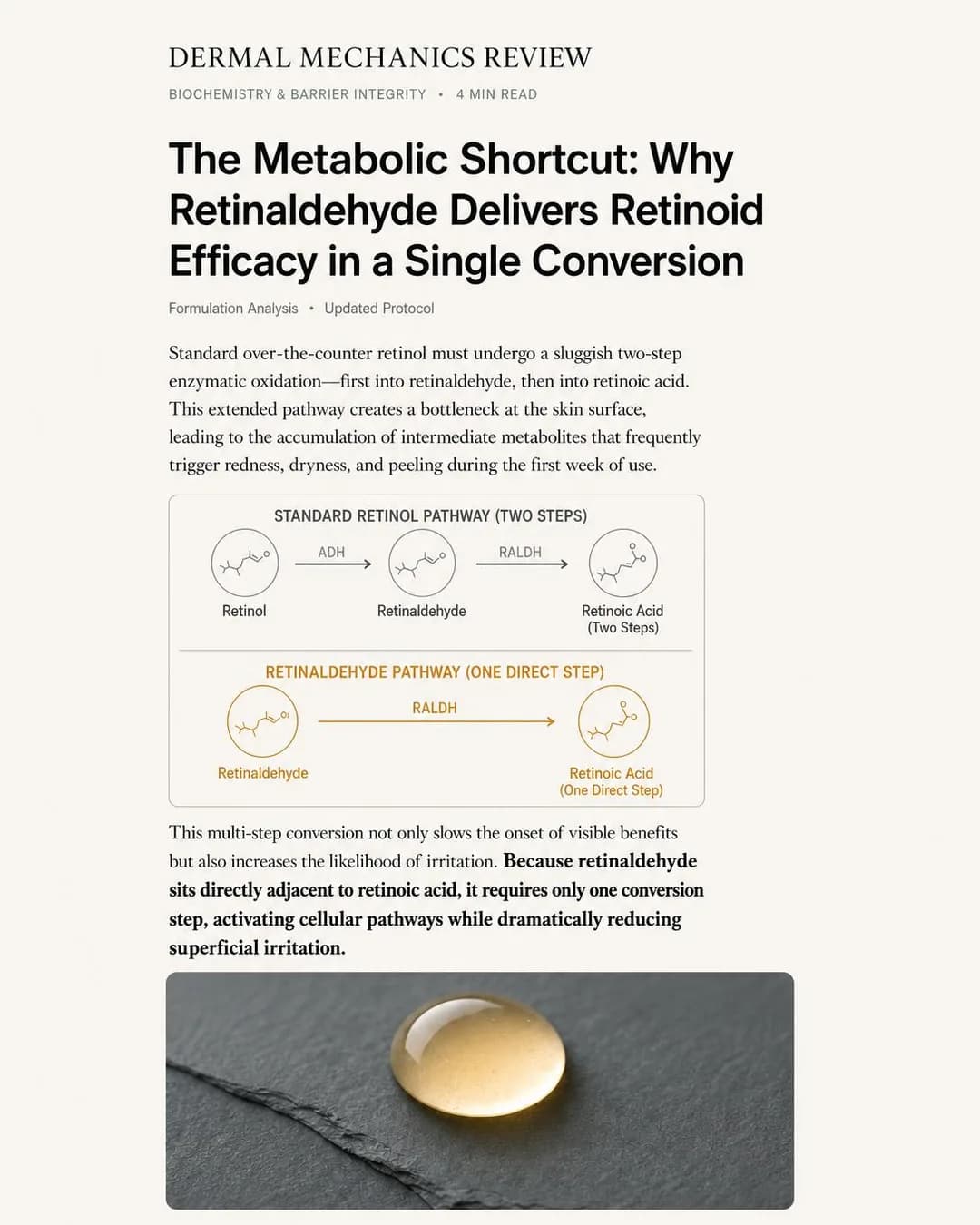 Example adRetinol takes 2 steps. Retinal takes 1.See the brief →
The problem people blame on the wrong product
Traffic- Who it is for.
- People who keep buying a heavier cream for skin that feels tight by midday, and wash with a cleanser that squeaks.
- Angle.
- Problem & Pain — A misdiagnosis sells a change of habit before it sells a product, which is why this is a Traffic ad. Keep the qualifier the brief had. The example's “often” became “almost always” and then nothing, so the ad now tells every reader their wash is the cause, and for some of them it is not. Describe the product (“a cream cleanser that doesn't strip”), never the state of the reader's skin.
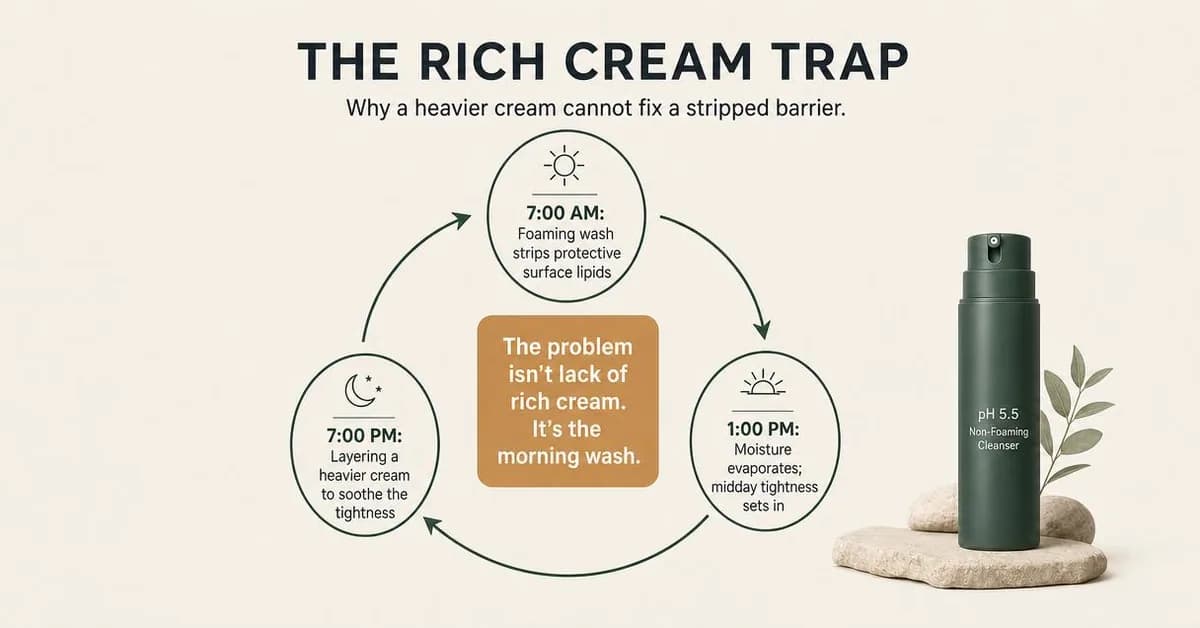 Example adYour skin isn’t dry. It’s stripped.See the brief →
A product for a situation: thirty washes a shift
Traffic- Who it is for.
- Nurses, cooks and cleaners who wash their hands dozens of times a shift and skip hand cream at work because it greases everything they touch.
- Angle.
- Identity & Emotion — An identity works in an ad when it is a situation rather than a body, and a job is a situation. What sells the tube is the cosmetic fact in the brief: it absorbs in under a minute. The example narrowed three jobs to one, put a symptom in the picture (“knuckles split … by 2 PM”) and printed “HAND REPAIR” on the tube. Protecting cracked skin is a claim the FDA's skin-protectant rule gives to drugs. Give each job its own ad and lead with the minute.
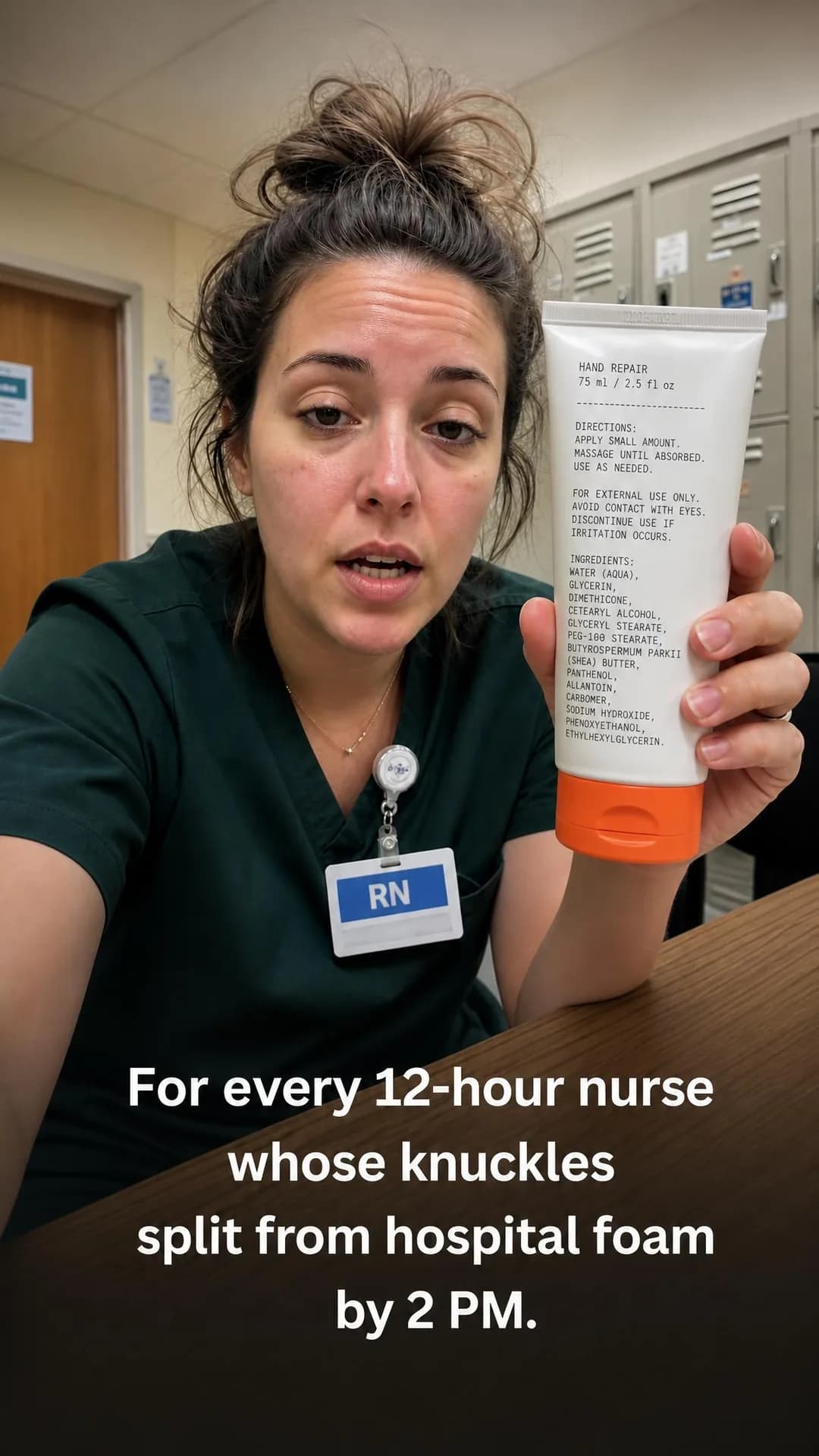 Example adBuilt for 12-Hour Hospital ShiftsSee the brief →
A routine set, priced below its parts and sized to a date
Sales- Who it is for.
- People with a shelf of half-finished bottles who could not say which ones are doing anything.
- Angle.
- Benefit & Outcome — Simplification is believable because it sells fewer products, and the example's arithmetic holds because the brief did it: $82 of products for $74. The set's size is the other argument. Sized to last about two months, it also tells you when the reorder is due, which the second-jar rows need. One of the three is a sunscreen, so target the set's ads 18 and over as the safe default, and keep its SPF claim to what the FDA's sunscreen rules allow.
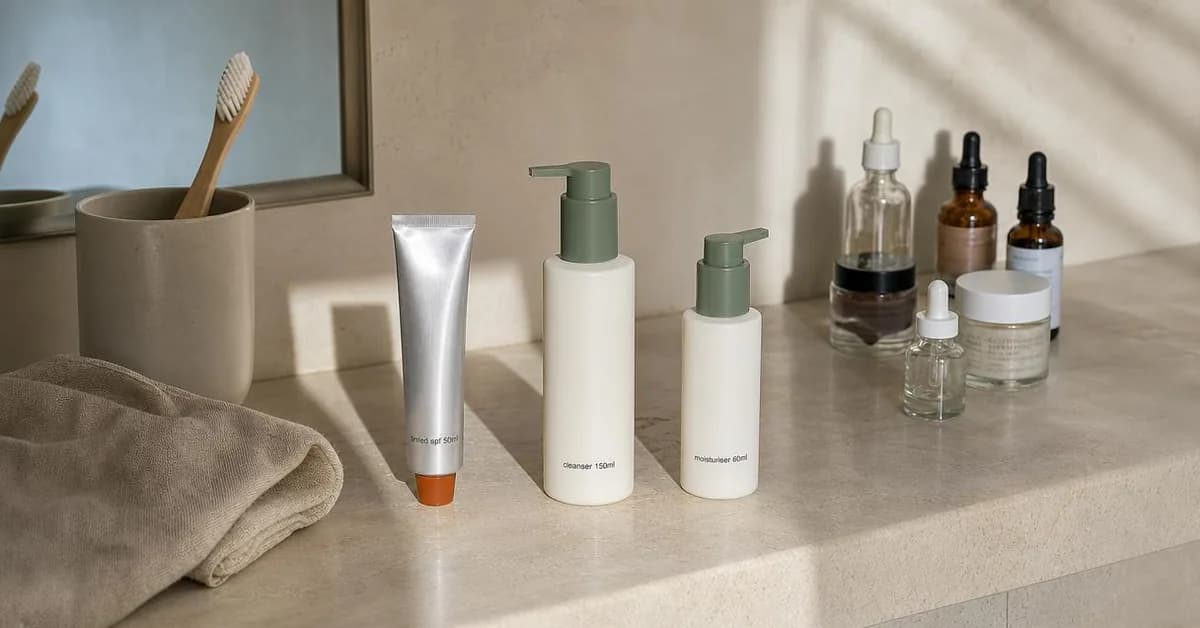 Example adTrade 11 bottles for 3 essentials.See the brief →
The price per night, when the bottle lasts
Sales- Who it is for.
- People who decided serums are not worth it because theirs ran out in five weeks.
- Angle.
- Offer & Economics — Divide the price by the nights on paper and put the answer in the brief. The example's 42 cents is right because the brief did the division, and its “skin saturation happens at precisely 0.33 ml” is a division presented as a fact about skin. The nights are also the reorder date: a bottle sold as ninety nights is a customer due back around day eighty. One who comes back at week three is using several pumps a night, and needs the dose on the product page more than a second bottle.
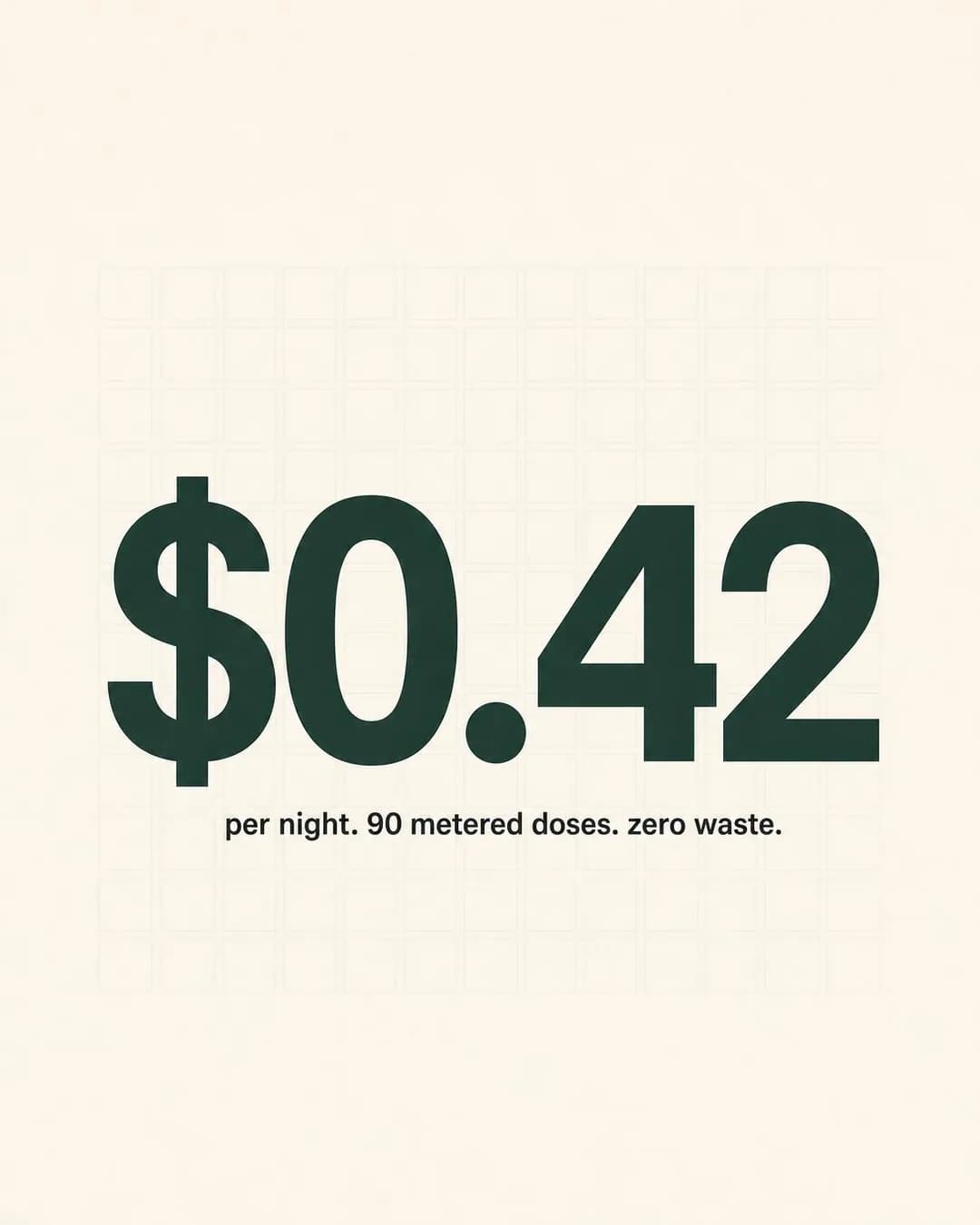 Example ad90 Nights. $0.42 Per Dose.See the brief →
A shade range, shown on real skin under flash
Sales- Who it is for.
- People who stopped wearing a mineral sunscreen or a foundation after seeing it turn grey or mismatched in flash photos.
- Angle.
- Comparison & Positioning — The objection is a belief formed by experience, so the proof is the photograph that formed it: the same face under the same flash, the old product on one side and your shade on the other, for every shade you sell. The example shows only the after, and only one of its three shades. Put skin tone in the product (“formulated for deep skin tones”), never in a sentence about the reader. A foundation is a cosmetic and can run from 13; a sunscreen is a drug in the United States, so target 18 and over as the safe default, and never call it waterproof.
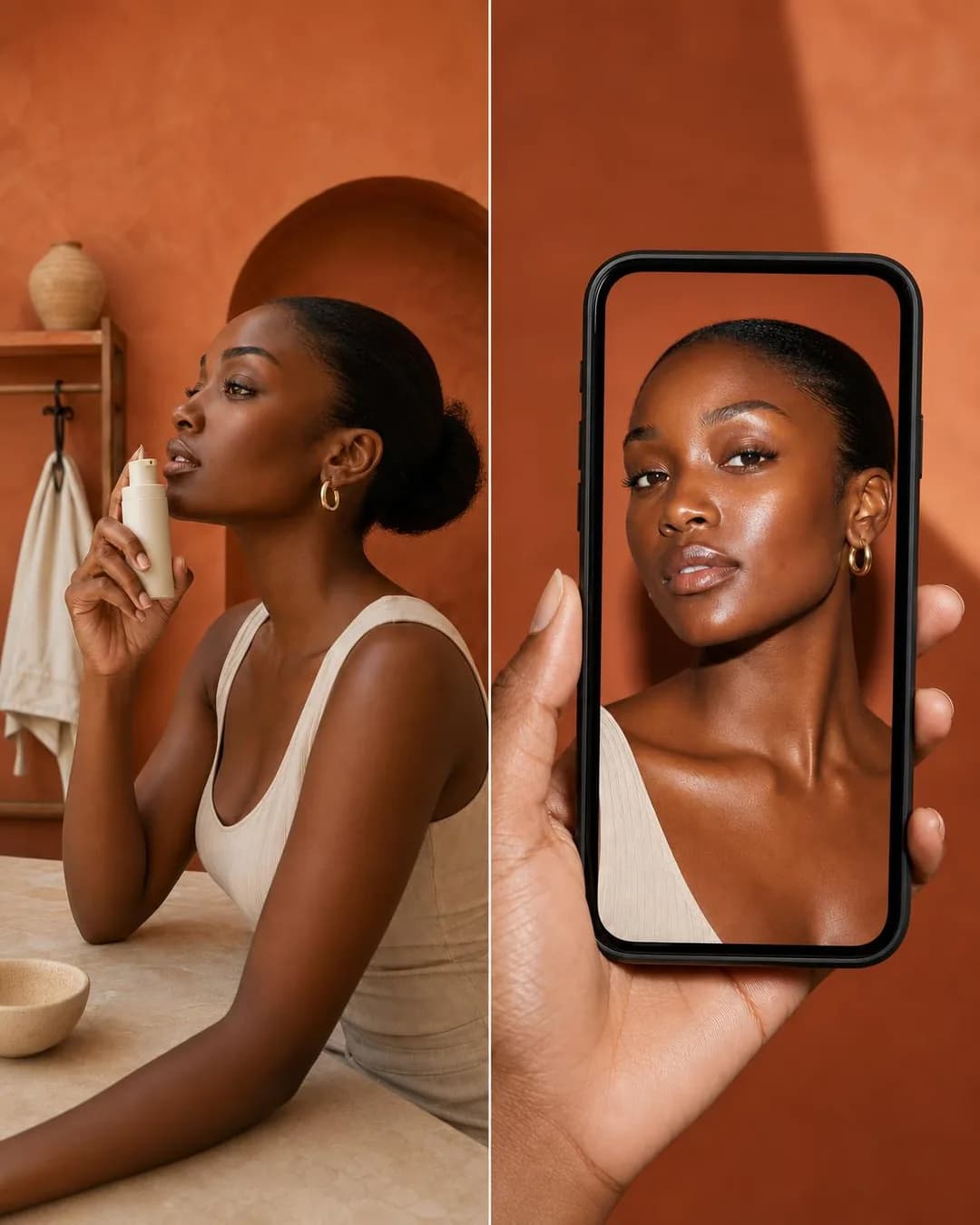 Example adZero White Cast. Zero Flashback.See the brief →
A before-and-after of real customers, shot to a protocol
Sales- Who it is for.
- People with a seasonal problem, winter dryness or rough patches, who assume nothing fixes it.
- Angle.
- Proof & Trust — This is the trade's native proof, and the example's brief is the protocol to copy: the same window, the same light, the same camera, no makeup or retouching, day 1 and day 28. Its face is invented. Photograph several customers to the protocol, with written consent, and show what the group got, not only the best result, because the FTC says a customer's result will likely be read as what buyers generally get. Target 18 and over, turn off creative enhancements, and if the ad names the 28 days, say what they were measured on. Winter skin needs a winter day 1, so this winter's shoot is next winter's ad.
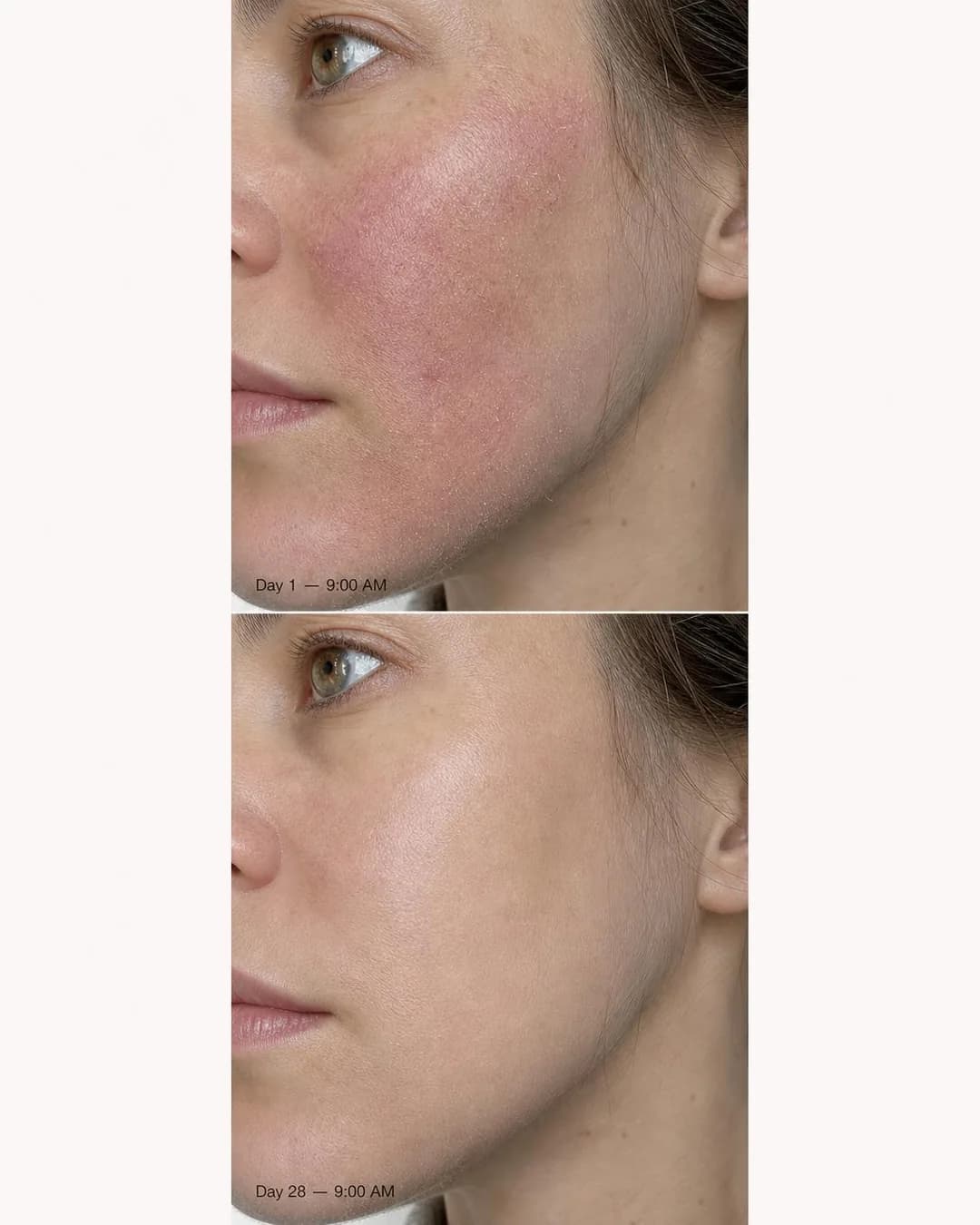 Example adDay 1 vs Day 28: Barrier RebuiltSee the brief →
A creator's post, run as a partnership ad
Sales- Who it is for.
- Readers who trust a face more than a brand, above all a face with skin like theirs.
- Angle.
- Proof & Trust — The one proof a generator cannot make, the UGC this trade runs on, and the format Facebook sells for it. Choose the creator by skin and age: with Advantage+ audience on, only a minimum age holds, so on our reasoning the face is the age signal you still control. Read the caption before they publish, since the code you boost comes from the live post, and agree the terms in the creative section before they share it. Later, look at whether the customers credited to them come back. No ad in the current batch runs it, and no generated ad can.
No example ad for this offer on the examples page yet.
A refund that does not need the bottle back
Sales- Who it is for.
- People with a drawer of serums they stopped using after three nights, who assume an open bottle is money gone.
- Angle.
- Objection & Risk Reversal — Nobody knows how a product suits their skin until they have used it for weeks, and a refund lets them find out on their own skin. State the terms in the ad. The FTC's guides allow “money back guarantee” only if the full price comes back on request, with any conditions disclosed; the brief's refund had one condition, 60 days, and a headline added another (“If it stings or pills, it's on us”). Show the product and its price, which the example left out. With no return, every refund costs the full price and the bottle, so put your refund rate into the first order's margin.
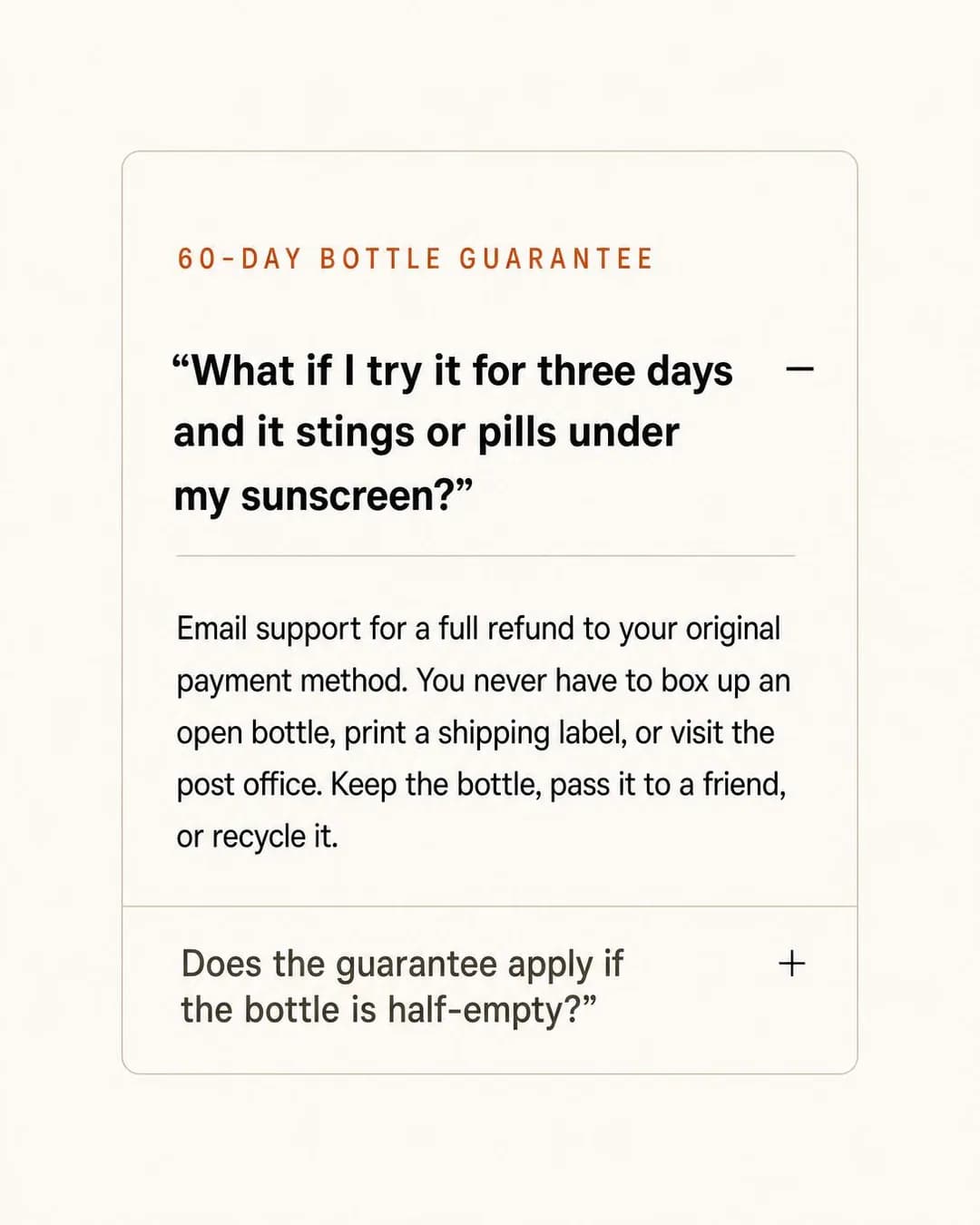 Example adDon’t return it. Just get refunded.See the brief →
Gift sets, for the person buying for someone else
Sales- Who it is for.
- People buying for a partner, a parent or a friend in November and December, who cannot know the recipient's skin or shade.
- Angle.
- Scarcity, FOMO & Timing — The buyer is not the user, so the set has to remove the guess: no shade to choose, fragrance-free, a gift receipt, an exchange. The deadline is the last order date for delivery before the holiday, which is true and dated. Email your customers about the sets first, then leave them in the ad: someone who knows the product may well give it, and the email reaches only those who open it. The recipient's reorder is the prize, and you will only see it if a card in the box asks for their details. No ad in the current batch runs it.
No example ad for this offer on the examples page yet.
A seasonal batch with a real cap
Leads- Who it is for.
- Last season's buyers, who ran out before the season did, and new customers who have heard it sells out.
- Angle.
- Scarcity, FOMO & Timing — One batch a year makes the scarcity true. Last season's buyers are the people the brief describes; email the ones who agreed to hear from you, and exclude only them from the ad, whose job is new names. Do the sum before you spend: tins left for newcomers = 3,000 − what last season's buyers take, and names needed = that ÷ (the share of last year's sign-ups who ordered × tins per order). Last year's batch sold out, so treat the answer as a ceiling; names well beyond it will mostly hear it has sold out. The example's copy protects hands from the cold, which is the FDA's skin-protectant claim; “softens rough winter hands” is the cosmetic one.
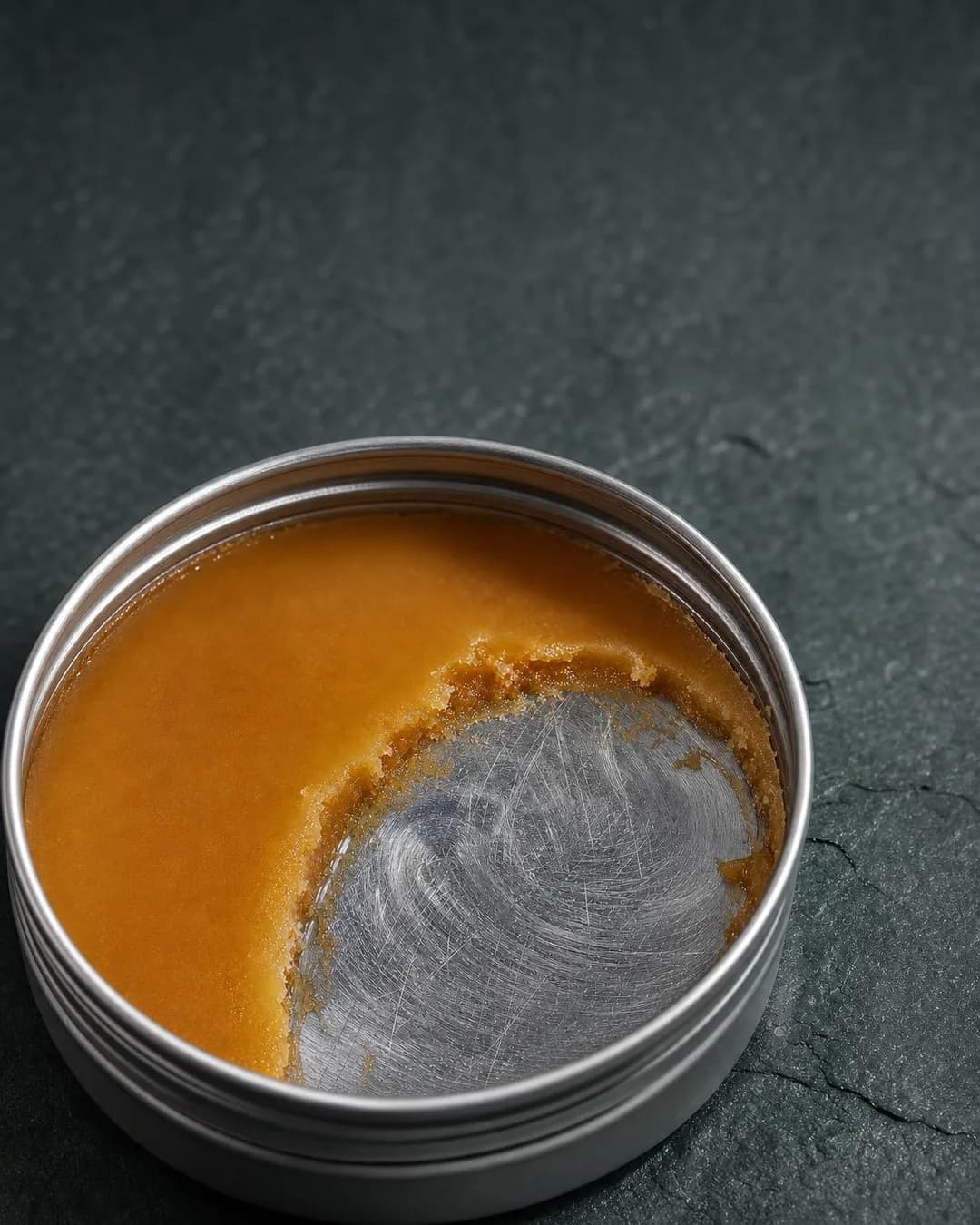 Example ad3,000 Tins Poured. Once a Year.See the brief →
The second jar, to the customer whose first is running out
Sales- Who it is for.
- People who bought 45 to 70 days ago, on a product that lasts about two months.
- Angle.
- Offer & Economics — Start with the free version: an email, sent when the jar gets low, to every customer who agreed to hear from you. The ad is for everyone the email does not move. Leave emailed customers in, and let the holdout in the budget section measure what the ad adds on top of the email. It can be plain, because the reader has seen what the jar does on their own skin: the product, the price, how long it lasts, a link straight to it, and a two-jar price for the customer who has decided. No ad in the current batch runs it.
No example ad for this offer on the examples page yet.
Subscribe and save, on the customer's own schedule
Sales- Who it is for.
- Customers who have reordered once and would rather not think about it again.
- Angle.
- Offer & Economics — A subscription turns the reorder into a date. Wait for the first reorder: until then you do not know how fast this customer uses the jar, and the gap between their first two orders is the best starting interval. Failing that, start near the product's life (twelve weeks ships a little before a ninety-night bottle runs out), not a round month. The audience is a customer list of people who have ordered the same product twice, in its own ad set, with the holdout half excluded. Show the price and how often it is charged in the ad; the destination section has the checkout's rules. No ad in the current batch runs it.
No example ad for this offer on the examples page yet.
A letter to customers when something went wrong
Awareness- Who it is for.
- Customers who bought from a batch that failed, deciding whether to buy again.
- Angle.
- Story & Founder POV — An apology to your own customers, with the fix stated, sells nothing on the day. Run it to a list of the affected orders and hold a random part of the list out, because the failure, the free replacement and your emails all move their reorders too. Keep the numbers as sure as the facts are: the example turned “about one in twelve” into “8.3%”, and a pump the brand stopped using into stock it “recalled”, a word with a regulatory meaning. The replacement restarted everyone's jar, so keep these customers out of the reorder band until it runs out.
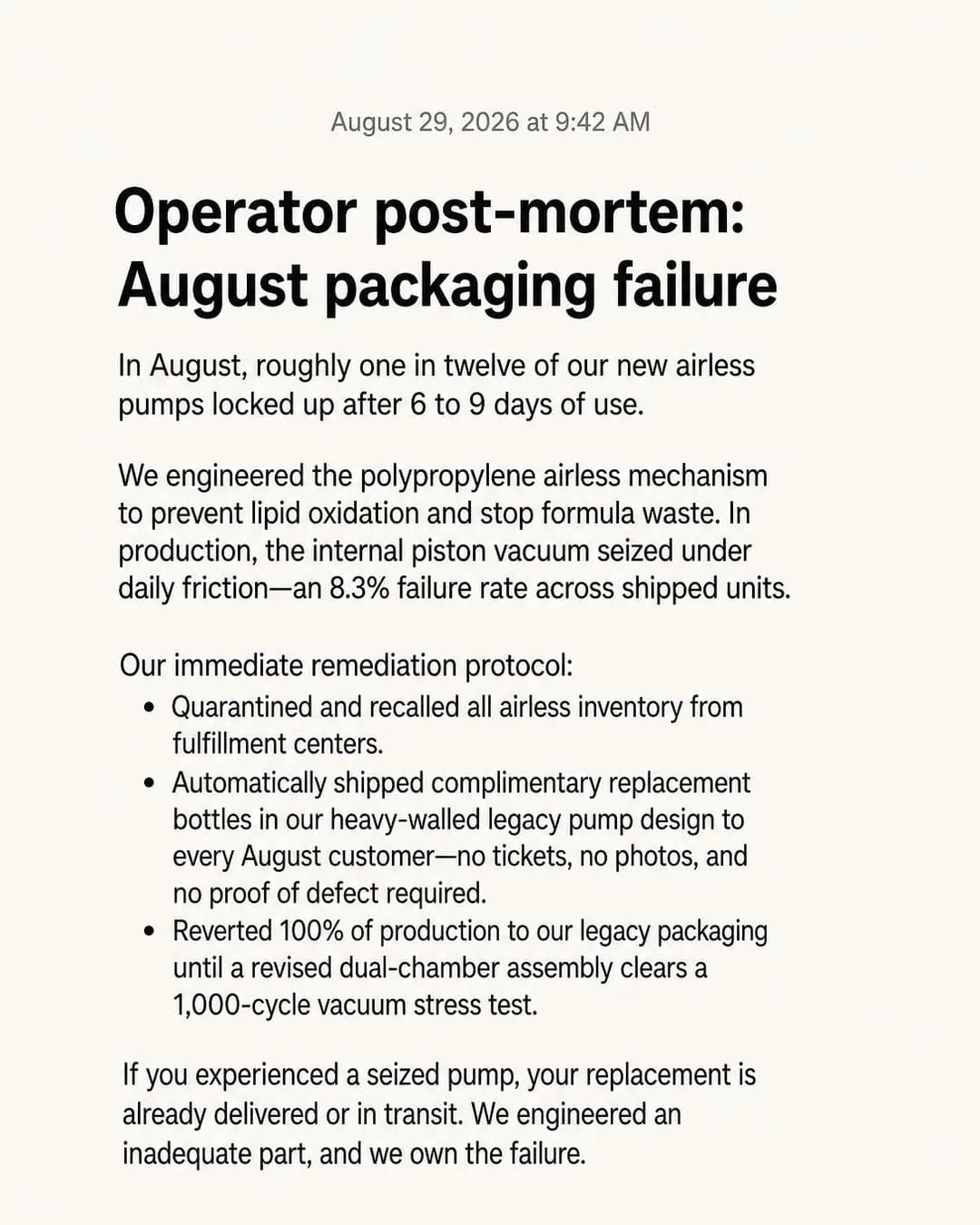 Example adOperator Post-Mortem: August FailureSee the brief →
Browse Facebook ad examples for a skincare or beauty brand →
Targeting: broad for the first jar, retargeting on a calendar for the second
Health is not one of Meta's special ad categories, so none of the special-category limits apply: age, lookalikes, exclusions, custom audiences and interests are all available, though the health-data filters in the objectives section can still restrict the pixel data these audiences are built from. For the first jar, broad targeting is the starting point. A store that sends Meta its purchases teaches the delivery system who buys, and Advantage+ audience treats interests and included audiences as suggestions it may go beyond. What it holds are location, minimum age, language and custom-audience exclusions. Meta's API reference says that since version 23.0 a new ad set either defaults to Advantage+ audience or must set it explicitly; in Ads Manager, check the audience section of every new ad set.
Minimum age moves with the ad, not the brand. Meta's floor is 13, and its age rules exempt creams, cleansers and makeup, so those ads can run from there; a before-and-after runs at 18 and over, and so, as the safe default, does a sunscreen or a set with one in it. An ad set takes the strictest floor any of its ads needs. With Advantage+ audience on, the minimum you set, from 18 to 25, holds and a maximum does not; Meta's reference does not say how far below 18 it delivers when you set no minimum, so if younger buyers matter to you, check the audience section. On our reasoning, the face in the ad is the age signal you still control. Put age in the copy and it points at the reader.
Exclude recent customers. Anyone still using a jar they bought from you should not see a first-order ad, so exclude everyone who bought within your longest product's life plus about ten days (70 days if your products last about two months) from prospecting and retargeting ad sets, and sell them what they have not bought in a customer ad set of their own. Exclusions belong to the ad set, so excluding product by product means one prospecting ad set per product, each needing its own fifty results a week; only a brand with that volume should try it. Custom-audience exclusions are one of the constraints Advantage+ audience will not expand past. Meta used to offer an existing-customer budget cap on Advantage+ sales campaigns; its help centre now says the cap “is no longer available” and describes the same moves by hand: exclude existing customers, or give them a separate ad set with its own spending limit.
The second jar is a calendar, and your pixel keeps it. A website custom audience built on the Purchase event keeps each buyer for as many days as you choose, and one audience can hold an inclusion rule and an exclusion rule, each with its own window. Include everyone who bought in the last 70 days and exclude everyone who bought in the last 45, and for a set sized for about two months the audience holds the customers from shortly before it runs out to shortly after. A customer who reorders on your site drops out, because they now match the exclusion.
Filter those rules by product if your pixel sends a product ID with the Purchase event. For a store with more than one product that is not optional: without it, a serum buyer who adds a hand cream at day 40 is kept out of the band until day 85, weeks after the serum ran out. Sell the two-jar pack under its own product ID, so its buyers never match the single jar's band and get one of their own at twice the life (bought in the last 130 days, not the last 105, for a two-month product). Some customers the pixel cannot time: subscribers, whose renewals may never reach it, customers sent a replacement, and refunded customers. Keep them out of every reorder ad set with an uploaded list, and upload another for buyers older than your windows or from before the pixel.
Then keep each retargeting ad set inside its audience. For Sales, Leads and App promotion, including a custom audience makes it an Advantage+ custom audience suggestion automatically, and Meta says a suggestion can deliver ads “beyond the original selected audience”. A reorder ad shown to strangers is a first-order ad with the wrong copy. Use “Further limit the reach of your ads” on every ad set built on a custom audience, product-page visitors included.
- AgeUse it — it moves with the ad
- 13 and over for creams, cleansers and makeup; 18 and over for a before-and-after, and as the safe default for a sunscreen or a set with one. With Advantage+ audience on, only a minimum from 18 to 25 holds.
- LocationUse it — where you ship
- Where you can deliver, and where your claims were checked. This page covers the FDA's line; other countries draw their own, so read a market's rules before you add it.
- Advantage+ audienceUse it for first orders
- Treats interests and included audiences as suggestions; holds location, minimum age, language and custom-audience exclusions. Check it on every new ad set. Wrong for a retargeting ad set.
- Custom-audience exclusionsUse it
- Everyone who bought within your longest product's life plus about ten days (70 days for two-month products) out of prospecting and retargeting; subscribers, refunded customers and anyone sent a replacement out of every reorder ad. Exclusions hold under Advantage+ audience, and now do the job of the existing-customer budget cap Meta has retired.
- Product-page visitors (retargeting)Use it — the people deciding
- Visitors to your product pages and argument pages in the last 30 days, with recent customers excluded by the same window.
- Purchase-window audiences (replenishment)Use it — the second jar
- Include: bought in the last 70 days. Exclude: bought in the last 45. That holds customers 45 to 70 days after their order, around when a two-month set runs out, and a reorder on your site takes them out. One per product, filtered by product ID; the two-jar pack gets its own ID and a band at twice the life (130 and 105 days).
- Customer listsUse it — what the pixel cannot time
- Subscribers, refunded customers, anyone sent a replacement and buyers older than your windows; the base for the holdout; and, for the subscription ad, people who have ordered the same product twice. Before the first upload, check that your privacy notice covers advertising use: Meta's Custom Audiences terms have you warrant the rights, permissions and lawful basis.
- “Further limit the reach of your ads”Use it on every retargeting ad set
- Including a custom audience in a Sales or Leads ad set makes it a suggestion automatically. This setting keeps delivery inside it.
- LookalikesSometimes — seed from reorders
- A lookalike of everyone who bought once is modelled on people who may never buy twice. If you have enough repeat customers, seed one from them and compare the two.
- Detailed targeting (interests)Rarely
- An interest in skincare describes a very large pool, and under Advantage+ audience it is only a suggestion. Let the Purchase event and the creative do the selecting.
- Special ad categoryNone
- Meta's special ad categories are housing, employment, financial products and services, and social issues, elections or politics. Health is not one; what binds a skincare ad is its content, its age floor and the health-data filters.
Where the click goes: a landing page that says what the ad says
For a product the reader already understands, the product page. It is advertising too: the FDA counts claims “on the product labeling, in advertising, on the Internet”, so the page should describe the product in the same cosmetic words as the ad, give the size and how long it lasts, and carry the full ingredient list as text, which a reader with an allergy checks before buying. Send the Purchase event with its value, and tag the link so your store records which campaign each customer's click came from.
For an ad that has to change a habit, a page that makes the argument: why a foaming wash leaves skin feeling tight, why a hand cream can dry in a minute. Run it as Traffic, optimised for landing page views, and write it under your own name. A page dressed as an article from an independent publication is the format the FTC treats as deceptive when it implies the ad “comes from a party other than the sponsoring advertiser”; the retinal serum's invented journal is the example.
For a reorder, a link that opens the product ready to buy again, or the customer's last order ready to repeat, if your store can build one, with the two-jar price and the subscription beside it.
For a subscription, two rulebooks apply. Meta's Subscription Services standard says subscription ads “must disclose information on pricing and recurrent billing”, and an ad that asks for personal information, an Instant Form for instance, is prohibited if it lacks any one of these: an unchecked opt-in box, clear language on how to cancel, the price and billing interval shown plainly rather than in fine print or behind a link.
Your checkout answers to the Restore Online Shoppers' Confidence Act: the material terms before the billing details, express informed consent before the charge, and a simple way to stop the charges. A box the customer ticks themselves is the plainest way to show consent. Put the interval in the ad as well; “$38 every 12 weeks, skip or cancel in your account” fits in one line.
For a limited batch or a launch, an Instant Form or a sign-up page, then an email on the day. Instant Form leads can be downloaded for up to 90 days from submission, so connect the form to your email tool or download the leads weekly.
For shade matching, a conversation, if someone answers it. Meta lists Messenger among the places a Sales ad can send people; our publisher sends link buttons only, so that ad is built in Ads Manager. “Which shade am I?” is a question a person answers better than a chart. Readers may also ask whether a product is safe for their rosacea or their eczema, so write the answers in advance in cosmetic terms and send anything medical to a doctor: a reply in a chat is written by you.
A partnership ad goes wherever your own ad would. Boosting the creator's post keeps their words and their disclosure, so both have to be right in the post itself. Creating a new ad lets you complete the text and media yourself and leave out any claim you could not make, but their original post still says whatever it said, so ask them to fix that too.
The recommendation: A product page that says what the ad says, in cosmetic words, with the full ingredient list as text and a Purchase event carrying its value. A page under your own name for any ad that must change a habit first. A reorder link that goes straight to the product. For a subscription, the price and interval in the ad, and a checkout that shows the terms and asks for consent before it takes a card. An Instant Form or sign-up page only for a capped batch or a launch list. A chat only if someone who knows the cosmetic-or-drug line answers it.
Creative direction: three authors, one rule
The rule from the examples page carries every ad here: make the product the subject, and describe how skin looks or feels. Meta's personal-attributes rule has nothing to object to in a sentence that says nothing about the reader, though its Health and Wellness standard still bars timed promises without qualifiers. The FDA reads a product that makes lines “less noticeable, simply by moisturizing” as a cosmetic, and one that claims to “increase the skin's production of collagen” as a drug. A skincare account has three authors, and the rule binds all of them: you, the tool that drafts your ads, and the creators whose faces and words you borrow.
In our batch the tool drifted one way. Eight of the ten briefs described a cosmetic in cosmetic terms. Four of those ads came back with repair, rebuilding, renewal or cold protection in the copy, and a fifth named its product “Barrier Repair Emulsion”. The qualifiers went too: “often” became nothing, and “about one in twelve” became 8.3%. Read generated copy for exactly those words and put the hedges back. Read the pictures as well: the hand-cream tube came back with an ingredient list nobody wrote, and both faces whose skin tone no brief described came back light.
Precision is a claim of its own. A figure, “clinically proven” or “clinical” needs evidence behind it: in 2014 the FTC's order against L'Oréal, over “clinically proven” gene claims for two anti-aging lines, required “competent and reliable scientific evidence” for claims like them. The hand cream's copy called itself “Clinical Barrier Repair for Nurses” on a brief that mentioned no test at all.
A borrowed face has rules of its own. When an ad represents that the person in it uses the product, the FTC's endorsement guides require them to have really used it, and the ad to stop when you no longer have good reason to believe they still do. The guides say a customer's result will likely be read as what buyers generally get; the FTC found that a note like “Results not typical” does not change that, so either the result is typical or the ad states what typical is. One of the FTC's examples is an acne treatment whose real testimonials were shown beside stock photos of people with near-perfect skin, which it says misrepresents the endorsers' improvement. A generated face is the same substitution with nobody behind it.
Borrowed words carry the strictest rule: under the FTC's endorsement guides a creator can make the claims about the product that you could make, and no more. Brief them the way you would brief a copywriter: what the product does in cosmetic words, what they may say about their own skin and how long they used it, and what is off limits (cures, heals, treats, repairs, collagen, cells). They can describe their skin as dry, oily or sensitive; they should not name a diagnosis, or say what the product did to one.
Read the caption before they publish, not before you run it. The code you boost is generated from the live post, and a paid or gifted creator's post is an endorsement from the day it goes up. The FTC also expects a brand to make “a reasonable effort to know what participants in your network are saying”, so keep reading their posts afterwards.
Agree the terms before they share the code. How long you may run the post: turning a code off stops new ads, but “Any active ads using the code will continue running”, so the end date is yours to keep, and the ad stops sooner if they stop using the product. Who may use the code: two partners can at a time, so name yourself and your agency. How long they will use the product before they post, at least as long as their words will imply. And the original file, so a new ad can be cropped to each placement.
Then disclose it in your own words. Meta requires creators to tag you with its branded content tool, and a partnership ad can show the partner's account in its header, but the FTC's advice is not to rely on a platform's tool: “it's always best to add your own disclosure even if a platform offers its own disclosure tool.” A free product is a material connection too, so a creator you only sent a jar to still has one to disclose. If you boost their post as it stands, the disclosure has to be in their caption; if you create a new ad, start its text with “Ad” or “Sponsored”.
- Make the product the subject, and describe how skin looks or feels. Never tell the reader what state their skin is in.
- Read every draft for repair, rebuild, renewal, recovery, treatment and protection from the cold, and replace each with softer, smoother or less rough.
- Put the qualifiers back: often, about, for most people. In our batch the model took them out.
- Give every figure, and every use of “clinical”, evidence you could show.
- Check every rendered label, ingredient list, shade and face against your real product and your real customers. In our batch the ingredient list was invented and the faces nobody described came back light.
- Show only real faces: customers or creators who have used the product for as long as their words imply, and still do, with written consent.
- Show what customers generally get, not only the best result, and say what any stated timeframe was measured on.
- Run a before-and-after at 18 and over, and a sunscreen too as the safe default, and turn off creative enhancements first.
- Brief creators like copywriters: what the product does in cosmetic words, what they may say about their own skin, and what is off limits (cures, heals, treats, repairs, collagen, cells).
- Read the caption before they publish. The code you boost comes from the live post.
- Agree the terms before they share the code: an end date, who may use the code (two partners at a time), how long they will use the product before they post, and the original file.
- Keep a creator's first person about themselves: their age, their skin type, their routine. Cut any diagnosis, and anything the product did to one.
- Disclose in your own words at the start of the text (“Ad” or “Sponsored”), whatever the platform shows.
- Stop the ad on the end date, or sooner if they stop using the product. Turning the code off leaves running ads running.
- Render 4:5 at 1440 × 1800 for the feed, and aim for a 27-character headline and primary text of 50 to 150 characters.
Campaign structure: four lines, from the first jar to the second
The two purchases set the structure: a line that finds new customers, a line for people who looked and did not buy, a line that sells the next jar, and a small line for customers. They run side by side, because at any moment you have new readers, people deciding, and customers whose jar is running out. Each is judged on its own clock, shown on its card and worked through in the budget section.
Prospecting: the first jar
50 × your cost per purchase, a week, per Sales ad setAudience. Everyone you can ship to, broad, with Advantage+ audience on, the minimum age set by the strictest ad in the ad set, and recent customers excluded (everyone who bought within your longest product's life plus about ten days).
Running. Sales on the hero product, the routine set, the price per night, the shade range and the refund; creators' posts as partnership ads; Traffic for the habit-change ads; Leads for a seasonal batch, with the customers you can email excluded. Gift sets in November and December, in their own ad set with customers left in.
Judged on. Ads Manager's cost per purchase within days; your store's cost per first order, and whether those customers reorder once their jar runs out. Alternating spend off and on over equal periods comes closest to cause. Gift sets on the first order, plus any recipient reorders a card in the box captures.
Retargeting: people who looked and did not buy
Small, because the audience isAudience. Visitors to your product and argument pages in the last 30 days, with recent customers excluded by the same window and “Further limit the reach of your ads” on.
Running. The refund, real customers' before-and-afters, the shade photographs, and the answer to the question your customers ask most often.
Judged on. First orders in your store, net of refunds, once the refund window has closed.
Repeat purchases: the second jar
Sized by the band, about 25 days of buyers; watch frequencyAudience. A purchase-window audience per product (bought 45 to 70 days ago, for a two-month set), kept inside its limits, with subscribers, refunded customers, anyone sent a replacement and the held-out half of your customers excluded.
Running. The plain reorder ad and the two-jar price; the subscription, in its own ad set, to customers who have ordered the same product twice.
Judged on. Margin per customer against the held-out half, over two jars' life. Never the purchases Ads Manager reports.
Customers
Small; the list sets itAudience. Your customer list, with “Further limit the reach of your ads” on and anyone inside a reorder band excluded.
Running. The products each customer has not bought yet, argued the way their first-order ads are; and news: an apology, a reformulation, a discontinued shade, a new shade for people who bought the old one.
Judged on. Against a random part of the list held out from the ad.
Budget and measurement: what a first jar is worth when the second one pays
Start with what a new customer is worth, because it sets what you can pay for one. Roughly:
Value of a new customer = margin on the first order + (share of first-time buyers who reorder × margin on a reorder × reorders per returning customer)
Take each figure from your own store, from customers old enough to have had the chance to reorder, over a period you are willing to wait for, a year say. Use margins after product cost, postage, payment fees, discounts and refunds; take the reorder ads' own spend off the reorder margin; and work out the reorder share without gift orders, whose buyers are not the users.
That value is the most you can pay for a first order and break even over the year, and your target cost per first order sits below it. The cost per first order that Ads Manager or your link tags show you is attribution, not effect: some of those customers would have found you anyway. One way to approach cause for the first-jar line is to alternate spend off and on over several equal periods, change nothing else, and compare the new customers your store records in each.
Then the volume. Meta says an ad set usually leaves its learning phase after about 50 results in a week, so plan on roughly 50 × your cost per purchase, as Meta counts it, as the weekly spend for one Sales ad set; before you have run anything, use your target. If your budget cannot feed even one, the ad set stays in learning, which is survivable if you stop editing it. Learning is counted from the ad set's last significant edit, so add ads and change budgets on a schedule, and judge it on several weeks of store orders.
Read the first-jar line on two clocks. Ads Manager gives you a cost per purchase within days. Your store gives you the cost per first order and, a product life later, the reorders: tag every ad link with UTM parameters so your store's analytics can record which campaign each first-time customer's click came from, and follow those customers past the date their jar would run out. A campaign whose customers never come back may be worth pausing, whatever its first week said. Gift campaigns are judged on the first order, plus any recipient reorders a card in the box captures.
Where Meta offers audience segments, which split a Sales campaign's results into new audiences, engaged audiences and existing customers once you define them in your ad account settings, define existing customers with the same window as your exclusions. A prospecting campaign should then show an existing-customer share close to zero; anything more is your exclusions leaking. The gift-set ad set, which leaves customers in on purpose, is the exception.
Net out refunds. A 60-day refund arrives long after the one- or seven-day window in which Ads Manager credited the purchase, so the refund ad's cost per purchase there is its best-looking number, not its real one. Count refunds in your store's figures.
A creator costs a fee per post plus the media behind it. You do not choose how much each ad in an ad set is shown, so a creator's ad beside your own is a comparison of what Meta chose to show, not a fair test; an ad it barely showed has not lost, it has not been tried. Rank creators on the first orders credited to their ads and on how often those customers return: that is a lead, not a verdict. To learn what a creator adds, give them their own ad set and alternate it on and off.
The second jar is measured differently, because the credit is the problem. Some customers in a reorder band were going to reorder anyway, and any who click the ad and reorder within the attribution window are counted, whether or not the ad changed anything. So build the comparison yourself, in the four holdout steps in the list below: split your customers by a fixed rule, hold one half out of the reorder ads, compare margin per customer over two jars' life, and check the gap against chance.
Count margin, not revenue, and count long enough. An ad that changes nobody's mind but hands the two-jar price to people who would have paid full price looks like a win in Ads Manager and, over a short window, in revenue too; over two jars' life, in margin, it shows up as the loss it is. If some held-out customers still see the ad, that shrinks the difference rather than faking one. At a small store, expect to read several months together.
Meta offers a model for the same question. Its incremental attribution setting “optimizes ad delivery for incremental conversions”, using “machine learning models that predict whether a conversion is caused by an ad”. A prediction is not a comparison, so keep your holdout even if you use it.
- Test the offer and the proof, not the headline: a set against a single product, a refund against a sample, a creator against your own photograph.
- Read a first-jar test in a week if the ad set left learning, otherwise over several weeks, and again after the product's life on reorders.
- To learn what a creator adds, run them in their own ad set in alternating on and off periods, and watch new customers in your store.
- Holdout, step 1: split your customers into two halves by a rule you fix once, such as odd or even customer number, so every new customer lands in a half on the day they buy.
- Step 2: upload the held-out half as an exclusion on every reorder and subscription ad set, re-upload it weekly, and keep emailing both halves the same.
- Step 3: compare margin per customer, after discounts and refunds and with the reorder ads' spend taken off the ad half, over the same number of days from each customer's order, long enough to cover two jars' life.
- Step 4: split the customers you had before the reorder ads started several ways by fixed rules, with the same numbers and window, and trust the ads' gap only if it is larger than nearly all of theirs.
- Set each reorder band from your own customers' reorder dates, and move it when they come back earlier or later than the jar's nominal life.
- Before blaming the creative on a Sales ad set, check whether it ever left learning, and when it was last edited.
Seven of these ads, in full
Every ad below was generated by best-in-slot for a skincare or beauty brand that does not exist, with its audience, angle and objective pinned before the run — and published exactly as it came back. They are seven of the Facebook examples for a skincare or beauty brand; the rest, with the full brief and the alternate headlines behind each one, are on that page.
Benefit & Outcome · 1.91:1 · Sales
Trade 11 bottles for 3 essentials.
Written for: People with a shelf of half-finished bottles.
The full brief and why it works →
Offer & Economics · 4:5 · Sales
90 Nights. $0.42 Per Dose.
Written for: People who think a serum runs out in a month.
The full brief and why it works →
Objection & Risk Reversal · 4:5 · Sales
Don’t return it. Just get refunded.
Written for: People who own serums they used twice.
The full brief and why it works →
Proof & Trust · 4:5 · Sales
Day 1 vs Day 28: Barrier Rebuilt
Written for: People whose cheeks go rough every January.
The full brief and why it works →
Comparison & Positioning · 4:5 · Sales
Zero White Cast. Zero Flashback.
Written for: People who stopped wearing mineral sunscreen after seeing photos.
The full brief and why it works →
Scarcity, FOMO & Timing · 4:5 · Leads
3,000 Tins Poured. Once a Year.
Written for: People who ran out of it last February.
The full brief and why it works →
Story & Founder POV · 4:5 · Awareness
Operator Post-Mortem: August Failure
Written for: Customers who ordered in August.
The full brief and why it works →
Browse Facebook ad examples for a skincare or beauty brand →
Mistakes specific to this trade
The first three are about proof: a face that does not exist, a creator's words run unread, and a result nobody has had time to see. The next three are about whom the account sells to. The three after that are words that go out unread, in a reply, a checkout and a label. The last decides what the account turns into.
Running a before-and-after of someone who does not exist
A generated face beside a caption that says “unedited” is the ad this page's introduction described. An ad that shows someone using a product has to show someone who did. Photograph real customers, with written consent, to the protocol the brief describes.
Running a creator's claim you could not make yourself
In your ad, their sentence is yours: an advertiser without substantiation is liable whatever becomes of the creator, and the FDA reads the same sentence as a drug claim. Read the caption before they publish, and create a new ad with your own text if the post says more than you could.
Paying for a result the creator has not had time to see
A 28-day claim needs 28 days of use. The FTC's guidance is that you cannot talk about your experience with a product you have not tried, or suggest you use it regularly after one go. Send the product early, and agree how long they will use it before they post.
Showing a first-order ad to people who just bought
Exclude everyone who bought within your longest product's life plus about ten days from prospecting and retargeting, and sell them what they have not bought in an ad set of their own. Meta's existing-customer budget cap is gone, so this is a setting you make on every such ad set.
Letting a reorder ad set find strangers
Include a customer audience in a Sales ad set and Meta treats it as a suggestion it may deliver beyond. The strangers it finds see an ad written for someone whose jar is running out. Use “Further limit the reach of your ads”.
Paying the reorder ad for reorders that were coming anyway
Customers in the band who click and reorder within the attribution window are counted, including the ones your email reminded and the ones who would have reordered anyway. Pay for the difference between the held-out half and the rest, measured the way the budget section describes.
Answering a condition question in the comments
“Will this help my rosacea?” under a moisturiser ad invites a yes that makes a drug claim, written by you, in public. The FDA has quoted a skincare company's own Instagram posts back to it, the oldest two years old, and a reply is your writing as much as a post is. Answer in cosmetic terms, and send medical questions to a doctor.
Letting a generated label stand
The tool draws packaging with words on it. In the batch, a hand-cream tube came back reading “HAND REPAIR” with an ingredient list of thirteen names, eleven of which nobody chose. A reader with an allergy trusts that list. Match every label in a render to your real one before the ad runs.
Judging the account on its first week
A campaign whose customers never come back can look as cheap as one whose customers do, or cheaper, and Ads Manager cannot tell them apart: it counts a purchase within one or seven days of a click, and the second jar comes two or three months later. Switch campaigns off on that comparison alone and you may cut the one whose customers return. Read every campaign again when its customers' jars run out.
Questions
- How do I run Facebook ads for a skincare brand?
- Run two kinds of ad. Sales ads win the first order with proof a reader can check: real customers' before-and-afters, a creator's post run as a partnership ad, a refund that does not need the bottle back. Retargeting ads reach past customers when their product runs out, from a website custom audience of recent buyers kept inside its limits. In both, make the product the subject and describe how skin looks or feels, because Meta reads what an ad says about the reader and, in the United States, the FDA reads what it says about the skin. Then judge the account on whether customers come back, not only on its first week.
- Are Facebook ads worth it for a skincare brand?
- They are if a new customer is worth more than you pay to find one, and your own store can tell you. Value of a new customer = the first order's margin + (the share who reorder × the margin on a reorder × the reorders a returning customer makes). If your cost per first order sits below that, the ads can pay over time; if it sits below the first order's margin alone, they pay on the first jar. Both figures are attribution until you test them, by alternating spend off and on over equal periods for new customers and by holding half your customers out of the reorder ads. This page gives no benchmark figures, because yours are the only ones that apply.
- Can skincare brands use influencers in Facebook ads?
- Yes, as partnership ads, Meta's format for influencer and creator ads, which it used to call branded content ads. The creator shares a partnership ad code from one of their published posts; in Ads Manager you turn on the partnership ad toggle at the ad level, paste the code and choose which accounts appear in the header. The ad runs in Facebook Feed, Reels, Stories and Marketplace, under any of the six objectives. You can boost their post as it stands or create a new ad and write the text yourself. Either way, what the creator says in your ad is treated as your claim, so read the caption before they publish.
- What can an influencer say in a skincare ad?
- The claims about the product that you could make yourself, and no more. The FTC's endorsement guides say an endorsement may not convey any claim that would be deceptive if the advertiser made it directly, and their own example is an influencer who wrote “This lotion cures eczema”, for which the advertiser without substantiation is liable. In the United States, the FDA reads the same sentence as a drug claim. A creator may describe their own skin type, age and routine, and how the product looks and feels; they must have used it for as long as they imply, and they should not say it cures, heals, treats or repairs anything.
- Do skincare influencer ads on Facebook need their own disclosure?
- Yes, on the FTC's advice. Its guidance says the responsibility for disclosure rests with the influencer and the brand, not the platform, and that it is always best to add your own disclosure even when a platform offers a tool; on our reading, that includes the partner's account shown in a partnership ad's header. A free product is a material connection too. If you boost the creator's post, the disclosure has to be in their caption; if you create a new ad, start the text with “Ad” or “Sponsored”.
- How do I retarget skincare customers when their product runs out?
- Send your reorder email first, since it is free. Then build a website custom audience on your Purchase event that includes everyone who bought within the product's life plus about ten days and excludes everyone who bought too recently for the jar to be low: for a two-month set, bought in the last 70 days but not the last 45. Filter it by product if your pixel sends a product ID, keep subscribers, refunded customers and anyone sent a replacement out, and in the Sales ad set use “Further limit the reach of your ads”, because Meta otherwise treats an included custom audience as a suggestion. Then hold half your customers out and compare margin per customer over two jars' life, since some would have reordered anyway.
- How much should a skincare or beauty brand spend on Facebook ads?
- Work it out from your own store. A new customer is worth roughly the first order's margin plus the share who reorder × the margin on a reorder × the reorders they make over a period you are willing to wait for; that is the most you can pay for a first order. Meta says an ad set usually leaves its learning phase after about 50 results in a week, so 50 × your cost per purchase is roughly the weekly spend for one Sales ad set. Run only as many as your budget covers, and if it cannot cover one, stop editing the one you have and judge it over several weeks.
- Can I advertise a skincare subscription on Facebook?
- Yes, with the terms in plain view. Meta's Subscription Services standard says subscription ads must disclose pricing and recurrent billing, and an ad that asks for personal information is prohibited if it lacks any one of an unchecked opt-in box, clear language on how to cancel, or the price and interval shown clearly. In the United States the Restore Online Shoppers' Confidence Act adds that your checkout shows the material terms before the billing details, gets express informed consent before the charge, and offers a simple way to stop the charges. Offer it to customers who have already reordered once, at an interval matched to how fast they use the product.
Sources
Every platform claim on this page was read against these on . Meta’s policies move; if one of these disagrees with this page, it is right and we are stale.
- Meta Business Help Centre — about partnership ads: “Partnership ads allow advertisers to run ads with partners: creators, brands and other businesses”; the partner and/or advertiser accounts are featured in the ad's header. Read 19 September 2026
- Meta Business Help Centre — supported objectives and placements for partnership ads: Facebook Feed, Stories, Reels and Marketplace; all six objectives, Sales including Website and Messaging apps; Marketplace and Stories deliver with both identities in the header. Read 19 September 2026
- Meta Business Help Centre — partnership ad codes: generated by the partner from published content (on Facebook, from the three-dot menu); up to 2 partners per code; turning a code off stops new ads, and “Any active ads using the code will continue running”. Read 19 September 2026
- Meta Business Help Centre — create a partnership ad: the partnership ad toggle at the ad level; paste the ad code, post ID or post URL; both identities, the first only, or dynamic identity; boost an existing post or create a new ad and complete its text and media. Read 19 September 2026
- Meta Branded Content Policies: creators must use the branded content tool to tag the business partner; branded content in ads follows the Advertising Standards. Read 19 September 2026
- Meta Advertising Standards — Subscription Services: ads “must disclose information on pricing and recurrent billing”; an ad prompting personal information is prohibited if it lacks any one of an unchecked opt-in checkbox, clear cancellation language, or clearly shown price and billing interval. Read 19 September 2026
- Meta Advertising Standards — Privacy violations and personal attributes: no assertions or implications about a person's age or physical health, among others; “Ready to upgrade your skin to look younger?” among the rejected examples. Read 19 September 2026
- Meta Advertising Standards — Health and Wellness (change log 23 July 2026): before-and-after for general cosmetic products under 18+; non-permanent cosmetics such as creams and makeup exempt from its age restrictions; timed promises without qualifiers prohibited. Read 19 September 2026
- Meta Business Help Centre — about age-based targeting: “The minimum age on Facebook and Instagram is 13”, higher in some jurisdictions. Read 19 September 2026
- Meta Business Help Centre — about sensitive health information: “Diseases, medical conditions and injuries” and OTC products “for specific medical conditions” among restricted health data; possible “performance issues, data restrictions”; notices by email or in Events Manager or Ads Manager. Read 19 September 2026
- Meta Pixel — conversion tracking: from 2 September 2025, custom conversions suggesting specific health conditions are flagged and prevented from being used to run campaigns. Read 19 September 2026
- Meta Marketing API — Special Ad Categories: HOUSING, FINANCIAL_PRODUCTS_SERVICES, EMPLOYMENT, ISSUES_ELECTIONS_POLITICS or NONE. Read 19 September 2026
- Meta Marketing API — Website Custom Audiences: retention window per audience; members removed when the window passes unless they match the rule again. Read 19 September 2026
- Meta Marketing API — Audience rules: “One audience rule contains two rule sets. Each rule set can contain an inclusion or exclusion rule”, each with its own retention_seconds; filters on event name and on fields the pixel sends. Read 19 September 2026
- Meta Business Help Centre — Advantage+ custom audience: an included custom audience guides delivery and can reach people “beyond the original selected audience”; applied automatically for Sales, App promotion and Leads; “Further limit the reach of your ads” restricts it. Read 19 September 2026
- Meta Marketing API — Advantage+ audience: expands the pool “subject to your non-negotiable constraints”: location, minimum age, language and custom audience exclusions; age_min 18–25; from v23.0 advantage_audience defaults to 1 or must be set explicitly on a new ad set. Read 19 September 2026
- Meta Business Help Centre — how to replicate existing customer budget cap: the cap “is no longer available”; exclude existing customers, or split them into an ad set with a spending limit. Read 19 September 2026
- Meta Business Help Centre — audience segments: breakdown reporting of sales campaigns into new audience, engaged audience and existing customers, defined in ad account settings; “This feature may not be available to you yet.” Read 19 September 2026
- Meta Business Help Centre — about incremental attribution: “optimizes ad delivery for incremental conversions” using models “that predict whether a conversion is caused by an ad”. Read 19 September 2026
- Meta Business Help Centre — about attribution settings: click-through counts events “within 1-day or 7-day after a link click on your ad”. Read 19 September 2026
- Meta Business Help Centre — about the learning phase: exit “usually occurs after about 50 results in the week after the ad set's last significant edit”. Read 19 September 2026
- Meta Business Help Centre — about creative enhancements: brightness and contrast adjusted, visual touch-ups; “Some enhancements may be turned on by default, but you can turn them off at any time”. Read 19 September 2026
- Meta Business Help Centre — about expired leads: Instant Form leads downloadable for up to 90 days from submission. Read 19 September 2026
- Meta Custom Audiences Terms — the advertiser warrants the rights, permissions and lawful basis to use the customer data. Read 19 September 2026
- 16 CFR 255.1 — FTC Endorsement Guides: an endorsement “may not convey any express or implied representation that would be deceptive if made directly by the advertiser”; advertisers liable for endorsers' misleading or unsubstantiated statements; an endorser represented as a user must be a bona fide user, and the ad may run only while there is good reason to believe they remain one; Example 5 (“This lotion cures eczema”) and Example 6 (acne testimonials beside stock photos). Read 19 September 2026
- 16 CFR 255.2 — FTC Endorsement Guides: a consumer's experience “will likely be interpreted” as what consumers will generally achieve; disclose generally expected performance otherwise; “Results not typical” found not to cure it. Read 19 September 2026
- 16 CFR 255.5 — FTC Endorsement Guides: disclose material connections clearly and conspicuously; they include “the provision of free or discounted products”. Read 19 September 2026
- FTC — “FTC's Endorsement Guides: What People Are Asking”: responsibility for disclosure “rests with the influencer and the brand – not the platform”; “You can't talk about your experience with a product if you haven't tried it”; “a reasonable effort to know what participants in your network are saying”. Read 19 September 2026
- FTC — Disclosures 101 for Social Media Influencers: “Don't assume that a platform's disclosure tool is good enough”. Read 19 September 2026
- 16 CFR 239.3 — FTC Guides Against Deceptive Advertising of Guarantees: “Money Back Guarantee” only if the full purchase price is refunded at the purchaser's request, with material conditions disclosed. Read 19 September 2026
- FTC — Enforcement Policy Statement on Deceptively Formatted Advertisements (22 December 2015): deceptive if it implies the ad “comes from a party other than the sponsoring advertiser”. Read 19 September 2026
- FTC — L'Oréal settles charges over anti-aging cosmetics (30 June 2014): “clinically proven” gene claims for Génifique and Youth Code; the order requires “competent and reliable scientific evidence”. Read 19 September 2026
- 15 U.S.C. 8403 — Restore Online Shoppers' Confidence Act: disclose all material terms before obtaining billing information, obtain express informed consent before charging, provide simple mechanisms to stop recurring charges. Read 19 September 2026
- FDA — Is It a Cosmetic, a Drug, or Both? (Or Is It Soap?): intended use established by claims “on the product labeling, in advertising, on the Internet”; articles intended to affect the structure or any function of the body are drugs. Read 19 September 2026
- FDA — Wrinkle Treatments and Other Anti-aging Products: “less noticeable, simply by moisturizing the skin” is a cosmetic; “increase the skin's production of collagen” is a drug or device. Read 19 September 2026
- FDA — Warning letter to Matte Beauty, 25 July 2024: FDA reviewed the company's Instagram and quoted posts from 20 March 2022 (“increase collagen production”), 30 June 2023 and 29 August 2023 (“acne and rosacea”) as evidence of drug intended use. Read 19 September 2026
- 21 CFR 347.50 — OTC skin protectant labeling: “temporarily protects … chapped or cracked skin” and protection “from the drying effects of wind and cold weather” are drug indications. Read 19 September 2026
- FDA — Questions and Answers on OTC sunscreen requirements: sunscreens cannot be labelled “waterproof” or “sweatproof”, or called “sunblocks”. Read 19 September 2026
- Meta ads guide — image ad specifications, Facebook Feed: 4:5 at 1440 × 1800; primary text 50–150 characters; headline 27. Read 19 September 2026
- Pew Research Center — Americans' social media use, November 2025
Generate Facebook ads for your skincare or beauty brand
Paste your site and best-in-slot reads it (products, ingredients, prices, what you claim) and shows you the business summary it wrote, which you can edit, before any ad is made. Then it writes the concepts, renders the images and drafts the copy. Read every draft for repair and renewal, and every label against your real one; the faces have to be your customers' or your creators'. Free to start, no card.
Every angle recommended above is documented in the best-in-slot ad angle library, and the ads are from Skincare Facebook ad examples. More industries are at all ad guides.