
Ad Angle Library #8 · 11 angles
Scarcity, FOMO & Timing ad angles
Create a reason to act now rather than later.
Every family before this one argues that something is worth buying. This one argues that it is worth buying today, which is a different claim carrying a different burden of proof. “This solves your problem” gets checked against the product. “This ends Friday” gets checked against your calendar — and against every ad you have run before this one.
That checking is not hypothetical, and it is the fact that should govern how you write all eleven. Paid social delivers the same ad to the same person repeatedly by design; retargeting exists to do exactly that. So the reader you spend the most money on is the reader most likely to see “ends Sunday” on its ninth consecutive Sunday. Urgency is the only category of claim in advertising where the medium itself hands your best prospects the evidence, unprompted, for free. Everything else in the library can be exaggerated quietly. This cannot.
The taxonomy notices, in its own way. Open the weakness column for these eleven rows and it says the same thing over and over — constant FOMO destroys credibility, fake scarcity is highly damaging, the deadline must be real and meaningful, frequent use feels manipulative, the deadline needs to matter. Every other family has a spread of distinct weaknesses; this one has a single weakness repeated eleven times. Which tells you where the work is. The writing job in this family is small and mostly mechanical. The real job is upstream: you do not write urgency, you find it or you build it into how the business actually operates, and then you describe it accurately.
Take the translation problem seriously too, because a third of the family was written with a warehouse in mind. Limited Stock, Limited Edition and Restock all assume units that can run out, and if what you sell is a plan with an infinite number of copies, the borrowed word is the fake the taxonomy warns about in its most literal available form. Translate the mechanism, not the vocabulary. Software has real constraints — a founding price you have genuinely decided to stop offering, onboarding slots a human has to staff, a cohort with a support ceiling, a beta with a number attached — and each of those is scarce for a reason the reader can follow. If you cannot name yours, run a different angle rather than a prettier lie.
So the four rows below group by what is actually running out: a clock you set, a clock you didn’t, a limit inside the product, a limit on the door. Then there is a fifth row with one angle in it, FOMO / Scarcity, which names nothing at all — and that turns out to be the most useful thing to understand about the family, because it is the version almost everybody writes.
Which one, when
- The clock you setLimited Time · Early Bird · Price Increase
- Three deadlines you author yourself, which means all three burden of proof falls on you. Limited Time takes the offer away on a date. Early Bird makes moving before other people the qualifying condition and lets the reward decay. Price Increase is the odd one: nothing becomes unavailable, the number simply gets bigger and stays bigger. Choose by what genuinely changes when the clock hits, and never run one whose honest answer is “nothing”.
- The clock you didn’tSeasonal Deadline · Restock · Launch / Drop
- Here the moment comes from a fact rather than a decision — the calendar, stock that arrived, a thing that now exists. Nobody has to trust you about a deadline you didn’t set, which makes these the most believable urgency in the family and also the least available: you cannot schedule a restock for a slow quarter. Take them when the world hands them to you, and be ready early, because everyone else can see the same date.
- The limit is in the productLimited Stock · Limited Edition
- Scarcity that lives in the thing itself rather than in your marketing calendar. Limited Stock is a number counting down; Limited Edition is a product built to end. Both need a constraint a reader can inspect and a reason it cannot simply be larger, which is why a software team should either find its genuine version — seats, cohorts, staffed capacity — or leave both of these alone.
- The limit is on the doorWaitlist · Exclusive / VIP
- The only two angles here that work before the reader wants to buy — cold to warm for Waitlist, mid to hot for Exclusive / VIP — because what is restricted is entry rather than units or time. They build a list and a reputation instead of closing a sale, and they are the slowest things in the family. A queue that opens to everybody next week was never a door.
- The limit you never namedFOMO / Scarcity
- The family’s umbrella and its default failure mode. It is the only angle here that doesn’t say what is running out, so it is the only one a reader cannot check — and unverifiable urgency is precisely what burns the credibility the other ten are spending. Reach for it when the pressure is real but genuinely has no shape. Most of the time it has one, and a row above says the same thing with something behind it.
About the examples. Every ad below was generated by best-in-slot for best-in-slot — one product, one underlying problem, 11 different arguments about it. That repetition is the point: hold the product and the pain still, and the angle is the only thing left changing. Each is shown exactly as it came out.
FOMO / Scarcity
HotBroadly frames the opportunity as something the buyer may miss.
Frames the opportunity as something the reader could miss, without committing to what, how much, or by when. It is the family’s umbrella angle and by a wide margin the version most often actually written, because it is the only angle in the entire library that can be produced with no facts whatsoever. That is exactly why it underperforms the way it does: everything that makes urgency work has been left out of it.
The mechanism it is reaching for is loss aversion — missing something feels worse than gaining the equivalent thing — and loss aversion is real. But it operates on specific losses. A reader who cannot tell what they would be missing cannot picture missing it, and “don’t miss out” asks them to supply the entire content of the threat themselves. Compare the two halves of the family: an ad saying nine onboarding slots remain and an ad saying spaces are filling fast are the same claim, except one of them can be believed.
It is also routinely confused with Popularity / Bestseller from Proof & Trust (issue #4), and the confusion costs you the better ad. “Everyone is buying this” is proof — evidence about the product, aimed at doubt. “You might not get one” is scarcity — pressure about timing, aimed at delay. They feel similar in a headline and they answer different objections, so a reader stuck on “is this any good” is unmoved by the second one no matter how urgent it sounds. When you do run the bare version, hang it on something the reader can verify from their own situation rather than from your claim about yours: the cost of the delay itself, which is theirs and needs no deadline from you.
- Works because
- Creates immediate action pressure.
- Fails when
- Constant FOMO destroys credibility.
Write one like this
- The brands testing eleven angles a month are the ones you’ll be bidding against in Q4.
- You can start this in the quiet week or in the week you have no time. Those are the two options on offer.
- Somebody in your category generated fifty ads this month for less than your last freelancer invoice.
- No countdown. Just the plain fact that the accounts pulling ahead started testing before they felt ready.
Don’t run FOMO with nothing behind it. An ad that names no limit gives the reader nothing to check and nothing to weigh — and the first time your urgency looks decorative, every real deadline you publish afterwards inherits the doubt.
Your competitors' ads are already running. Yours isn't. While you're filling out setup forms and waiting on designers, they're already testing offers, collecting data, and closing sales. best-in-slot turns your website into a finished Meta ad in 60 seconds — concept, images, copy, published. No forms. No waiting. Start your free account and catch up today.
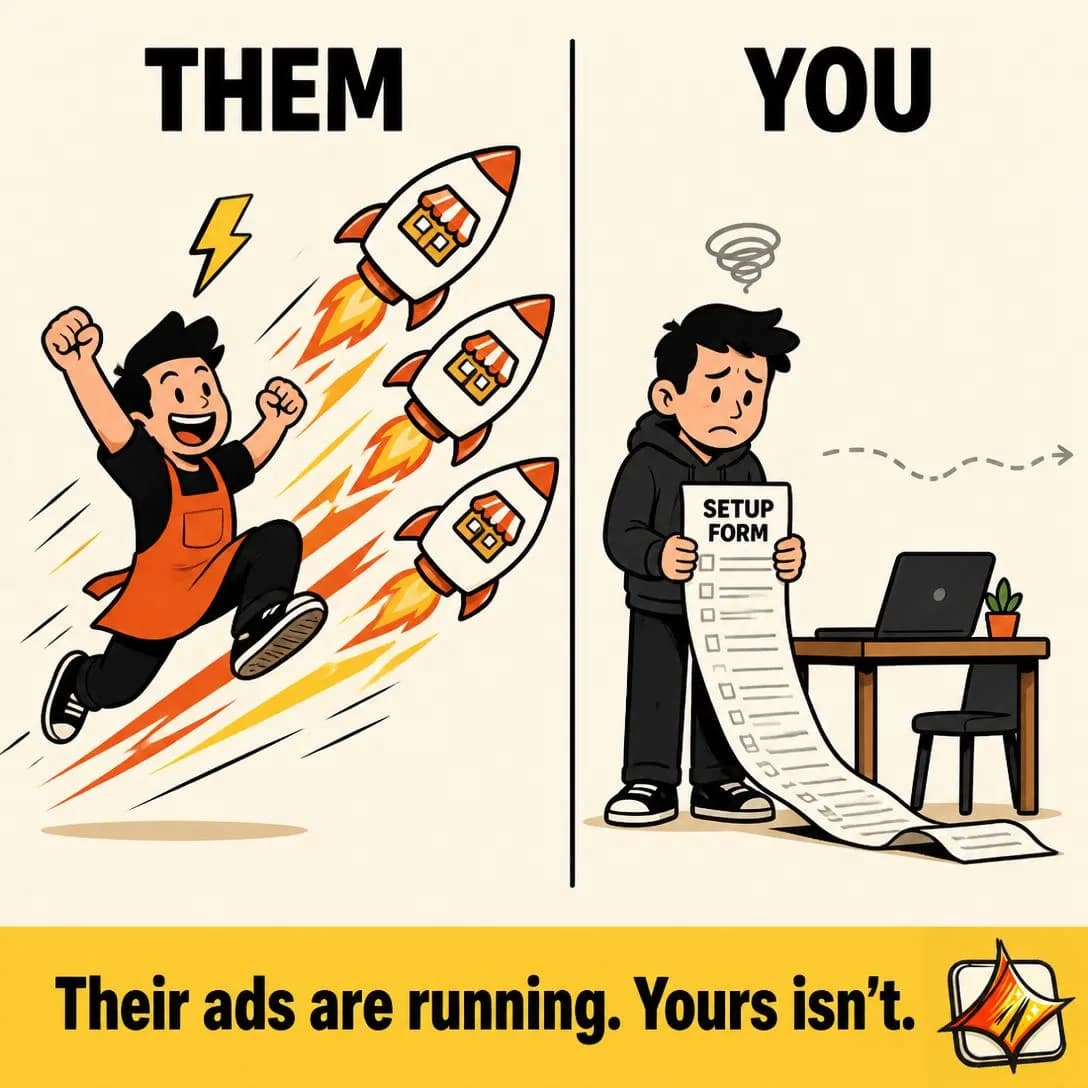
Their ads are live. Yours isn't.
Website to Meta ad in 1 minute
Limited Time
HotUses a deadline to create urgency.
A date attached to an offer, and the most load-bearing thing in the family: it is what converts an Offer & Economics ad (issue #7) from a description into a reason to act this week. That family’s Discount angle already says as much from the other side — a price cut with no end date isn’t a promotion, it’s your actual price wearing a costume. Limited Time is the costume coming off.
Which puts the whole weight on the date being real, and “real” here has an operational test rather than a copywriting one: would anyone inside your company be uncomfortable turning down a customer who asked for the deal on Monday? If the honest answer is that you’d just give it to them, the deadline does not exist, and you will find out when the first person emails on Monday and tells everyone what happened. Offers that quietly stay open are how a brand teaches its market to wait.
The taxonomy asks for two things and teams reliably deliver one: the deadline must be real and meaningful. Meaningful is the word that gets dropped. Five percent off, ending Friday, is a genuine deadline attached to a loss nobody would rearrange their week for, and it produces a shrug that also spends one of your limited opportunities to be urgent. Make the loss proportional to the pressure you are applying, name the actual date rather than “soon”, and say what the price becomes afterwards — a deadline the reader can put in a calendar is a deadline they can act on.
- Works because
- Gives a clear reason to act now.
- Fails when
- The deadline must be real and meaningful.
Write one like this
- 20% off the launch pack until Sunday midnight. Monday it’s the normal price, and we will say no if you ask.
- The founding price ends on the 30th. That’s a date, not a banner that’s been up since March.
- Three days left on the double-credit month. After that credits cost what credits cost.
- This ends Friday. Email us on Saturday and we’ll tell you, politely, that it ended Friday.
Don’t set a deadline you’d break for anyone who asks. An offer you’d quietly honour on Monday isn’t limited, and the first customer to test it tells everyone else what your dates are worth.
⏳ The holiday buying window is already open. Every day you wait to launch an ad, people are buying the same thing from a competitor who was ready. You keep saying 'I'll make one when I have time.' You do not have time. The season doesn't wait for your to-do list. Paste your website link into best-in-slot — finished Meta ad (image, all 4 sizes, copy) in about a minute, lands in Ads Manager paused. No forms. The clock's running either way.
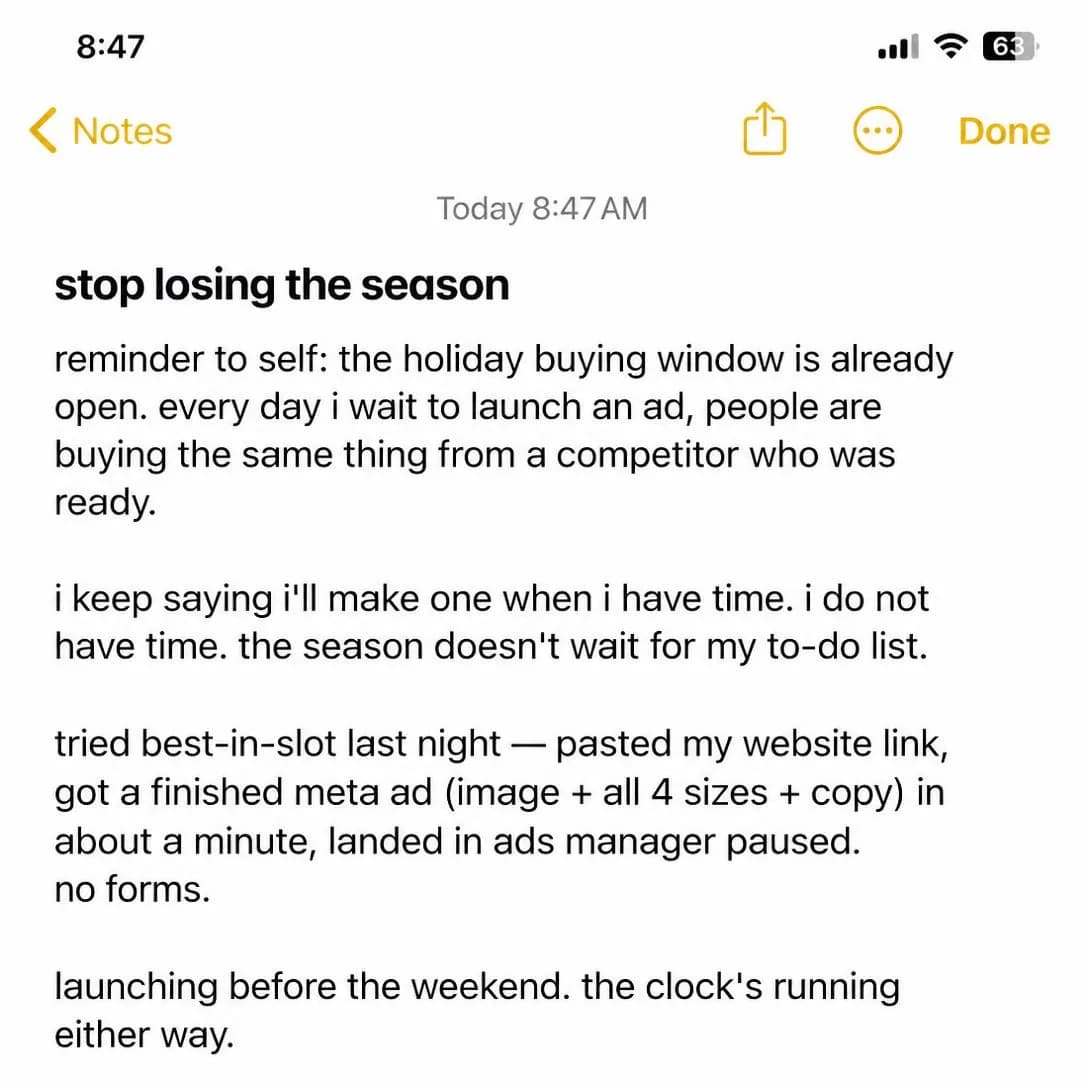
The buying season won't wait for you
Website → live ad in 60 seconds
Limited Stock
HotUses finite inventory or supply as the urgency mechanism.
Puts a finite number of units behind the urgency, which makes it the strongest closer in ecommerce for a simple reason: it is the one form of scarcity a reader can watch happening. The count goes down. Nothing has to be believed on trust, and the ad gets to update itself every time it runs.
It also carries the harshest sentence in the family — fake scarcity is highly damaging — and if you sell software you should read that sentence as being about you specifically. There is no stock. What there can be is a cap that costs you something to hold: founding seats at a price you have actually decided to stop offering, onboarding slots a person has to staff, a cohort sized to the support you can give it. Each of those is scarce for a reason a reader can follow, which is the entire difference between a constraint and a decoration. “Only 100 licences” of an infinitely copyable product has no such reason, and readers sense the absence long before they can articulate it.
So state the mechanism, not just the number. “Nine left” is a claim; “nine onboarding slots this month, because one person runs them and there are only so many hours” is a fact with its cause attached, and the cause is what makes the number credible. Then let it actually run out, publicly. A cap that never quite closes is worse than no cap at all, and a cap that does close is what makes the next angle in this family available to you.
- Works because
- Strong ecommerce closer.
- Fails when
- Fake scarcity is highly damaging.
Write one like this
- 40 founding accounts at this price. There’s no technical reason for the cap — we just want to onboard them properly.
- Nine onboarding slots left this month. One person runs them, which is the whole reason there’s a number at all.
- The launch cohort is 100 brands. 63 of them have their brand kit set up already.
- When these are gone the plan still exists. Just not at this price, and not with the calls.
Don’t invent a cap on something infinite. If nothing physically stops you selling one more, the reader’s suspicion that the number is decorative is simply correct — and this is the one angle where getting caught discredits the entire family.
50 free ad credits. Use them or lose them — forever. No monthly refresh. No "try it later" safety net. Just one jar, one time, sitting there while you bookmark this tab for the third time this week. Every day you wait is another credit you're not spending. Get your finished Meta ads now before the jar's empty.

50 credits. One time. Use them now.
Spend them or lose them forever
Limited Edition
Cold–HotPositions the product itself as temporary, rare, or exclusive.
The product itself is temporary. That sounds like Limited Stock and is a different argument: stock is a quantity that runs down, an edition is a thing designed from the start to end. The buyer’s motive changes accordingly — not “act before they’re gone” but “own the one that won’t exist later” — which is why the taxonomy files it as scarcity plus status rather than scarcity alone, and why it is the only angle in the family that can work on somebody who has never heard of you. A drop is a reason for a stranger to look.
The editing has to be genuine. An edition is defined by what makes it different, so a standard product with a seasonal badge on it is the version that fails, and it fails twice: the reader who buys learns your editions are labels, and the reader who doesn’t buy learns nothing was at stake. A pack of angles written for one quarter, a set built around a specific occasion, a collaboration that produced something the normal product doesn’t contain — those end honestly, because there is something to end.
Its weakness in the taxonomy is a narrower addressable market, and that is a planning constraint rather than a flaw to be written around. Editions convert best among people who already care, so a business with no audience gets a fraction of the return one with an audience does. Budget accordingly, retire the thing exactly when you said you would, and do not bring it back six weeks later under a new name — the retirement is the product feature you were selling.
- Works because
- Combines scarcity with status and collectability.
- Fails when
- Narrower addressable market.
Write one like this
- The Q4 pack: eleven holiday-specific angles, live until January, then retired from the library.
- This set was built for one season. It won’t be here next year, and that’s not a marketing decision.
- We’re making this one once. When the season ends it comes down, which is the entire plan for it.
- Not a new tier. A new set, for this quarter, gone with the quarter.
Don’t put an edition label on the standard product. If nothing inside is actually different, you’ve told the reader your scarcity is a design choice — and they’ll price your next edition exactly that way.
Only 500 founding seats. After that, this price is gone forever. We're numbering the first 500 people who sign up for best-in-slot — and locking them into founding pricing for life. Once seat #500 is claimed, everyone else pays full price. No grandfathering. No exceptions. Your number is your proof you were early.
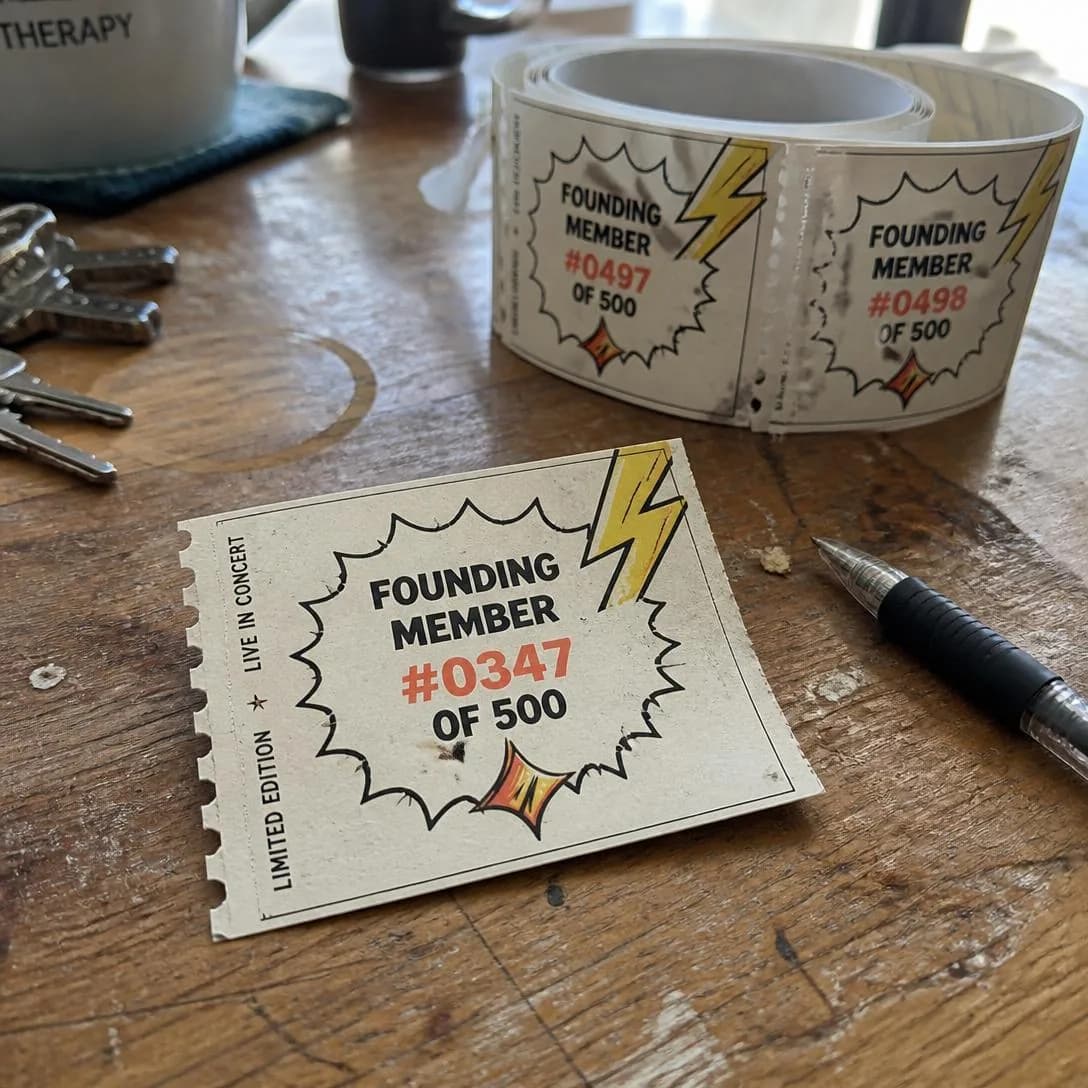
Only 500 founding seats left forever
Join the first 500. Lock in forever.
Restock
Warm–HotAnnounces that a sold-out or unavailable product is back.
Announces that something unavailable is available again, and it converts more cheaply than anything else in the family because the persuading already happened. Its audience is people who decided to buy and couldn’t. You are not making an argument; you are removing an obstacle they already resented.
Quietly, it is also one of the strongest proof ads you can run. A sell-out is the least deniable version of Popularity / Bestseller from Proof & Trust (issue #4) — demand you didn’t have to describe, because the shelf described it. That only holds if the sell-out was real and visible, though. A restock ad for something nobody watched run out is an ordinary offer carrying an implied claim about demand that never happened, and implied claims are the ones readers feel free to test.
Operationally the angle starts on the day you sell out, not the day supply returns. The notify-me list built during the gap is where the return converts; without it you are announcing to a general audience an event that only mattered to a specific one. For anything sold as capacity rather than goods, the same shape works whenever a closed thing reopens — a cohort taking names again, onboarding slots freeing up, a tier that came off the pricing page while you caught up. Say why it closed. A reopening with a reason behind it reads as a business that runs on real limits, which is the reputation every other angle in this family is drawing against.
- Works because
- Converts pent-up demand efficiently.
- Fails when
- Primarily useful when demand already exists.
Write one like this
- The founding plan is open again. It closed in March because we couldn’t onboard people fast enough.
- Onboarding slots are back — twenty of them, same as last month, and last month they went in a week.
- You asked to be told when this reopened. It reopened this morning.
- Closed in March, open today. Same price, same cap, same reason for the cap.
Don’t announce a restock nobody noticed was gone. Without a sell-out the reader can actually remember, you’re running a normal offer with a demand claim smuggled into it.
Sold out in 48 hours. Your 50 free credits are back. 🔥 We restocked the free tier after thousands of founders grabbed it last week. No card, no catch — just paste your website link and build a finished Meta ad in under a minute. One-click or step-by-step, your call. Credits never expire, and nothing goes live without your approval. Grab them while the box is still open.

50 Free Credits — Back in Stock Now
No card. Never expires. Grab them.
Waitlist
Cold–WarmUses restricted pre-launch access or a queue to build anticipation.
A queue in front of something that isn’t available yet, and the only angle in the family aimed at people who are not close to buying — cold to warm, per the taxonomy. It is not a closer and should never be judged as one. What it buys is a list of people who raised their hand, plus a public number that becomes evidence later.
Two things happen at once when someone joins, and both matter. The friction converts a passive flicker of interest into a small act of commitment, which changes how that person reads your next ad. And the queue accumulates into proof: four hundred names is a fact about demand you can cite in every launch ad you run afterwards. That is why the friction the taxonomy flags as a weakness is also the mechanism — a frictionless waitlist collects people who felt nothing.
The failure is aiming it at the wrong reader. Somebody ready to pay you today should never meet a queue; friction pointed at a hot audience is a lost sale in strategy costume. And whatever is on the other side of the door has to be real — earlier access, a better price, an actual gate. A waitlist that opens to the general public the same week teaches your most enthusiastic segment that your gates are theatre, and they are precisely the people who will remember.
- Works because
- Builds lead pools and perceived demand.
- Fails when
- Adds friction before purchase.
Write one like this
- Multi-brand accounts open in September. The list decides who gets in first, in the order people joined it.
- Not live yet. Join the list and you’ll have it a week before the pricing page does.
- Four hundred people are ahead of you. That’s also why we’re building it.
- We onboard twenty brands a week, in order. Join today and you’ll know your number today.
Don’t run a waitlist at people who could pay you now. A queue is for demand that has nowhere to go yet; put one in front of a ready buyer and you’ve invented an obstacle your competitor doesn’t have.
The ad tool everyone's talking about has a waitlist. For an ad tool. 🤨 Paste your website link → finished Meta ad in ~60 seconds. Concept, hero image, all four sizes, full copy. No forms, no briefs, no downloads. Just ads that land paused in your Ads Manager. The access list is open, but it won't be forever. Get in while you still can.
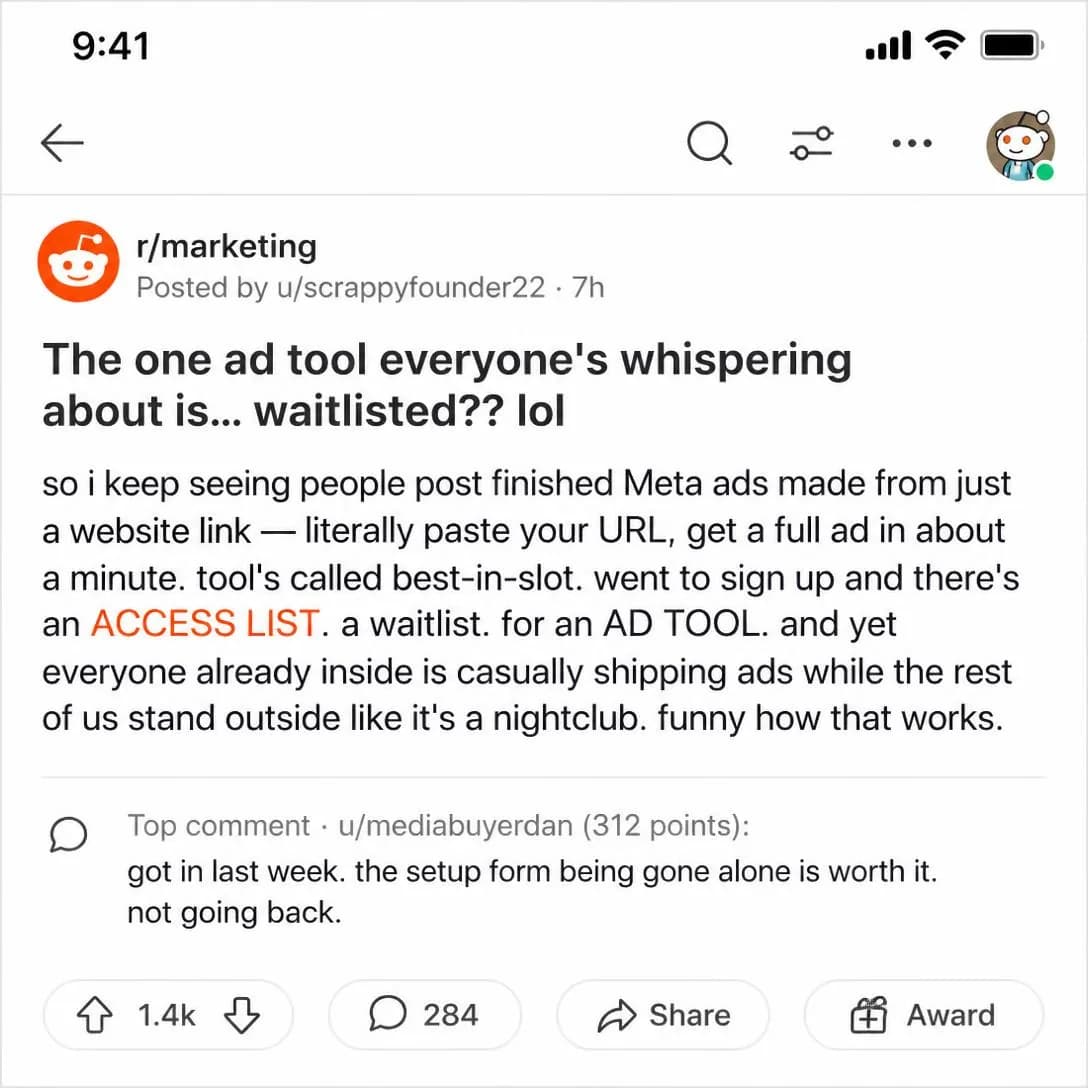
The waitlisted ad tool (yes, really)
Ads in 60 sec. No setup form.
Early Bird
Warm–HotRewards buyers who act before others.
Rewards the people who move first, usually with a price or a perk that decays as the date approaches. It reads like Limited Time and argues something distinct: Limited Time removes an offer on a date, while Early Bird makes moving before other people the qualifying condition. The reader isn’t racing a deadline so much as racing a queue, which is a more comfortable thing to lose and a more satisfying thing to win.
It is best where the purchase is separated from the thing purchased — events, launches, preorders — because there the schedule is inherent and you are not inventing anything. Somebody buying a ticket in March for a thing in June accepts without argument that March money is worth more to you than May money. Where no such event exists you have to manufacture the schedule, and manufacturing it lands you back with Limited Time’s burden of proof plus an extra layer of structure to justify.
The mechanic worth stealing is tiering: first fifty at one price, next hundred at another, then standard. It turns a single deadline into a scoreboard, gives the ad something new to say each week it runs, and lets latecomers watch a consequence arrive in real time. Every tier has to actually close, though. A tier one still available in week six is the taxonomy’s warning made concrete — the deadline stopped mattering, and so did the next one you announce.
- Works because
- Excellent for events, launches, and preorders.
- Fails when
- The deadline needs to matter.
Write one like this
- First 50 accounts keep the founding price for as long as they stay. 31 are taken.
- Early access to multi-brand is $19. It’s $29 for everyone who waits for launch day.
- Book an onboarding call before launch week and you skip the queue entirely. That’s the whole reward and it’s real.
- Tier one closed Tuesday. Tier two is ten dollars more and closes when a hundred people take it.
Don’t run tiers that never close. The moment tier one is still open in week six, every tier you announce afterwards is read as a suggestion — and you’ve trained your fastest buyers to be your slowest.
New tools give freebies once. This is that once. Right now, every founder who signs up gets 50 free credits — enough for 3 finished Meta ads, zero dollars spent. No card required. This is a launch perk, not a permanent feature. The people who act now get more for nothing than the people who wait. Don't be the one scrolling past this next month wishing you'd clicked today.
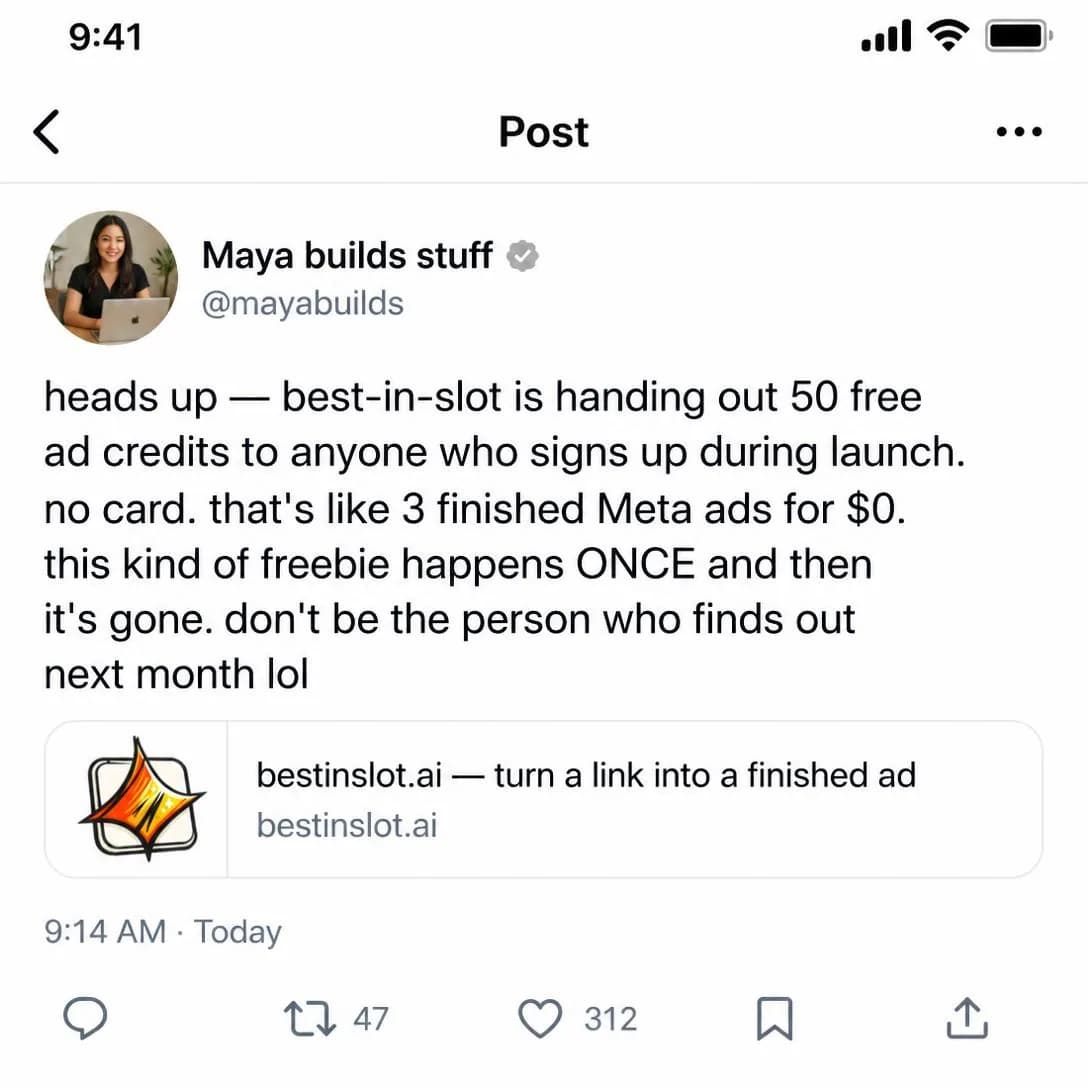
50 free credits. No card. Going fast.
No card · 3 ads · Launch only
Price Increase
HotGives urgency by announcing that the current price will rise.
Announces that the number is going up on a date, so acting now is arithmetic rather than fear. It is the most rational urgency in the library: nothing sells out, nothing disappears, the product is exactly as available next month and simply costs more. The reader is not being asked to worry about losing access, only to notice a difference they can calculate.
That makes it unusually safe for a premium position, and it is worth seeing why. A discount concedes that your price was soft; a price increase asserts the opposite, and it usually comes with a built-in justification — the thing got bigger, costs went up, four families of angles exist now that didn’t when the number was set. Offer & Economics (issue #7) spends most of its energy protecting a price from the erosion discounting causes, and this angle is the rare urgency play that doesn’t cost that family anything.
The weakness — frequent use feels manipulative — is really a rule about frequency and follow-through. Once a year with a reason reads as a company being straight with people; twice a quarter reads as a lever, and readers can tell the difference immediately because they have seen both. Then the follow-through: the price must actually rise, publicly, on the stated day. Do it once, properly, and you have bought something rare — the next time you announce an increase, the market has already watched you keep this exact promise.
- Works because
- Strong rational reason to act now.
- Fails when
- Frequent use can feel manipulative.
Write one like this
- The price goes to $39 on the 1st. Start before then and you stay at $29 for as long as you keep the plan.
- We’ve added four angle families since we set this price. On March 1 the price catches up.
- This is a notice, not a sale: $29 now, $39 next month, no countdown timer involved.
- Last year we said the price would go up in April, and in April it went up. Same again, on the 1st.
Don’t announce an increase that doesn’t happen. It’s the one promise in this family a reader can verify for free, forever, on your own pricing page — and a price that quietly stayed put is a permanent argument against your next deadline.
Prices go up Friday. If you've been thinking about trying best-in-slot — the AI ad tool that turns your website into finished Meta ads in under a minute — now's the time. Lock in today's rate before it's gone. No forms, no guesswork, just ads that publish straight into your ad account. Start free at bestinslot.ai
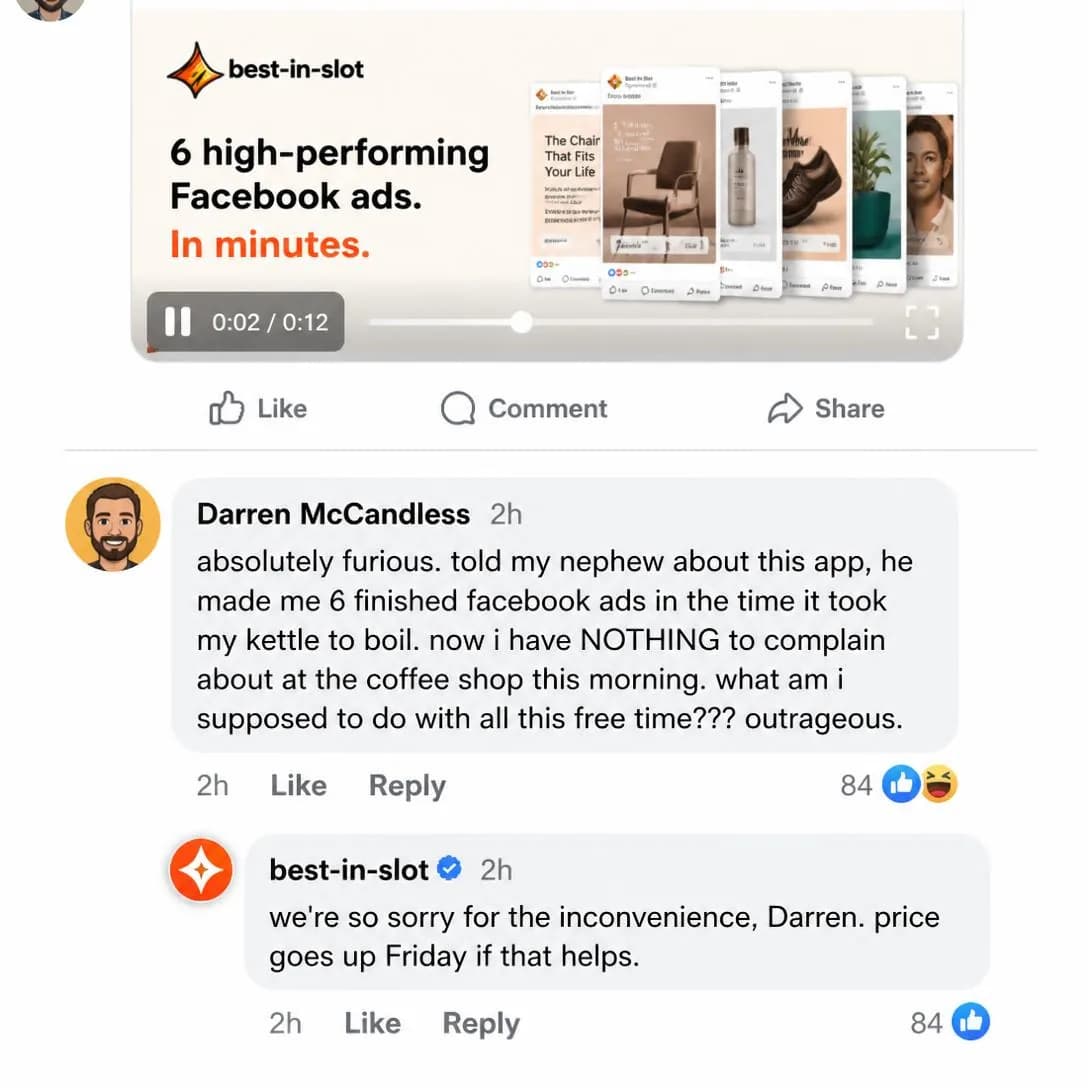
Prices rise Friday. Lock in now.
Try free before Friday
Seasonal Deadline
HotUses a holiday, season, event, or calendar moment as a natural deadline.
Borrows a date the reader already believes in — Black Friday, the end of the quarter, the new year, a tax deadline, the start of a school term. The whole advantage is in the ownership: you didn’t set this deadline, so nobody has to trust you about it, and the single largest failure mode in this family simply doesn’t apply.
The external clock also supplies context the other angles have to manufacture. The reason to act isn’t a claim about your offer, it’s a fact about the reader’s year, which is why the good version of this ad often barely mentions the promotion. For anything sold to businesses that advertise, Q4 is the honest one and it arrives earlier than people plan for: creative for the busiest quarter has to exist before the quarter, so the deadline that actually binds is weeks ahead of the one on the calendar. Say that out loud in the ad and you are describing their situation rather than pushing on it.
Its weakness, a short shelf life, is a production constraint rather than a strategic one, and it is why seasonal campaigns are chronically under-made. Creative dated to a season is worthless the day after, so a team whose ads take a week to produce rationally makes two of them and runs both into the ground. The other consequence of a public date is competition: everyone can see it, everyone buys the same inventory in the same fortnight, and the ad that shows up three weeks early gets the version of that audience nobody is bidding against yet.
- Works because
- Urgency feels legitimate and contextual.
- Fails when
- Creative has a short shelf life.
Write one like this
- Q4 creative gets made in September. It is September.
- Black Friday is forty days out and your ads for it don’t exist yet.
- Everyone’s CPMs double in November. The ads you make in October don’t.
- The deadline isn’t ours. It’s the one already on your calendar, and it hasn’t moved.
Don’t borrow a season your buyer doesn’t actually live in. A holiday campaign aimed at people whose year doesn’t turn on that week is a deadline nobody feels — and a deadline nobody feels is just a date sitting in your copy.
Black Friday is 11 days away and your ad creative still isn't done. You know the playbook: brief the designer, wait three days, give feedback, wait two more, then scramble to write copy that matches. Or you could paste your website link into best-in-slot right now and have a finished Meta ad — concept, image, copy, all four sizes — in about a minute. The deadline's not moving. Your ads should be ready already.
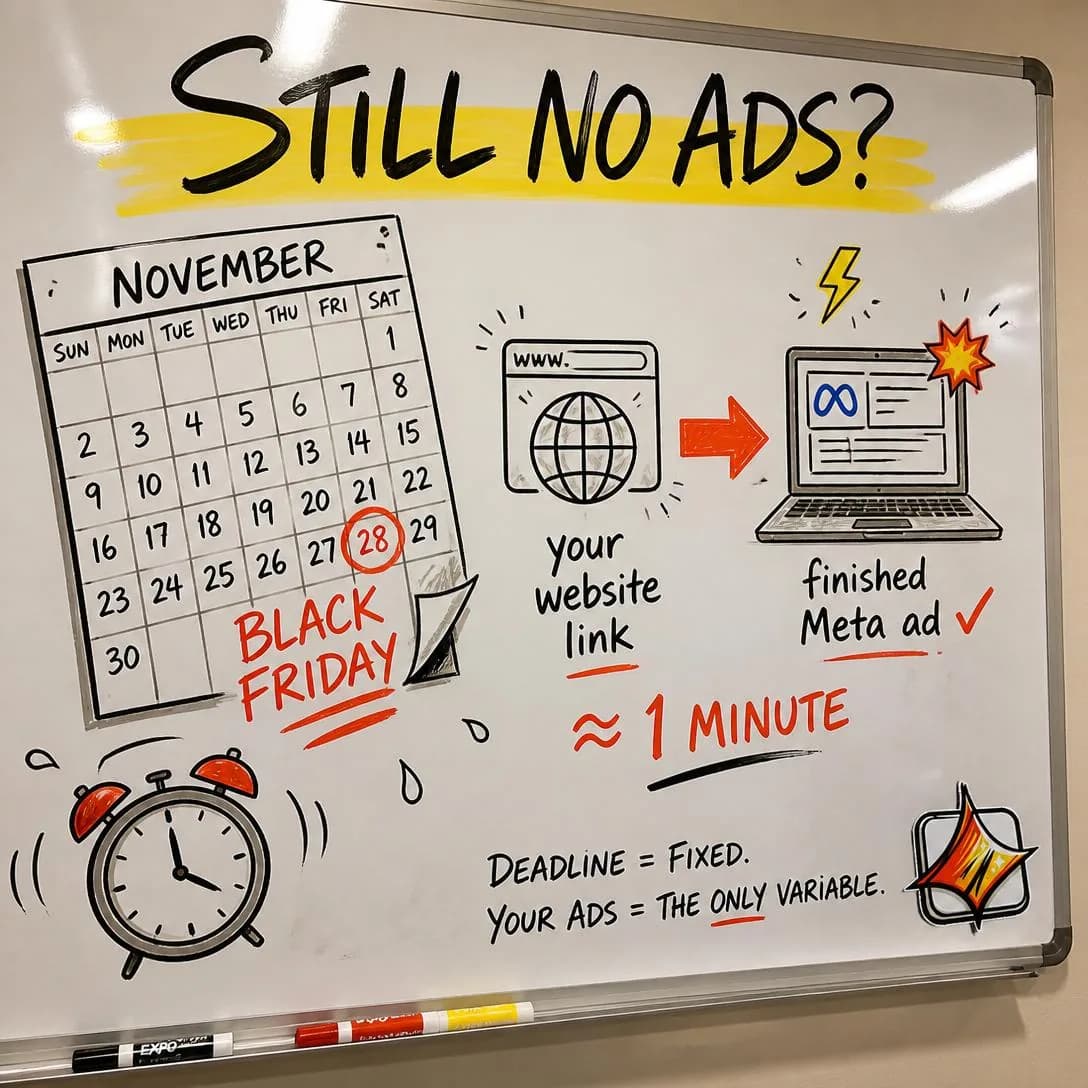
BFCM ads done in 60 seconds
From link to live ad, one minute
Exclusive / VIP
Mid–HotRestricts access to a group, tier, member base, or invitation.
Restricts access to a group: members, invitees, a tier, a room. The scarce thing here is neither time nor units but entry, and what the reader is buying is partly the fact of being inside — which is why the taxonomy pairs status with scarcity on this row and gives it a mid-to-hot stage rather than a hot one. Belonging is interesting to somebody well before they are ready to pay.
That makes it the one angle in this family that runs on identity, and it borrows from Status / Prestige and Belonging / Community further along the library in Identity & Emotion. The practical consequence is that the group needs to be a specific thing rather than a flattering adjective. “VIP” by itself is empty — nobody has ever felt like a member of a word. Forty agencies in a shared channel is a room, and a reader can picture being in it, which is the entire product being sold.
Exclusion limits scale, says the taxonomy, and that is the trade rather than a defect: this angle deliberately addresses fewer people in exchange for addressing them better. It earns its place where a smaller qualified audience is worth more than a bigger one — high-ticket tiers, agency plans, anything with a community attached. The gate has to be genuine, and genuine means somebody is actually outside it. An invitation everyone receives is a mailing list, and the people who thought they had been chosen are the ones who take the discovery worst.
- Works because
- Combines status and scarcity.
- Fails when
- Exclusion can limit scale.
Write one like this
- The agency tier isn’t on the pricing page. It’s forty accounts and an invitation.
- Members get new angle families a month before the library does.
- You’re seeing this because you’ve run more than 200 ads with us. Most people aren’t.
- Invitation only, in the boring literal sense: somebody already in the room has to add you.
Don’t call it exclusive when everyone gets in. An invitation with no gate behind it spends the word — and, more expensively, tells the people who believed they were inside that they never were.
We're capping this at 1,000 Founding Members. Not because we want to feel exclusive — because we want to build this with people who got in before everyone else caught on. You'll get a numbered card. Lifetime founder pricing. And the invite closes forever once we hit 1,000. 213 spots left as of this morning.
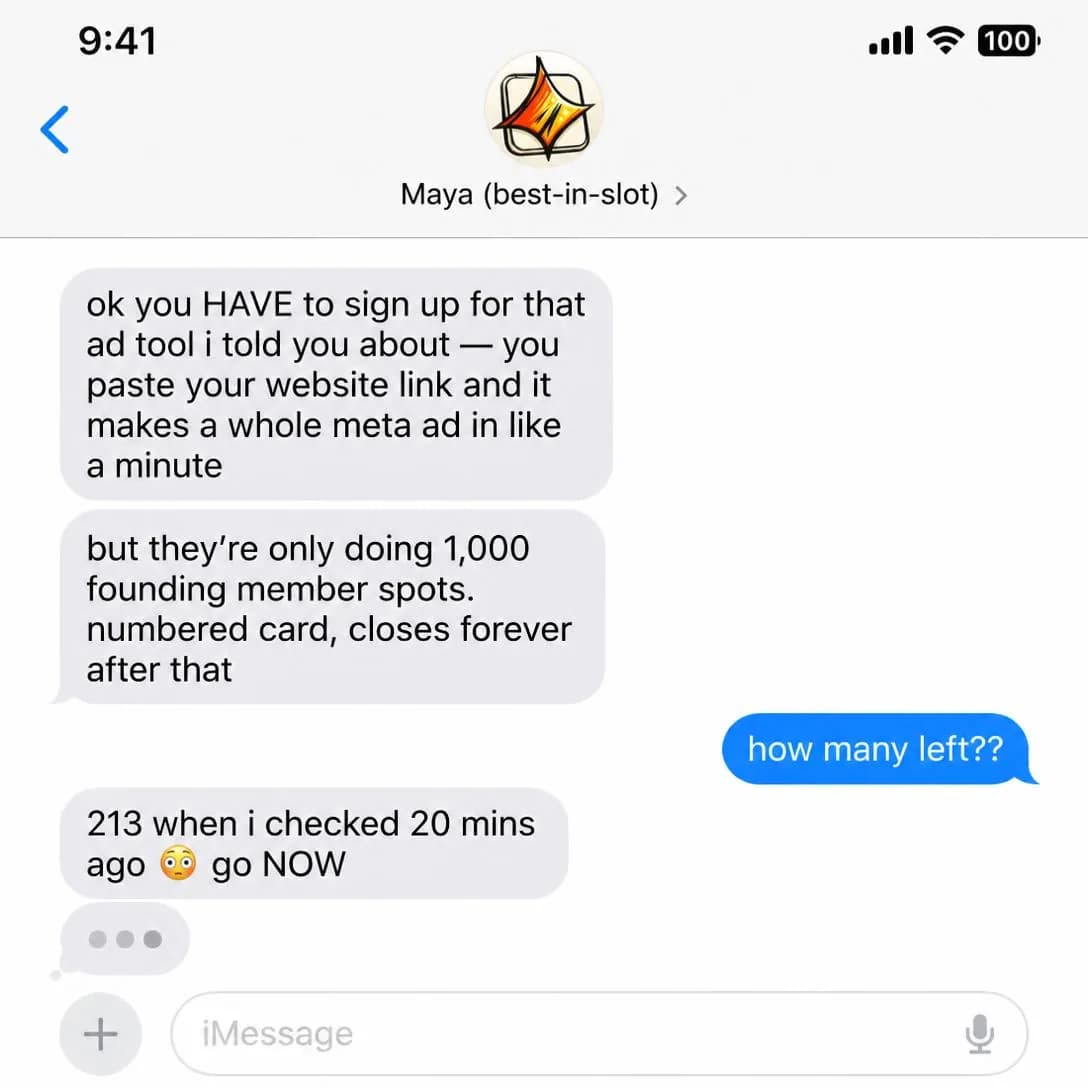
Founding Member No. 0047 — claim yours
Claim your founding member spot
Launch / Drop
AllUses novelty and release timing to create excitement.
The only angle in the family the taxonomy marks for every stage, and the reason is that it isn’t scarcity at all. Nothing is running out. The reason to act is that the thing is new, and newness is its own event: it interests strangers because news is interesting, and it interests existing customers because it gives them a reason to come back without you having to discount anything to get them there.
It requires existing attention or a compelling product story, and the taxonomy is blunt about that condition for a good reason — a launch ad from a brand nobody follows is an announcement into an empty room. When a drop underperforms, the diagnosis is almost never the launch creative. It is either that the audience-building didn’t happen in the months beforehand, or that the thing launched isn’t different enough for the news to survive being described. Neither is fixed by a louder announcement, which is what most teams try next.
The version that compounds is a rhythm rather than an event. A business that ships on a cadence people can learn — a family a month, a drop every quarter, something new on a day of the week — converts its audience into an audience that checks. That is the difference between a launch and a habit, and it is also the only form of this angle that still works on the fourth outing, when the novelty of you being new has worn off and all that is left is whether the thing you shipped is any good.
- Works because
- Strong for product launches, collections, and new features.
- Fails when
- Requires existing attention or a compelling product story.
Write one like this
- Six angle families were live yesterday. Eleven are live today.
- New: multi-brand accounts. One login, every client, no second setup.
- We ship a new angle family every month. This is number eight.
- The thing half our inbox asked for in March went live this morning.
Don’t launch into an empty room. If nobody is listening yet, the announcement isn’t the problem and a bigger one won’t help — this angle spends an audience rather than building one.
🚨 We just launched. And if you're still filling out setup forms while your competitors paste one link and get a finished Meta ad in 60 seconds, you're already behind. best-in-slot reads your site, generates the concept, builds the image, writes the copy, and drops it paused into your Ads Manager. No brief. No forms. No zip files. Be first, not last.
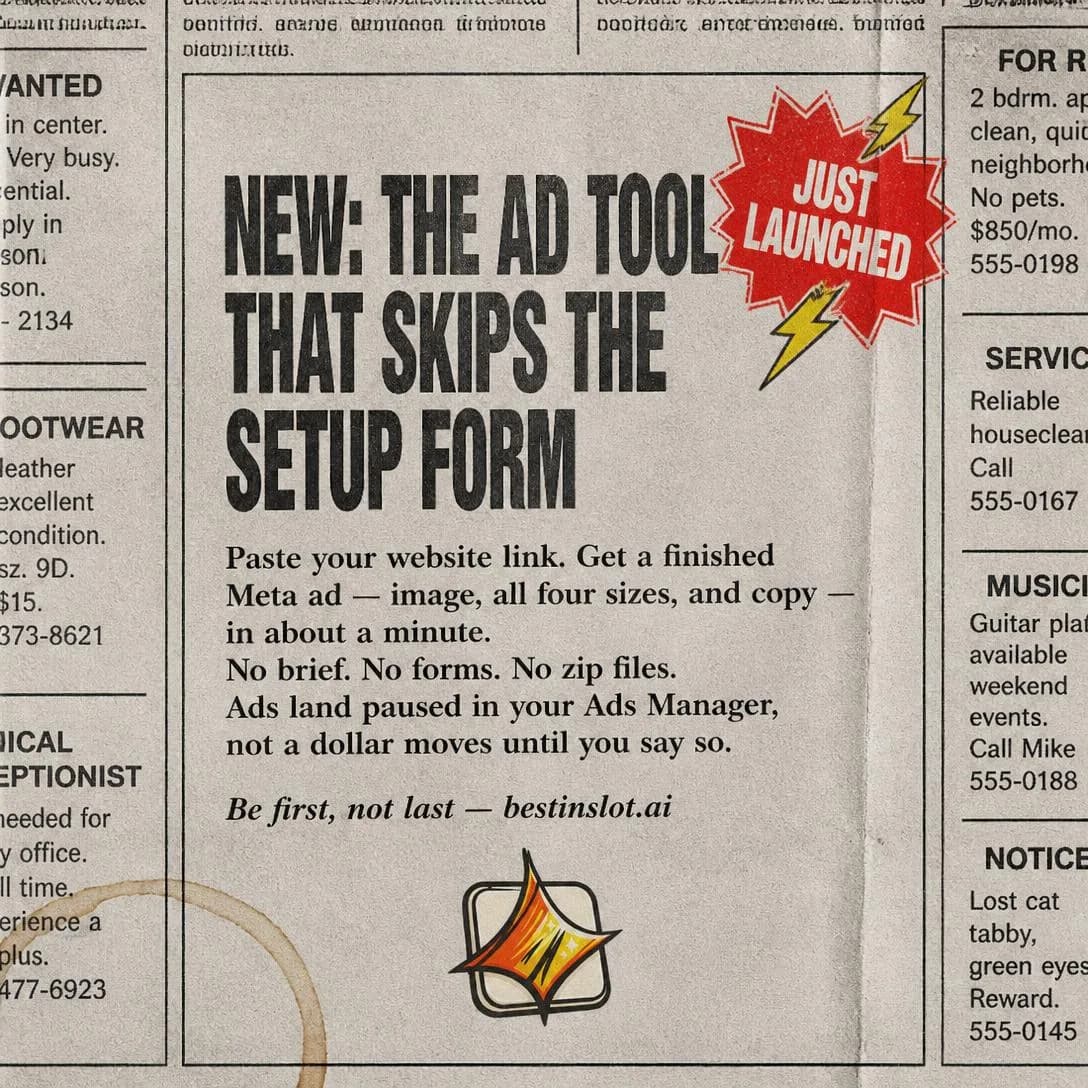
Be first, not last — try it now
bestinslot.ai — live now
Testing them against each other
Testing inside this family answers a narrow question well: what kind of “now” does your buyer respond to — a date, a number counting down, a closed door, or news. Run a Limited Time offer against a Limited Stock cap against a Launch / Drop at the same warm audience and the winner tells you something durable about how your market experiences pressure. But there is a prior test worth running first, and almost nobody runs it: your best urgency ad against the identical offer with no urgency at all. This is the only family that charges you for being wrong in a currency other than money, so it is worth knowing what the deadline is actually adding before you start spending credibility on one every month.
And read a loss here differently than elsewhere in the library. A Problem & Pain ad that fails usually failed because the argument was wrong. A scarcity ad that fails often failed because the constraint wasn’t believed — and belief in your constraints is a property of your history, not of the ad in front of them. Which is also why the honest fallback lives outside this family entirely: Cost of Inaction (issue #1) makes the clock the reader’s own, compounding week by week whether or not you ever set a date, and it is the only “why now” in the library you can run fifty-two weeks a year without spending anything. When something here does land, pair it with Objection & Risk Reversal (issue #6). Urgency raises the cost of moving fast, a guarantee lowers it, and the two together are the standard closer for a reason.
Pick an angle. Get the ad.
No credit card · 50 free credits (about 5 ads or Instagram posts)