
Ad Angle Library #4 · 12 angles
Proof & Trust ad angles
Reduce skepticism and increase belief.
The first three families are things you say. This one is the only family whose persuasive material was produced by somebody other than you — a customer, a crowd, a lab, a rating — and that changes what writing it means. You are not composing an argument here, you are choosing which piece of evidence to hold up, and the copy is the frame around it. It also means this is the one family you cannot write your way into. An account with thin proof cannot be given better proof copy, only better proof, which makes it an operational problem wearing an editorial costume.
It has a different job from its neighbours, too. Proof does not create wanting — it removes doubt. That makes it a multiplier on a desire that already exists and nothing at all to a reader who hasn’t got one. A wall of five-star reviews shown to someone who has never felt the problem converts nobody, because it answers a question they were not asking. It is why ten of these twelve sit at Mid or Mid–Hot, and why the fastest way to waste your best testimonial is to spend it too early.
The failure mode is identical in all twelve, and it isn’t exaggeration. It’s unfalsifiability. Readers have spent a decade being shown manufactured proof and have adjusted accordingly: the modern default reaction is not “that’s impressive”, it’s “who counted that”. So the currency in this family is checkability — a number that could not have been rounded, a name attached to a face, a review with a complaint in it, a standard somebody could have failed. Each of those beats a larger version of itself with nothing to grab. “Thousands of happy customers” is not a weak proof claim; it is the phrase brands reach for when they have none, and it is read that way.
The twelve differ on where the evidence comes from. Three are the crowd: Social Proof counts it, Reviews / Ratings quotes it, Popularity / Bestseller reports what it chose. Three are one person at increasing length — a Testimonial is a sentence, a Customer Result Story is a plot, a Case Study is a document with numbers in it. Three borrow an outside institution: Data measures, Expert Authority delegates, Third-Party Validation certifies. One borrows an audience instead, which is what a Creator endorsement is actually renting. Before / After skips the argument and shows the difference. And Repeat Customer is the only proof in the library collected after the product had a chance to disappoint.
Which one, when
- Cold–MidCreator / Influencer Endorsement
- The only one that arrives pre-trusted. Everything else here asks a stranger to evaluate evidence, which is work; a creator endorsement inherits a relationship the audience already has and skips the evaluation entirely. That is why it survives cold traffic when a case study cannot.
- MidCustomer Result Story · Data / Statistical Proof · Expert Authority · Third-Party Validation
- For a reader who has accepted the problem and is now auditing whether you can be believed. These four supply evidence that has to be read: a story with a middle, a number with a denominator, a specialist who explains rather than endorses, an outside body that could have failed you. All four ask for attention a stranger won’t give, and all four repay it with a kind of belief a star rating can’t buy.
- Mid–HotSocial Proof · Reviews / Ratings · Popularity / Bestseller · Testimonial · Case Study · Before / After · Repeat Customer
- Most of the family sits here, because proof is what you reach for once the wanting already exists. The first three are the crowd at three volumes — how many, what they said, what they picked. The next two are one person, short and long. Before / After drops the argument and shows the difference. And Repeat Customer is the only one measured after the product had a chance to fail, which is why it is worth more than the other six put together.
About the examples. Every ad below was generated by best-in-slot for best-in-slot — one product, one underlying problem, 12 different arguments about it. That repetition is the point: hold the product and the pain still, and the angle is the only thing left changing. Each is shown exactly as it came out.
Testimonial
Mid–HotUses one customer’s first-person experience as the core persuasion argument.
One customer, first person, their own words. It works because the reader isn’t being sold to — they are overhearing — and overheard persuasion bypasses the defences that a brand voice triggers automatically. The persuasive substance is not enthusiasm. It is the specificity of somebody’s actual life, which is the one thing a copywriter cannot invent convincingly.
So the best testimonials contain something you would never have written. A hesitation, a rough edge, the thing they were worried about beforehand. “I honestly thought it would look like a template” is worth more than “I love it”, because the first one has a doubt in it that the reader also has, and watching that doubt get resolved is the whole mechanism. Script the line and you get an actor’s read, and an audience clocks that in about a second.
The taxonomy says performance depends heavily on the quality of the testimonial, and the word “quality” is misleading — it is not production value, it is casting. Pick the customer whose starting position matches the audience you are advertising to, not the one who speaks best. Then ask for the moment rather than the opinion: “what were you doing right before you tried this” produces an ad, and “what do you think of us” produces a pull-quote for a homepage nobody reads.
- Works because
- Human, relatable, and credible when authentic.
- Fails when
- Performance depends heavily on the quality of the testimonial.
Write one like this
- “I rewrote the same headline four times. I asked it once.”
- “I genuinely thought it would come out looking like a template. It came out looking like my shop.”
- “The first one I ran beat the ad I paid an agency for.”
- “I don’t have a designer. I have a phone with 200 photos of my product on it.”
Don’t script it. The sentence a customer wouldn’t have thought to say is the one the audience believes, and a testimonial with no rough edge anywhere in it reads as a hired actor.
I was skeptical. How could AI actually understand my brand? Then I pasted my website link and saw the ad it made — with my actual logo, my colors, my vibe. Not some generic template. It felt like someone on my team made it. Except it took 60 seconds. If you've been putting off ads because they're too much work, just try one.bestinslot.ai
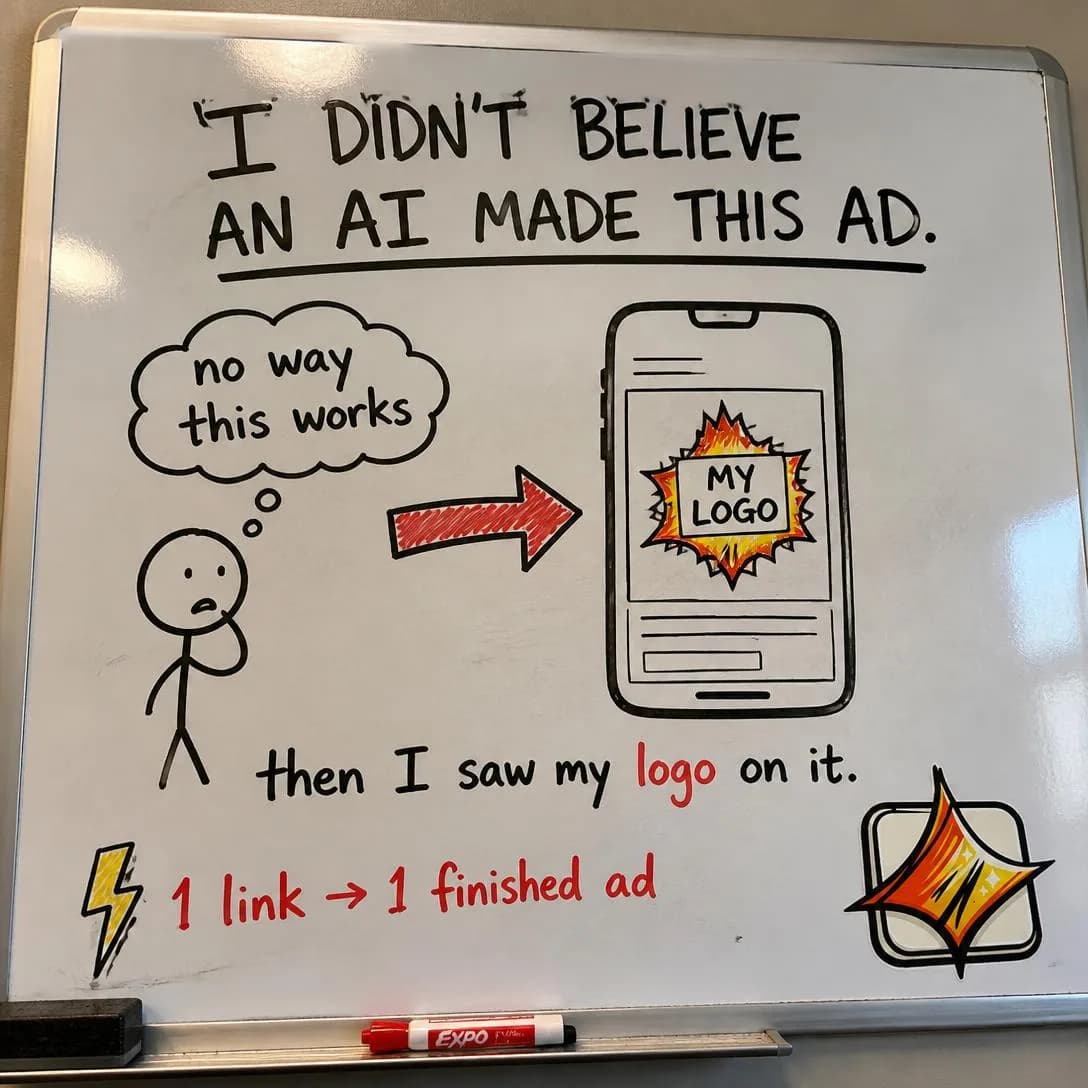
I didn't think AI could do this
Try it free. No credit card.
Customer Result Story
MidTells a customer journey from problem to product to outcome.
A testimonial with a plot. Three beats — where they were, what changed, where they ended up — and it earns its extra length by giving the reader somewhere to stand: a person whose starting position they can measure themselves against. Narrative buys the attention, and the proof is what the attention gets spent on.
Almost all of these fail in the same place, which is the middle. The story goes from broken to fixed with the product as a jump cut, and the reader is left with two states and no idea what actually happened between them. That gap is where belief was supposed to be built. Name the moment of change: what they did differently on the Tuesday, what they stopped doing, the decision that felt uncomfortable. A middle beat with a specific action in it is the difference between a story and a claim with characters.
It is slower than a review, which is its cost and its stage. Mid-funnel readers will give you thirty seconds because they are already trying to decide; cold readers will not, and the story gets scrolled before the turn. One discipline that keeps it honest: the before has to be specific enough to hurt and the after has to be specific enough to check. Vague on either end and you have written a fable, and fables are the reason this angle has a bad reputation it doesn’t deserve.
- Works because
- Combines narrative and proof.
- Fails when
- Takes longer to communicate than a simple review.
Write one like this
- In March she was paying £400 for a single ad. In April she stopped.
- Two years of boosting posts. Then one week where he actually tested something.
- She had 200 product photos and no ads. Here’s the fortnight in between.
- He’d decided Meta didn’t work for his category. This is what changed his mind.
Don’t jump-cut from broken to fixed. The middle beat — what they actually did differently, and when — is the only part of the story doing any proof work.
Sarah had zero ads Sunday night. Three running by 7am Monday. No agency. No designer. Just her website link and about 60 seconds. bestinslot.ai reads your site, picks an angle, generates the image, writes the copy, and drops a paused ad into your Meta account. You review it. You turn it on. That's the whole thing.
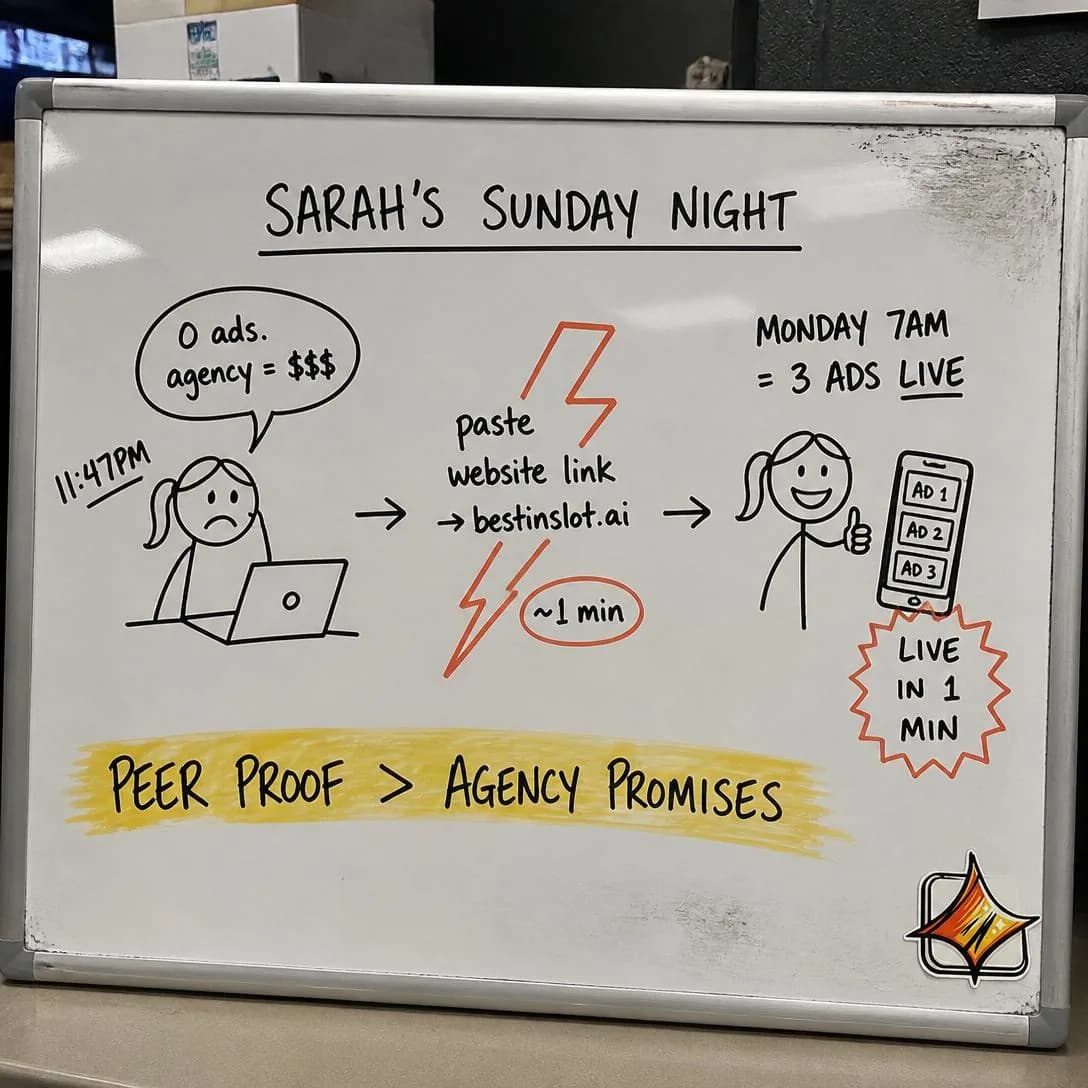
Sunday panic → Monday ads
No forms. Just your website link.
Reviews / Ratings
Mid–HotUses star ratings, review excerpts, review counts, or screenshots.
The fastest trust signal in the family, because it requires no reading. A star rating is legible in peripheral vision, and a screenshot of a real review carries more than a beautifully designed graphic of the same words — the platform chrome is itself part of the evidence. Designing your reviews into your brand system quietly removes the thing that made them believable.
The weakness the taxonomy names is real: everyone has 4.8 stars, so the rating differentiates nothing. What differentiates is the text. Choose excerpts that answer one specific objection rather than excerpts that praise generally, and let a middling one through. A four-star review that names a real flaw and buys anyway is the single most persuasive artifact most brands own, and almost nobody runs it, because it feels like an own goal. It is the opposite — it is the thing that makes the five-stars readable as evidence rather than as selection.
Volume and recency do the work the average score can’t. Nine hundred reviews says the score survived scale; reviews from the last thirty days says the product is still like this. And if the honest picture is thin — few reviews, mixed ones — running them anyway beats waiting, because the reader’s alternative interpretation of no reviews is not “new product”, it’s “nobody has bought this”.
- Works because
- Immediate trust signal and easy to understand.
- Fails when
- Generic if every competitor also has strong ratings.
Write one like this
- 4.8 stars. 900 reviews. Read the one-stars first.
- Sorted lowest first. We’d rather you saw those.
- Every review from the last thirty days, unfiltered, in one screenshot.
- “Took me two goes to get the brief right. The third ad is still running.” — 4 stars.
Don’t show only the five-stars. Unbroken praise reads as curation, and the four-star review with a complaint in it is what makes everything around it believable.
500+ founders have rated this 4.9 stars. Not because we asked nicely — because it actually works. best-in-slot turns your website into a finished Meta ad in about a minute. No forms, no briefs, no design handoffs. Just paste your link, pick a concept, and publish straight into Ads Manager. Everything paused until you say go. The reviews speak louder than we ever could.
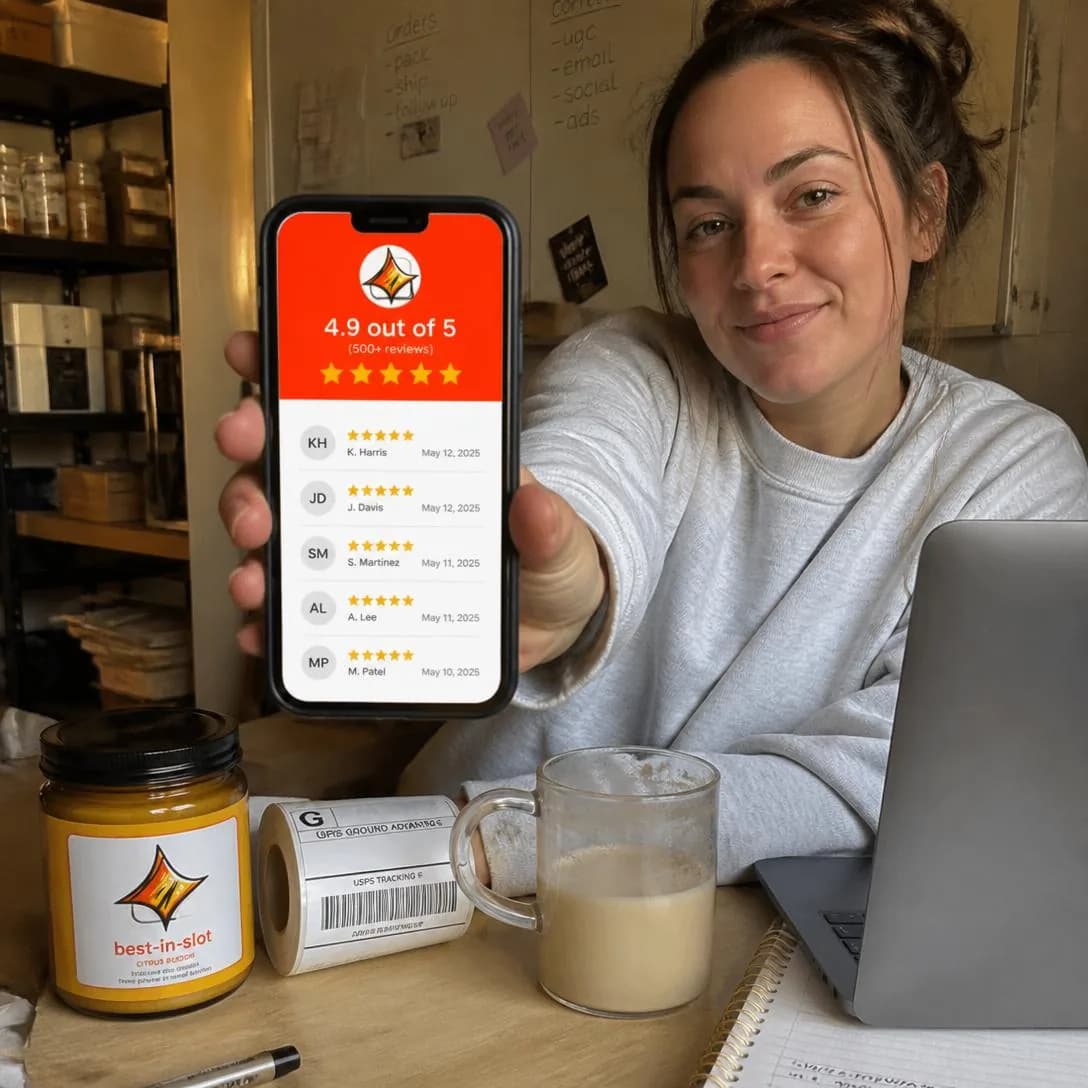
4.9 stars from 500+ founders
Start free. No card required.
Case Study
Mid–HotGives a detailed example of one customer or client achieving a result.
The heavyweight of the family: one named customer, real numbers, a timeframe. It earns its length in categories where the purchase is big enough that the buyer has to justify it to somebody else, and that reveals its real function — you are not only persuading the reader, you are arming them for the conversation they will have with a boss, a partner or a board.
Method beats magnitude. A modest result with the working shown outperforms a spectacular one without it, because a reader estimating whether this transfers to them is comparing situations, not outcomes. So name the starting conditions: the size of the business, the budget, what they had already tried and why it hadn’t worked. An unattributed number gives a reader nothing to measure against, and a number they can’t measure against is a number they discount to zero.
The taxonomy is right that it is too detailed for broad cold audiences, but the conclusion people draw from that is wrong. The ad is not the case study — the ad’s job is to make somebody want the case study. One number, one recognisable starting position, and the document behind the click. Four numbers in the creative is a slide, and a slide in a feed is a scroll. This is also the angle worth building deliberately: pick the customer whose situation most resembles your best audience, and go and document them properly.
- Works because
- Excellent for complex, expensive, or B2B purchases.
- Fails when
- Often too detailed for broad cold audiences.
Write one like this
- One product. £600 in test spend. Eleven angles. Here’s exactly what happened to each.
- A two-person skincare brand, no designer, six weeks. Full numbers inside.
- How a shop with 200 photos and no design budget got to a repeatable week.
- We gave one founder forty angles and told her to kill anything under a 2% CTR. Nine survived.
Don’t lead with the result and hide the conditions. A reader deciding whether it applies to them is comparing starting points, and a number with no situation attached gets discounted to nothing.
Maya runs a DTC candle shop. Sunday 11:47pm, she pasted her site link into best-in-slot. Monday 7:52am, three finished ads were sitting in her Meta account — paused, ready to review. Zero forms. Zero guesswork. Just one URL and about eight hours of sleep. If you've got a launch deadline and no ads ready, this is how you fix it tonight.
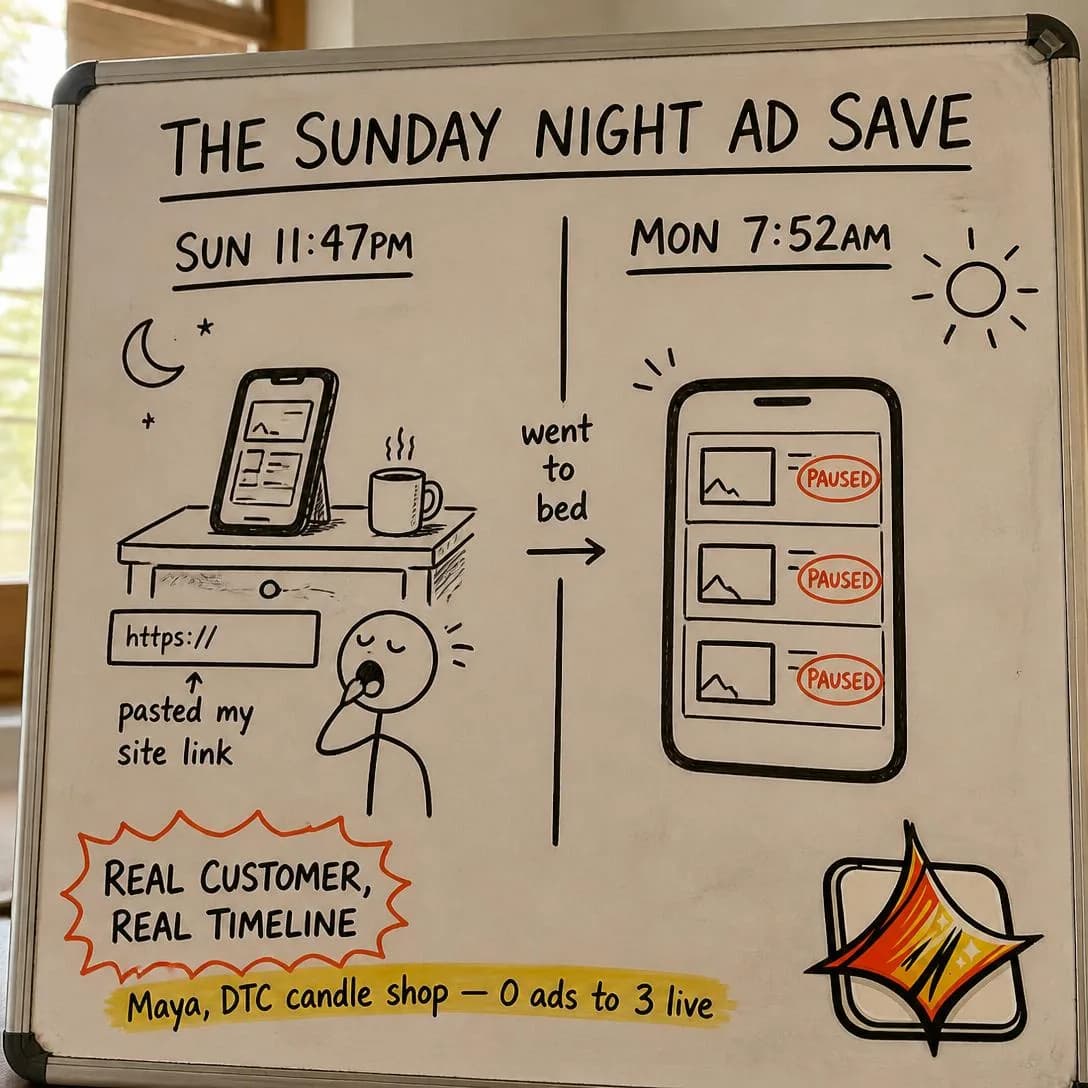
Zero ads to three live — overnight
Paste your site. Wake up to ads.
Before / After
Mid–HotContrasts the state before adoption with the state after adoption.
The most efficient proof format ever invented, because it needs no reading and no trust in the writer. You either see the difference or you don’t. It also carries the problem and the benefit in a single frame, which is why it can run colder than its stage suggests — it is doing the work of a Problem & Pain ad and a Benefit & Outcome ad simultaneously, and settling both with a picture.
The whole credibility fight is about controlled conditions. Same angle, same light, same distance, same crop. Every variable other than the product that changes between the two frames is a variable the reader will nominate as the real cause, and readers are unnervingly good at spotting a more flattering second photograph. Where you can, show the change happening rather than its two endpoints: a continuous take removes the place where the audience assumes something was fixed off-camera.
The taxonomy’s note about policy care is not boilerplate. The categories where before/after is most persuasive — health, body, skin, anything about appearance — are exactly the categories where the platforms restrict it, and the rules differ by market and change without much announcement. Read the current policy for your vertical before you shoot the creative rather than after the rejection, because the rejected version usually cannot be salvaged in the edit; it has to be reshot around a different claim.
- Works because
- Makes the transformation instantly visible.
- Fails when
- Can appear exaggerated; certain verticals require extra policy care.
Write one like this
- Left: the blank Canva page. Right: the ad, twenty seconds later.
- Same photo, same product. One of them went through the tool.
- This is the brief. This is what came back. There is nothing in between.
- Her ad account in March, and her ad account in May. Same budget both months.
Don’t change two things at once. A different crop, light or angle in the “after” hands the reader an explanation that isn’t your product, and they will take it.
This is the same person. Same desk. One minute apart. Left: 3 hours deep in an ad brief that still isn't finished. Right: holding a ready-to-publish Meta ad that took 60 seconds to make. No forms. No design handoffs. Just paste your site link, and best-in-slot builds the entire ad — concept, image, copy, all four Meta sizes — and drops it straight into your Ads Manager. Paused. Ready when you are. Nothing goes live until you say so. Start free → bestinslot.ai
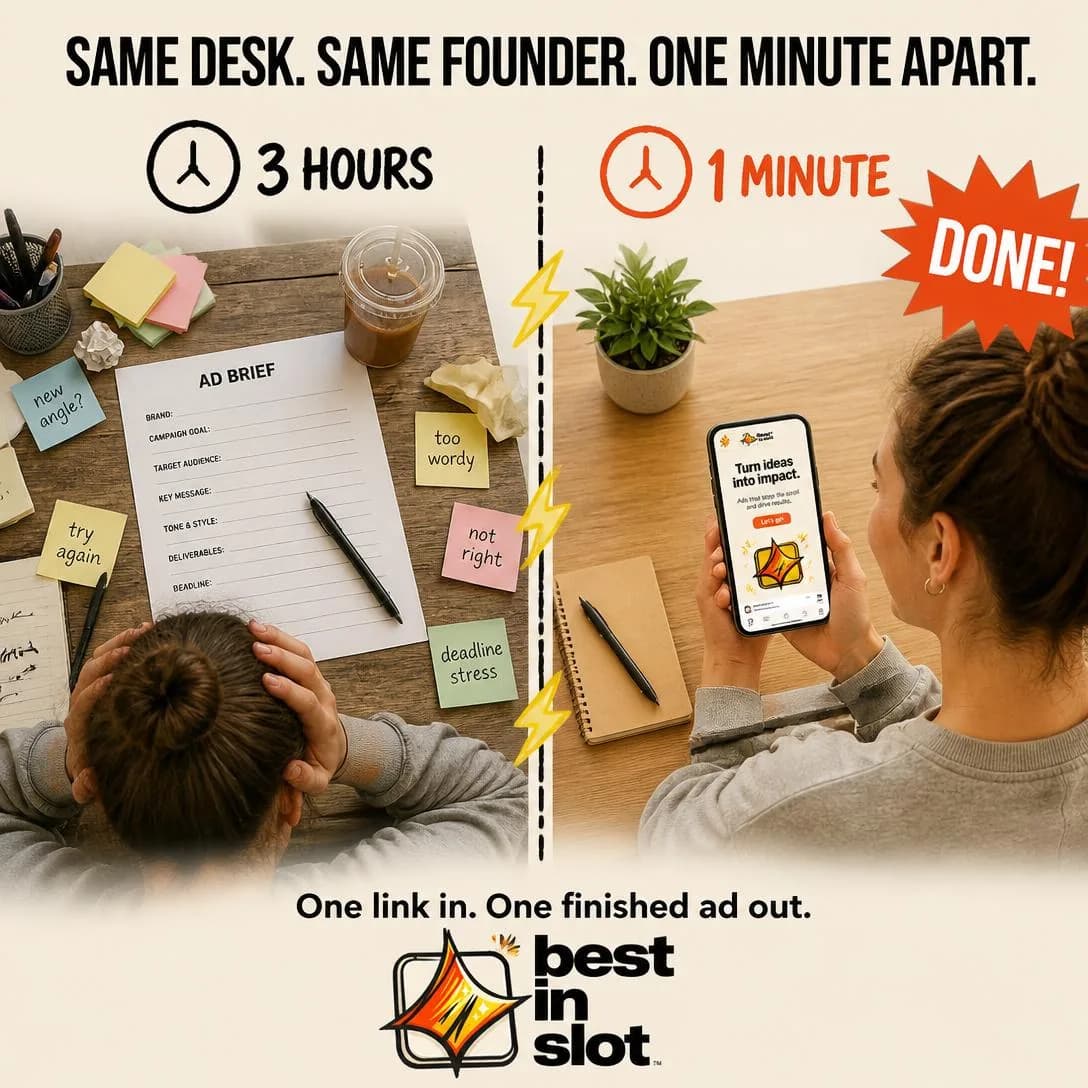
From blank brief to published ad in 60 seconds
No forms. Just finished ads.
Data / Statistical Proof
MidUses research, usage data, performance metrics, or quantified results.
Proof for the reader who takes nobody’s word for anything. It converts a claim into a measurement, and a measurement invites checking — which is the point, because the invitation is most of the persuasion. Nobody actually audits your sample size. They notice that you published one.
A statistic without a denominator is decoration. Three times faster than what, measured how, over how many runs, across what period. Poor sourcing is the weakness the taxonomy names and the fix is unglamorous: name the sample, the window and the comparison, in that order, in the ad rather than in a footnote. Your own usage data is often stronger than a cited study, because it is specific to the thing being sold and because you can say how it was collected.
One number per ad. Analytical readers are not persuaded by more statistics, they are persuaded by one statistic they can interrogate, and a stack of four reads as a deck rather than as evidence. Be careful about which one you pick, too: a metric chosen because it flatters has a recognisable shape, and the readers this angle targets are precisely the ones who recognise it. If the honest number is unimpressive, the ad has just told you something true about the product, and the fix is not in the copy.
- Works because
- Strong for skeptical or analytical buyers.
- Fails when
- Poor sourcing or weak context can reduce trust.
Write one like this
- Median time from link to finished ad, across the last 1,000 runs: 4 minutes 12 seconds.
- Nine out of ten first drafts get published without an edit. We measure it.
- 42 angles, one product, one week of spend. Two of them did 80% of the work.
- Advertisers who test five angles before scaling spend 34% less per purchase. Sample and method below.
Don’t publish a number without its denominator. “3x faster” with no baseline, sample or period is decoration, and the analytical reader you wrote it for is the one who notices first.
We timed it. 62 seconds from website link to a finished Meta ad sitting in your Ads Manager — paused, ready to review. No forms, no uploads, no guessing. Just paste your URL and watch the inbox fill up. Most ad tools promise 'fast.' We put a stopwatch on it.
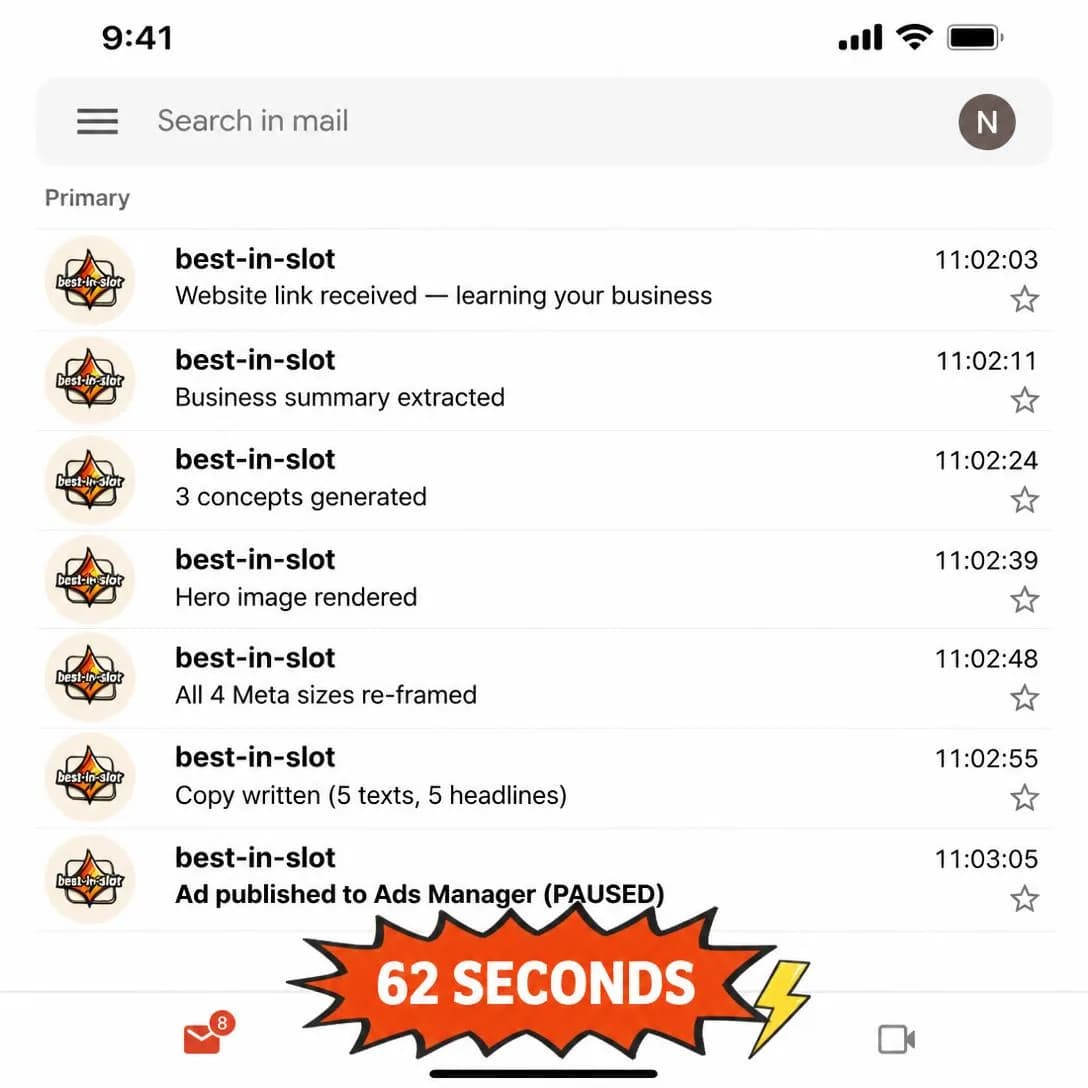
From link to live ad in 62 seconds
No forms. Just your website link.
Expert Authority
MidUses a credentialed professional or specialist to explain or recommend the product.
Borrowed credibility, and the mechanism underneath it is delegation. The reader cannot evaluate your claim, so they evaluate something they can: whether this person would attach their name and their reputation to it. That substitution is why the angle works hardest in categories where being wrong is expensive, slow to discover, or difficult to reverse.
Relevance beats fame, consistently and by a wide margin. A specialist your audience has never heard of, whose credential answers exactly the question they are stuck on, outperforms a famous generalist whose credential answers a different one. And have them explain rather than endorse. An expert walking through why the thing works transfers authority in a way an expert saying they like it never does, because the explanation is the part you cannot fake your way into — the credential is what makes the reader listen, and the reasoning is what they actually keep.
The risk the taxonomy names — the expert must be genuinely credible — usually shows up as visibility of the arrangement. Disclose it. A paid expert who says so is more persuasive than one whose relationship is discovered later, because the discovery retroactively poisons everything they said. And sanity-check the credential against your buyer rather than your industry: an initialism that impresses your peers can be complete noise to the person deciding whether to spend money.
- Works because
- Transfers authority and reduces uncertainty.
- Fails when
- The expert must be genuinely relevant and credible.
Write one like this
- A media buyer with £4m of Meta spend behind her on why your account only has one angle.
- “Most accounts don’t fail on creative quality. They fail on creative variety.” — twelve years buying media.
- We paid a performance marketer to try to break it. Her writeup is published unedited.
- She has tested every ad tool released since 2019. This is the first one still in her stack.
Don’t hire fame. A credential that answers the reader’s exact question beats a famous one that doesn’t, and an expert who explains beats an expert who endorses.
I spent 20 years running creative departments. Built the decks, argued the briefs, sat through the revision hell. A colleague dared me to try best-in-slot — you paste a website link, no forms, no brief, and it reads the business itself. One click. About a minute. Concept, hero image, all four Meta sizes, and the copy — sitting paused in Ads Manager, ready for me to review. Nothing goes live until you say so. That part mattered to me. It did in 60 seconds what used to take my team half a day. I don't say that lightly.
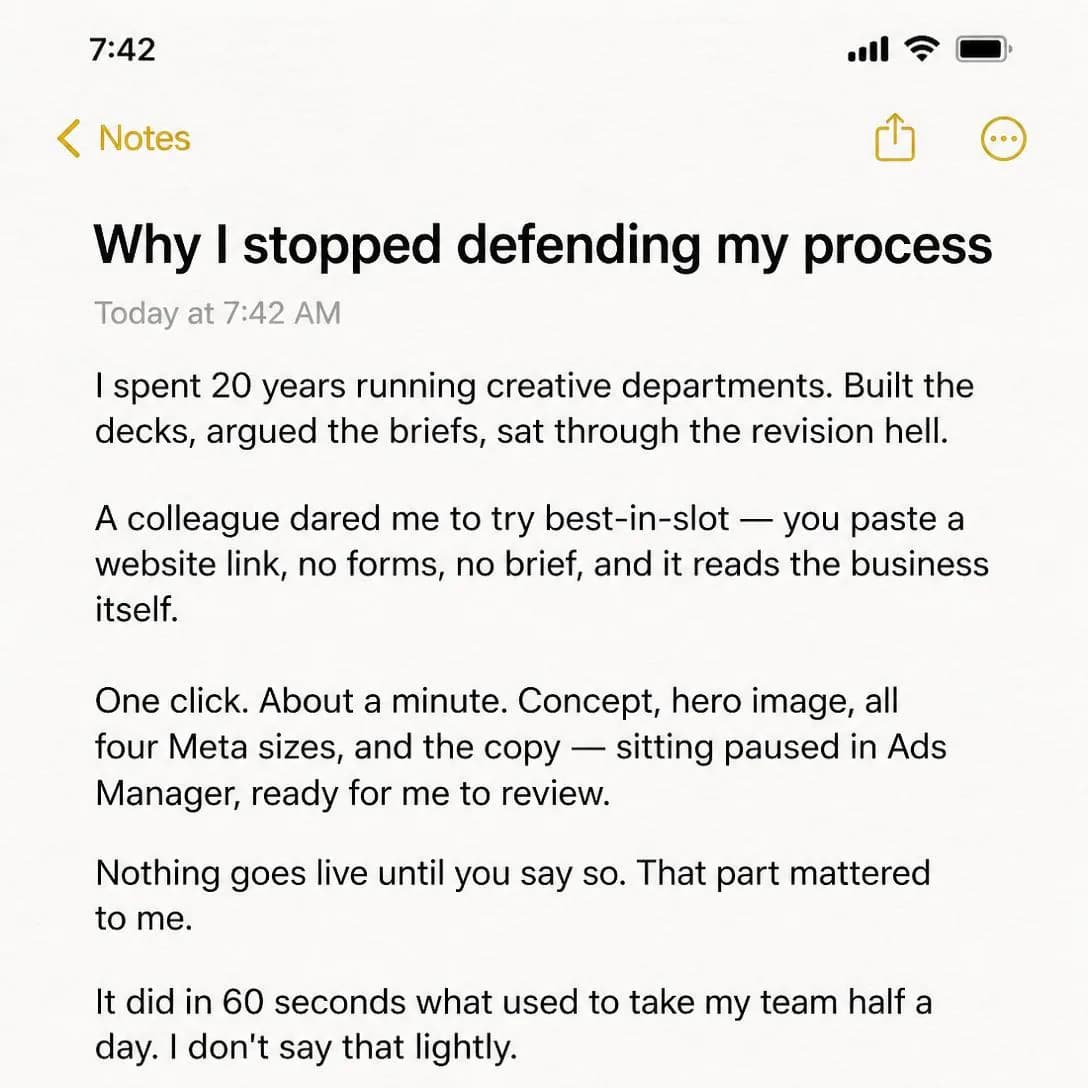
20 years in agencies. This replaced half my team.
Paste link. Get finished ad. 1 min.
Creator / Influencer Endorsement
Cold–MidUses a creator’s trust, reputation, or audience relationship to validate the product.
You are not renting reach here, you are renting a relationship. The endorsement carries because the audience has a history with this person — they have watched them be right, or be honest, or be funny, for a year — and your ad inherits the balance of that account. It is the reason this runs colder than everything else in the family: it arrives pre-trusted, so no evaluation is required.
Forced sponsorships are easy to detect, and the tell is always the same. The creator’s voice changes the moment the script starts, and the audience hears the seam even when they couldn’t name it. The fix is to hand over the argument and not the words: brief them on the one thing that has to be true when the video ends, give them the product for long enough to form an opinion, and let them get there their own way. They know their audience better than your copywriter does, and the ad’s entire value is that it sounds like them.
Casting is a fit problem, not a follower-count problem. A creator whose ordinary content already sits next to your category outperforms a much larger one who has never mentioned it, because relevance is what makes the endorsement legible as an opinion rather than as an ad. Disclose the arrangement, and make sure the endorsement would survive scrutiny — if they have not really used the product, some fraction of the audience will establish that, publicly, and the damage lands on you rather than on them.
- Works because
- Borrowed trust plus native-looking creative.
- Fails when
- Forced sponsorships are easy for viewers to detect.
Write one like this
- I’ve turned down every ad tool sponsorship for two years. This is the first one I took.
- She makes ads for a living and stopped charging clients for first drafts. Here’s why.
- “They gave me a login and said make whatever. So I gave it the worst brief I could think of.”
- Three creators, same product, no script. All three ended up making the same argument.
Don’t write the script. Give the creator the one thing that must be true at the end and let them find their own route — the voice change when a script starts is the first thing their audience notices.
A creator with 400K followers DM'd us this last night — completely unprompted, no deal, no payment: "ok this best-in-slot thing made my whole Meta ad in literally one minute, i'm obsessed, how is this real" We didn't ask her to post it. She just tried it. Paste a link, get a finished ad. That's the whole pitch.
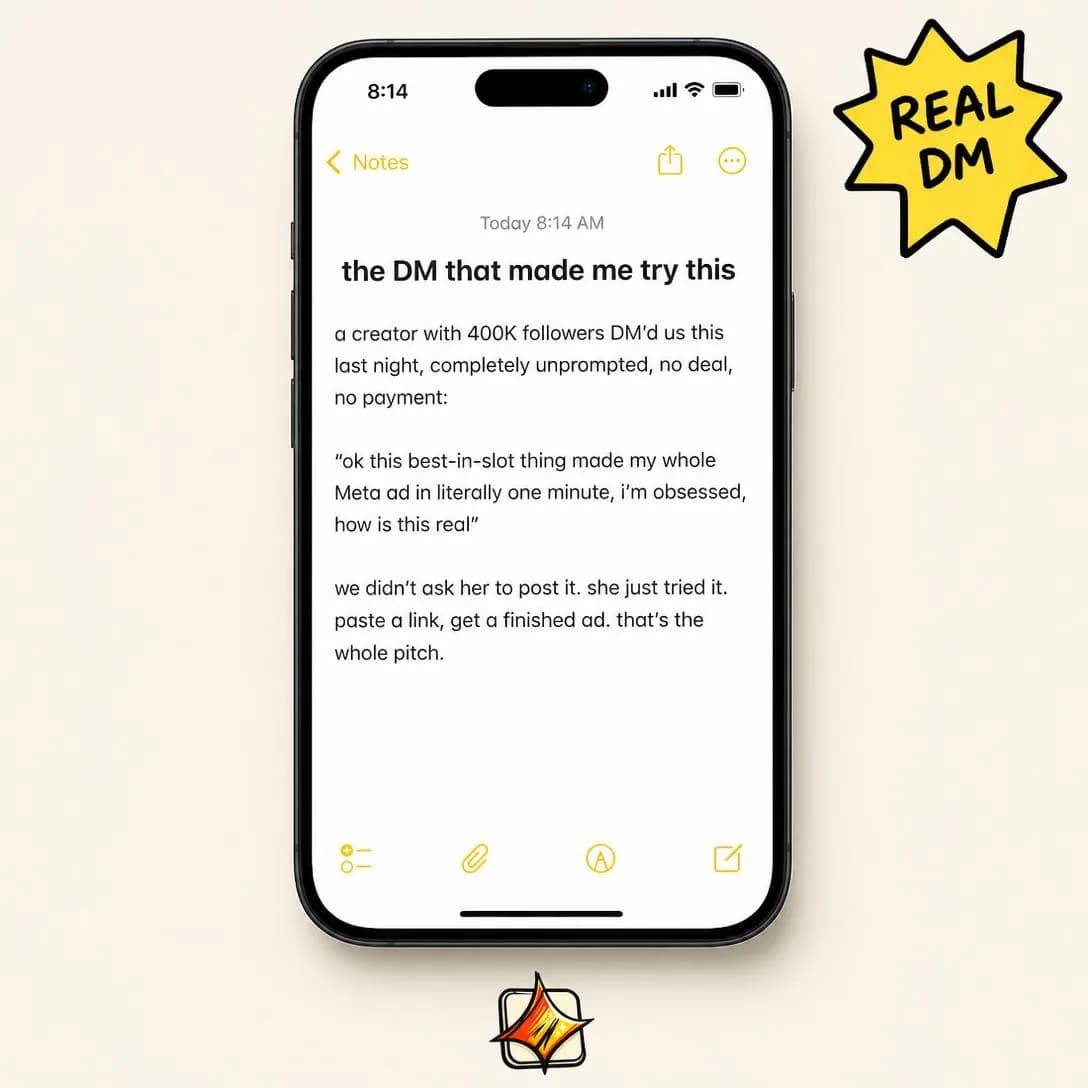
The DM that made us screenshot
Try it free. No card required.
Third-Party Validation
MidUses awards, certifications, media coverage, independent testing, or industry recognition.
Trust that originates outside the brand, which makes it structurally the strongest evidence available to you: the source had no reason to flatter you, and the audience knows it. Certification is the version with real teeth, because a standard is something you could have failed, and the possibility of failure is what converts a badge from a graphic into a fact.
The weakness in the taxonomy is the whole game. A badge means nothing when the reader has never heard of the issuer, and most awards are unknown to most buyers — which describes nearly every award your category hands out. So carry the meaning alongside the logo: one clause on what the test involved or what the standard requires. “Certified” is decoration. “Tested for 600 hours at 40°C by a body that fails about a third of entrants” is proof, and it is proof precisely because of the failure rate.
Two cautions. Independent testing you commissioned yourself sits in a grey area the audience is right to be suspicious about, so say who paid — the disclosure costs less than the discovery. And prefer validations that not everyone has: an award every competitor also won is an attendance record, and displaying it puts you in a set rather than distinguishing you from one. When in doubt, choose the recognition your buyer would have to have failed to get.
- Works because
- Trust originates outside the brand.
- Fails when
- Recognition may mean little if the audience does not know the source.
Write one like this
- The Meta integration was reviewed before we were allowed to ship it. That took four months.
- Independently tested for 600 hours at 40°C. About a third of entrants don’t finish.
- Certified to a standard you can actually fail. We nearly did, twice.
- An award we didn’t enter, from people who don’t accept submissions.
Don’t post a badge without its meaning. A logo from an issuer your buyer has never heard of is decoration — one clause on what the standard demands turns it back into evidence.
The AI ad tool everyone's writing about. 🗞️ Not our words — theirs. best-in-slot has been featured in marketing roundups, startup showcases, and founder toolkits because it does what most ad platforms don't: turns one link into a finished Meta ad in about a minute. No forms. No guesswork. Just ads that land in your account, paused and ready. Don't take our word for it — the press already did.
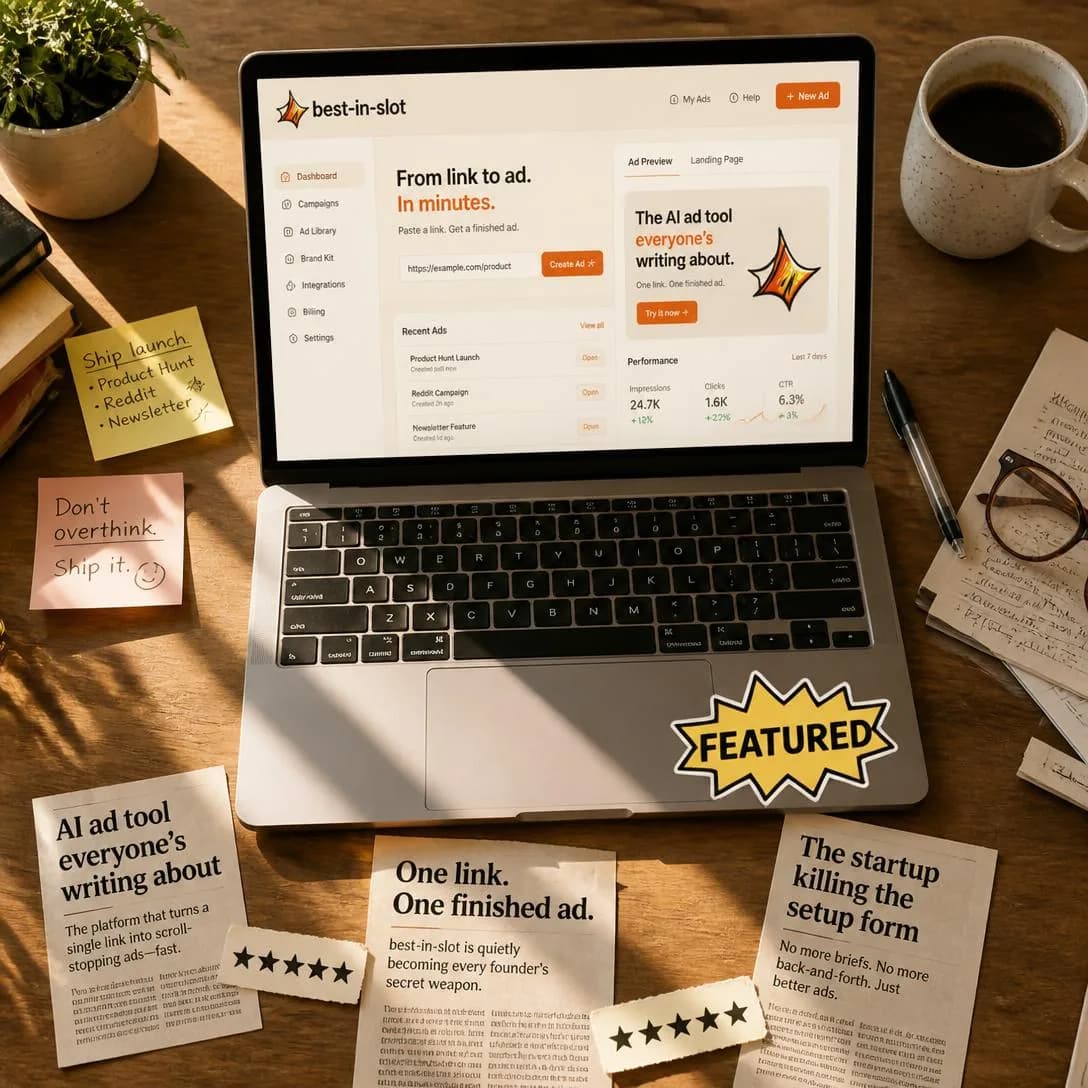
The AI ad tool press won't stop covering
Paste link. Get finished Meta ad.
Popularity / Bestseller
Mid–HotHighlights high sales volume, bestseller status, or category popularity.
Social proof’s blunter cousin. It doesn’t argue quality, it argues consensus, and readers reach for consensus exactly when they don’t want to do the research. That is not laziness, it is economising: the herd is a decision shortcut, and this angle sells the shortcut rather than the product.
It needs genuine scale and it goes generic fast, because everything is somebody’s bestseller. The escape is to narrow the category until the claim is both true and worth knowing — “our bestseller” tells the reader nothing, while “the one four in five first-time buyers start with” is a recommendation they can act on immediately. That is the real service this angle provides: not proof that you’re popular, but an answer to “which one should I get”, which is the question stalling most people who were otherwise ready to buy.
Then watch for the reverse effect, because it is stronger than people expect. Popularity reassures readers who want to be safe and repels readers who want to be first, so in taste-led or identity-led categories “everyone has this” is an argument against buying. And put a date on it. Popularity claims decay quietly — a bestseller badge with no period attached is eventually a claim about a year nobody remembers, and unlike an award it doesn’t even have a plaque to point at.
- Works because
- Uses herd behavior and decision shortcuts.
- Fails when
- Requires real scale and can become generic.
Write one like this
- Four out of five people who try it start with the same angle. So start there.
- Our most-run angle last month, by a distance. It isn’t the clever one.
- The credit pack most people come back and buy twice.
- If you only test one thing this week, test the thing everyone else tested first.
Don’t claim a bestseller without a category. “Our bestseller” gives the reader nothing to act on; the useful version narrows it until it turns into a recommendation.
50,000+ ads created this week. Not a typo. 🔥 That's how many founders and agencies chose best-in-slot over freelancers, templates, and the usual ad-tool chaos. Paste your website link, get a finished Meta ad in a minute — concept, image, copy, all four sizes, published straight into Ads Manager. You're not early to this one.
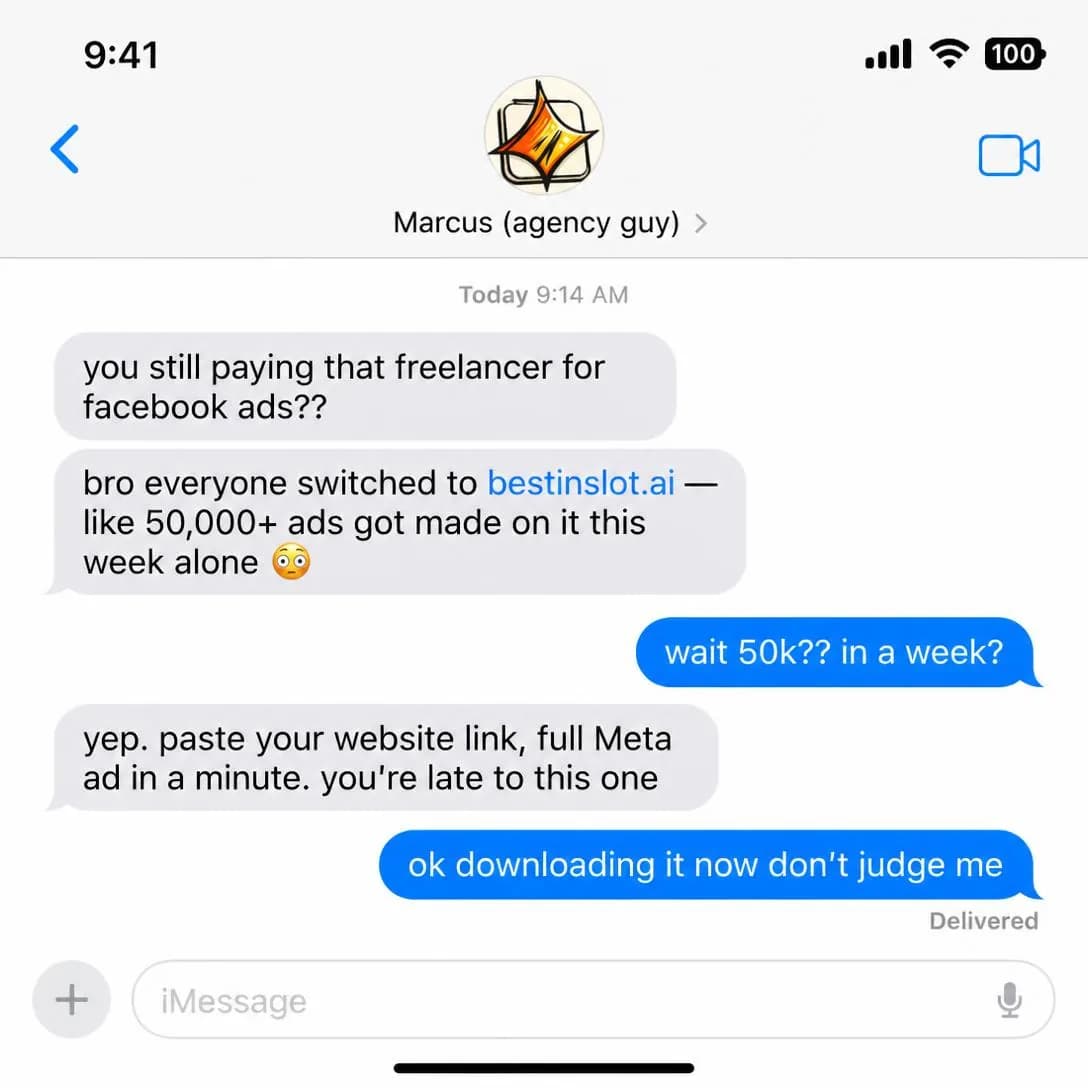
50k+ ads made this week on best-in-slot
Website → ad in 60 seconds
Repeat Customer
Mid–HotEmphasizes repurchase, renewal, retention, or long-term loyalty.
The strongest proof in the family and the least used. Anyone can be persuaded once — that is what the other eleven angles are for. A second purchase is a verdict delivered after the product had a full opportunity to disappoint, which is a different category of evidence altogether. A first purchase proves your marketing works. A repeat proves the product does, and only one of those is what the reader is actually worried about.
It is also the hardest thing here to manufacture, which is precisely why it lands. Retention numbers are boring, specific and checkable in a way sentiment never is, so describe the behaviour rather than the feeling. “Nine out of ten buy a second pack” beats “our customers love us” because the first one reports something that happened and the second reports something you decided to say. Keep the window in it, too: repeats within three weeks means something that repeats eventually does not.
The taxonomy is right that it fails in low-repeat categories, but the analogue nearly always exists — renewals, referrals, the customer who came back for a different product, the account still active after a year. Find yours and measure it. And take the internal reading seriously: if you sit down to write this ad and there is no honest number to write it with, you have not found a copy problem. You have found out what your product does after the marketing stops.
- Works because
- Often stronger proof than a one-time purchase.
- Fails when
- Not useful for categories with low repeat frequency.
Write one like this
- Nine out of ten buy a second pack.
- The average account has run it forty times. That’s the number we actually watch.
- First purchases prove the ad worked. Second ones prove the product did.
- Most people who buy credits buy them again within three weeks. That’s the entire pitch.
Don’t translate retention into sentiment. “Customers love us” is an opinion you asserted; “nine in ten buy again” is a behaviour you observed, and only one of them is proof.
I don't write testimonials. I just show receipts. 11 months, same tool, same $39 charge. If it didn't work, I'd have canceled in month two. Instead, I kept paying — because it keeps shipping ads faster than anything else I've tried. No forms, no export files, just paste a link and get a finished Meta ad in under a minute. Try it free, see if your billing history looks like mine.
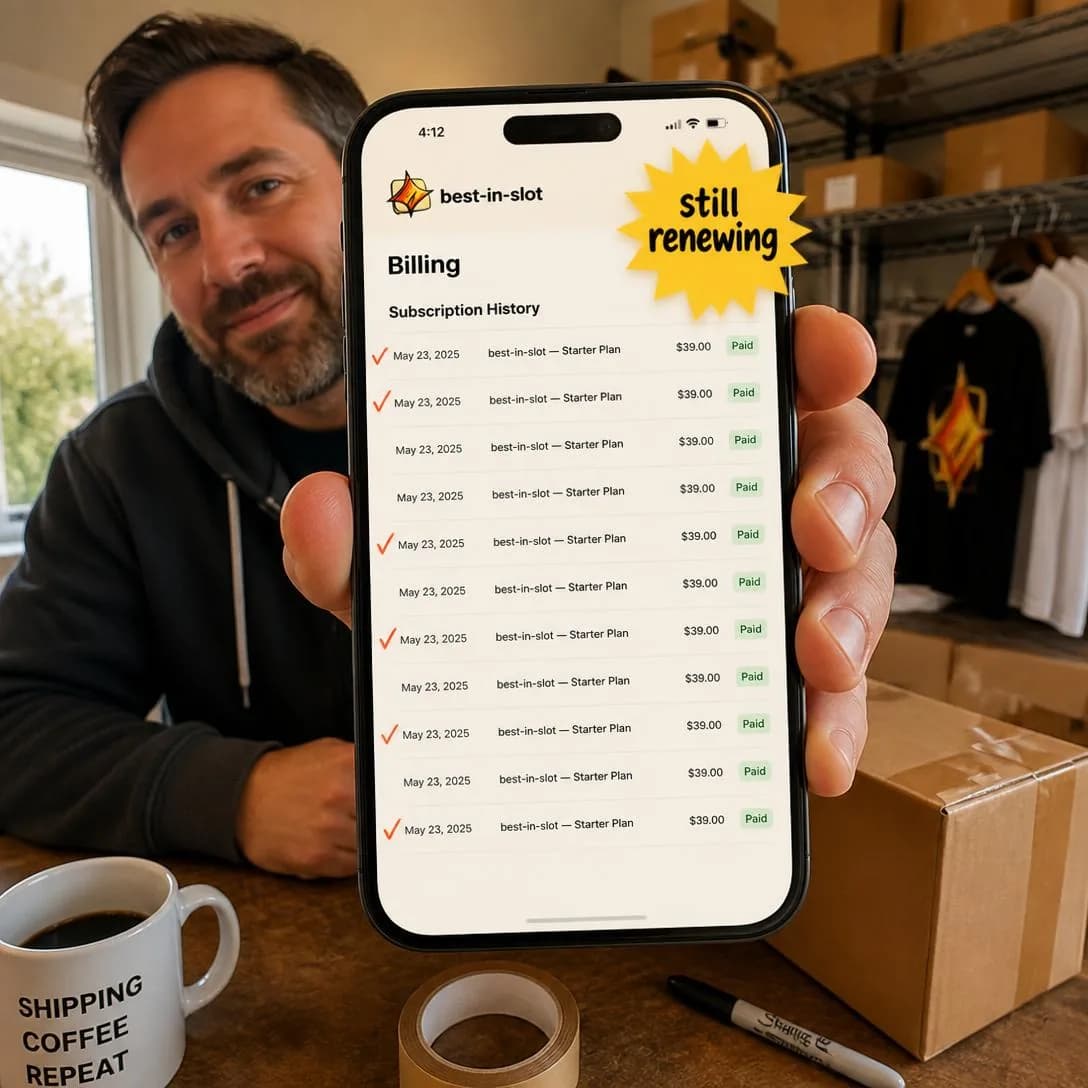
11 months. Still renewing. Here's why.
Meta ads in 60 seconds. Try free.
Testing them against each other
Test this family against itself the way you would test any other — one audience, one offer, one product — but read the results with temperature in mind, because proof is the most stage-sensitive family in the library. The same testimonial that dies cold will beat everything you own at a retargeting audience. A proof ad that lost has not necessarily been disproved; it may only have been asked a question the audience hadn’t reached yet. So run the family at mid and hot first, find the winner where proof is welcome, and only then find out how far up the funnel it can be pushed before recognition stops happening.
Then treat the outcome as an inventory decision rather than a copy decision, because this is the only family where losing tells you to go and collect something. If the case study beat the star rating, the answer is not a better ratings graphic — it is three more case studies, which is a quarter of operational work rather than an afternoon of writing. Whatever wins, keep the chain unbroken: the proof that earned the click should be the first thing on the landing page and still visible at the payment form, since a reader persuaded by a number who then cannot find it again has been handed a reason to close the tab. And re-audit yearly. Proof ages, the customer in your best testimonial eventually churns, and a 2023 award is a fact about 2023.
Pick an angle. Get the ad.
No credit card · 50 free credits (about 5 ads or Instagram posts)
Social Proof
Mid–HotShows that many other people already choose, use, or trust the product.
The argument is arithmetic on risk: if this many people have already decided, the odds that it is a mistake are low. Notice that it is not evidence about the product at all — it is evidence about other people’s evidence. That is exactly why it works, because most readers have neither the time nor the expertise to evaluate the thing itself, and delegating to a crowd is cheaper than investigating.
Vagueness is what kills it, and the vague version has a signature. “Thousands of happy customers” is the sentence brands use when nobody has counted anything, and readers have learned to hear the absence in it. The fix is to make the number look counted: odd rather than round, dated rather than cumulative, attached to a specific action rather than to a feeling. A figure that could not plausibly have been rounded implies a system that produced it.
Then narrow the crowd. The reader is not reassured by many people, they are reassured by many people like them, and a smaller number with a sharper description beats a bigger one every time — three hundred people with the reader’s exact job is stronger proof than four thousand anybodies. This also settles what to do when your numbers are small: use the honest small one, described narrowly. A big vague claim reads as invented, and a small specific one reads as counted, and counted is the only quality this angle trades in.
Write one like this
Don’tDon’t write “thousands of happy customers”. A round, undated, unattributed number is what brands say when they have nothing to count, and the reader hears it that way.
Thousands of founders stopped writing ads. Look what they made instead. Coffee, candles, cookware, dog treats, skincare, supplements — every one of these ads was built by a founder who just pasted a link and let the tool do the rest. No copywriter. No designer. No brief. One click, one finished Meta ad. You're looking at proof that it works for businesses that look nothing like each other. Which means it'll work for yours too.
Thousands of founders already use this
Paste link. Get finished ad.