
Ad Generator · Skincare & Beauty Brands
Facebook & Instagram ad generator for skincare and beauty brands
Paste your site. The AI reads your products, your ingredient lists and what you claim, then writes the concepts, draws the images and drafts the copy. In our skincare examples its claims about skin drifted one way, from how skin looks towards what the product does to it, so before any ad runs, read it for the words that turn a cream into a drug.
Enter your skincare or beauty brand's website
Your website is the whole brief: the ads start from what your product pages claim, and in our examples the steps after that pushed further. You see and correct the summary it writes before any ad is made, and every ad lands paused unless you choose otherwise, so you can read it for repair, renewal and anything printed in the picture before it runs.
No credit card · 50 free credits (about 5 ads or Instagram posts)
What it reads off a skincare or beauty website
- Your product pages, as text: names, sizes, prices and how long each one lasts. The AI writes a business summary from your pages, under an instruction to use only what they say, shows it to you to correct, and writes every ad from it. A size and a life (“30 ml, about ninety nights”) is what lets an ad sell a price per night, so do that division yourself and put the result on the page. Our serum ad's 42 cents was right because its brief supplied it. The summary also divided 30 ml by ninety nights on its own, and the copy turned the answer into a fact about skin: “skin saturation happens at precisely 0.33 ml”. Read every number an ad worked out for itself.
- What each product page claims. That is what the FDA reads to decide whether a product is a cosmetic or a drug. Look in three places: product names (one of our summaries named a serum “Barrier Repair Emulsion”), ingredient blurbs (ceramides that “reinforce the extracellular matrix”) and how-it-works copy. If a page says a cream repairs, heals or treats, change the page as well as the summary before the first ad, then read each ad anyway: in our examples later steps added claims no summary made.
- Directions for use. A schedule is an argument a reader can check on their own face, and a cosmetic one. Our retinal serum's summary kept its two-nights-a-week start, and the ads dropped it anyway and credited the molecule, with “renewal”. Put the routine on the page, then check each ad kept it, and write it back into the copy before you publish if not.
- Ingredient lists and actives with their percentages. The actives our briefs gave came back right: 0.1% retinal, 10% niacinamide, 20% zinc oxide. Packaging in a picture is drawn new, not copied, and a hand-cream tube came back printed with an ingredient list nobody wrote, so keep the full list on your site as text, where a reader with an allergy looks for it.
- Shades and skin types, in words. Name the shade range on the page (“three shades, light to deep”) so the ads can make skin tone part of the product rather than a sentence about the reader; in our mineral sunscreen ad the copy mostly did. Faces are another matter: the only deep skin tone in our batch was the one a brief built into the product, and the two faces nobody described came back light.
- Sunscreen details: the SPF, broad spectrum, water resistance in minutes. A sunscreen is a drug in the United States and may not be labelled waterproof or sweatproof, or called a sunblock; our sunscreen ad kept its SPF 30 right and used none of them.
- Your refund, guarantee and subscription terms, in plain words. The FTC's guides on guarantees ask an ad that promises a refund to disclose its conditions, and Meta requires a subscription ad to show the price and how often it is charged. Our refund ad's summary called a 60-day refund “unconditional” and listed conditions anyway, and the concept narrowed it to “If it stings or pills, email support”, the complaint our own audience line gave it.
- Reviews and customer results, if you publish them. The summary keeps notable proof and an ad may quote it. The FTC's rule on consumer reviews prohibits a review that misrepresents that the reviewer exists or what they experienced, and a real review can still be a drug claim once your ad quotes it: “it cleared my acne” in your ad is your claim. Before-and-after photos on your site do not appear in the ads.
- Your about page and anything you have written to customers: who makes the products and why. A founder's letter, or an apology when something went wrong, is one of the offers below, and it needs your real facts: our apology ad's summary had its brand “recall” stock it had only stopped using.
- Your colours and the look of your pages, the feel of your typography included, taken from screenshots of up to three of the pages you give it. Your photographs set the look; they do not appear in the ads, which are drawn new. To build the picture around your own jar, add it with its photos, as the next section explains.
What one click gives you
A concept written for one kind of customer
Not “skincare ad”. A specific person, of the kind our examples were written for: people who gave up on retinol in the first week, people who wash their hands thirty times a shift. The audience is chosen first, from the ones it drew up from your site, which you can edit, and the ad is written to it. Describe those people by what they do and keep symptoms out, though that alone is not enough: in our batch every audience line that named a skin problem came back as a sentence about the reader's own skin (“If your knuckles split by 2 PM”), and one ad whose audience named none still got its “wind-chapped knuckles” from the summary. Meta rejects ads that assert or imply the reader's health; its own example is “Do you have diabetes?”.
A finished image, and every word printed in it
Every picture is drawn new by the AI. To build it around your own jar or tube, add the product under “What are we advertising?” with up to six photos: the AI uses them as references and is told to show the product only as photographed. The result is a new picture of your pack, not your photo, and we have not yet published a skincare batch made that way, so read every word on the drawn label. In the step-by-step path, where you make each choice yourself instead of taking the one click, you can edit the square picture with one sentence, such as “remove the text from the tube”, before the other sizes are made from it.
All four Facebook and Instagram ad sizes
The square re-framed for 4:5 feeds, 9:16 Stories and Reels on both apps, and 1.91:1, which our publisher sends only to Facebook's right-hand column and search results. A re-frame is a new drawing, not a crop: a notes-app screenshot lost its phone frame in one, and our before-and-after came back with both faces redrawn. Read every size, not only the square.
Ad copy: five headlines, five primary texts, a description
One run, so you are choosing between versions of one argument. Read them as a set, because they can disagree: our cleanser ad puts the tightness at noon, at 1 p.m. and at 2 p.m. in different lines. Every line can be edited in place before you publish, which is where a “rebuilds” becomes “softens”. Expect most to run long. In our ten skincare ads, 3 of 50 headlines fit Facebook Feed's recommended 27 characters, and 15 of 50 primary texts, all from three ads, fit its recommended 50–150.
Published paused, into an ad set you pick
It never creates campaigns or ad sets, never edits your existing ads and never spends. So to publish you need a campaign and an ad set in your own Meta Ads Manager, and the ad takes that ad set's age range, whatever is in the picture. The objective belongs to that campaign too, so it is yours to set; the Facebook guide works it out. It publishes paused unless you switch that off. Every button it offers opens a web page (Shop now, Learn more, Subscribe and five more), which suits a product page, a refund policy or a subscription. A partnership ad or an ad that opens a Messenger chat is built in Ads Manager, and Download all and Copy all hand you the images and the text to build any ad there yourself.
The step-by-step path swaps the one click for choosing the audience, the angle, the concept and the image style from a gallery of 66 — same output, more decisions.
Four ads it made for skincare brands that do not exist: two that got their facts right, two that show the caution below
Generated by best-in-slot. Published as they came back, in three shapes. Two got their facts right: a routine set priced $74 as briefed, though its “tinted spf 50ml” tube reads as SPF 50 at a glance on an SPF 30 sunscreen and the shelf behind it came back tidy, nine products where the brief described eleven; and a mineral sunscreen that kept its SPF 30 and 20% zinc oxide, never said waterproof, and showed the deep skin tone its brief built into the product, though both halves of its comparison show the after, in one of its three shades. Two are the caution below, drawn: a before-and-after of a person who does not exist, and a hand-cream tube printed with “HAND REPAIR”. The notes behind each link judge an ad against the one-line brief it started from; the caution judges it against the business summary the AI worked from, because that is the part your site replaces.
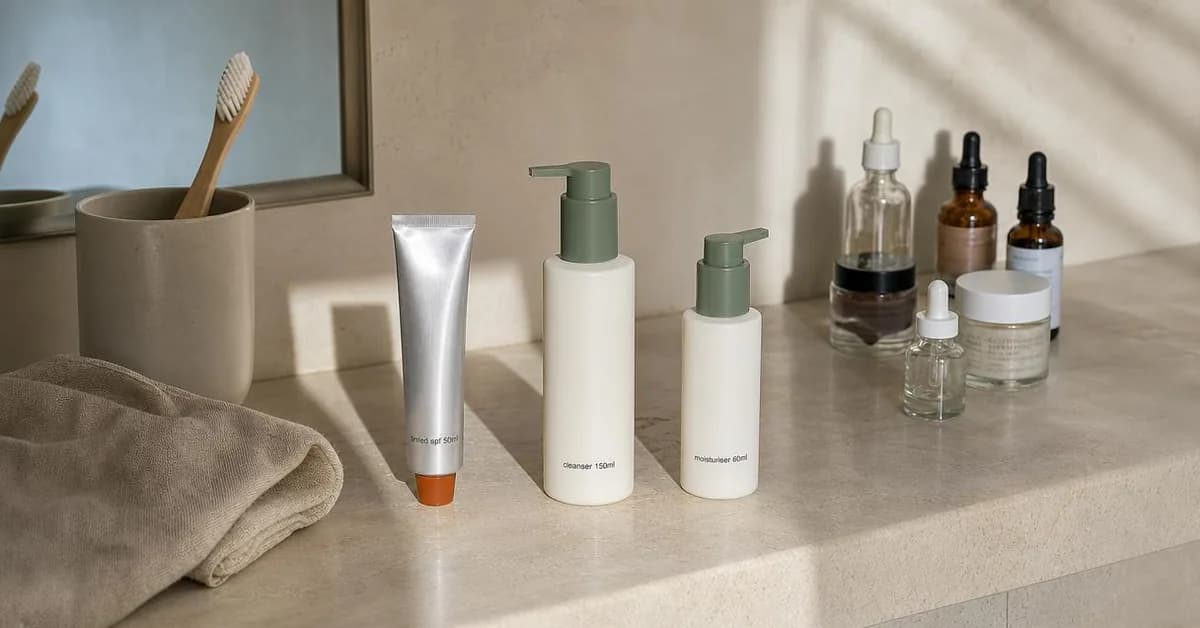
Benefit & Outcome · 1.91:1 · Sales
Trade 11 bottles for 3 essentials.
Written for: People with a shelf of half-finished bottles.
How this one was made →
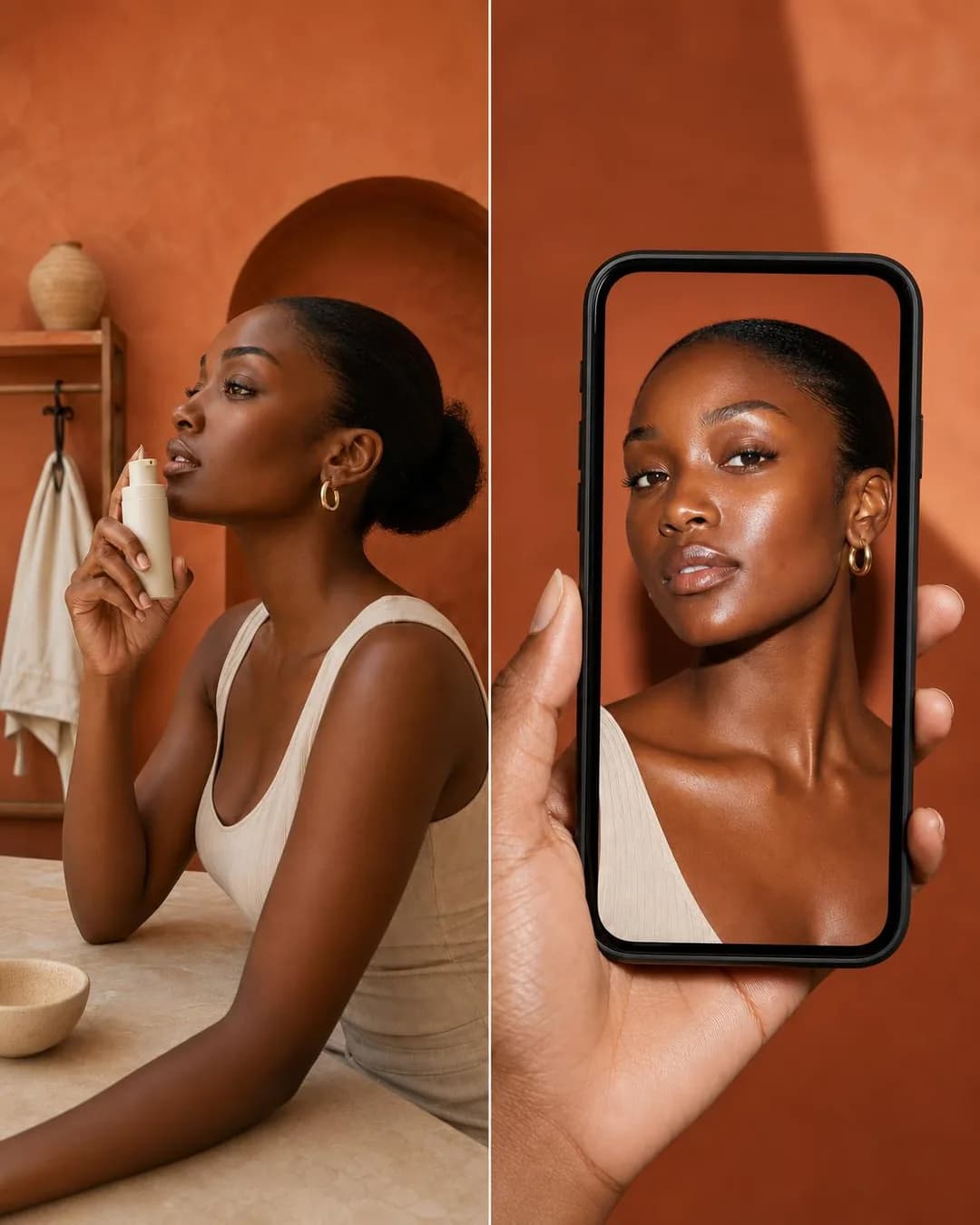
Comparison & Positioning · 4:5 · Sales
Zero White Cast. Zero Flashback.
Written for: People who stopped wearing mineral sunscreen after seeing photos.
How this one was made →
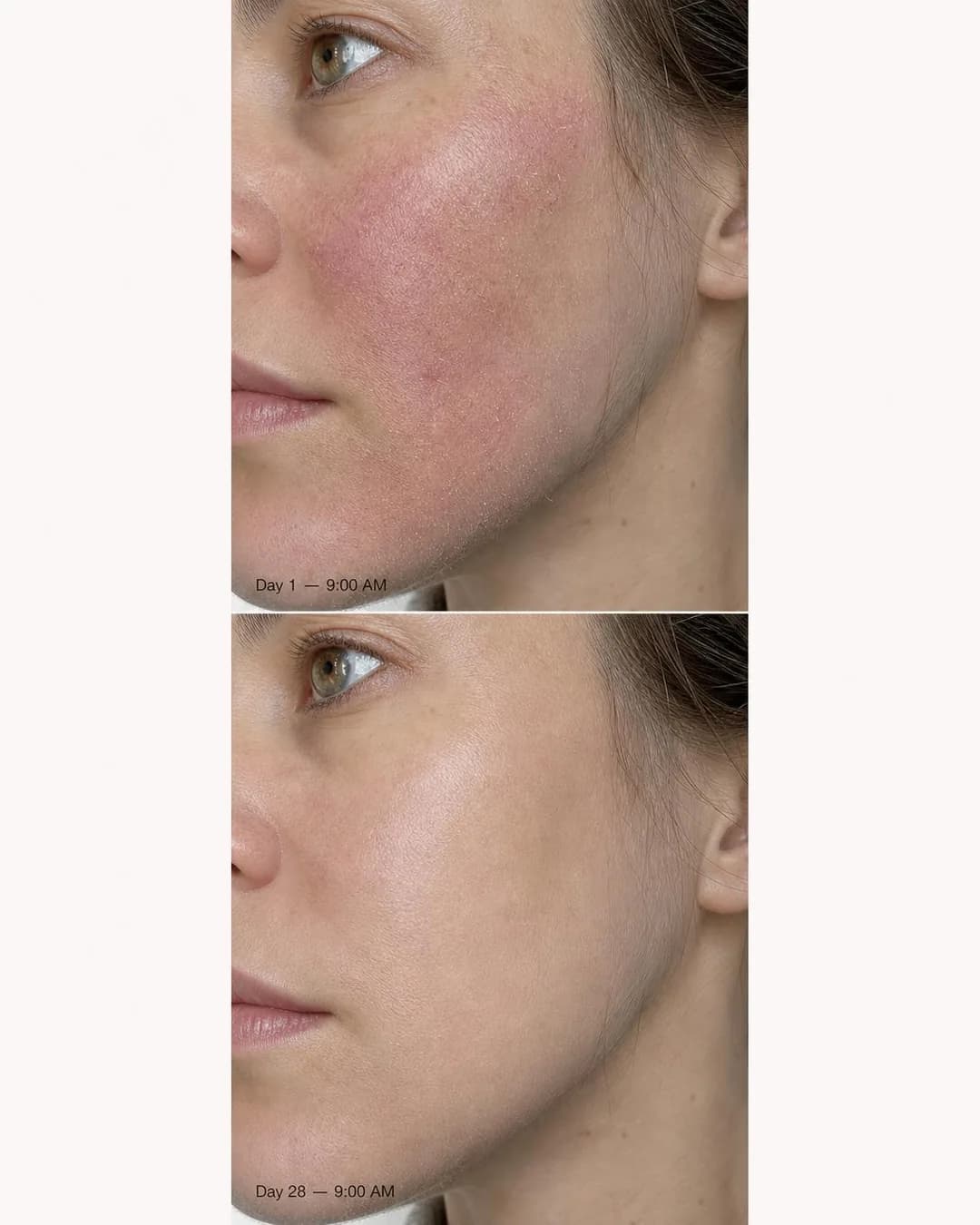
Proof & Trust · 4:5 · Sales
Day 1 vs Day 28: Barrier Rebuilt
Written for: People whose cheeks go rough every January.
How this one was made →
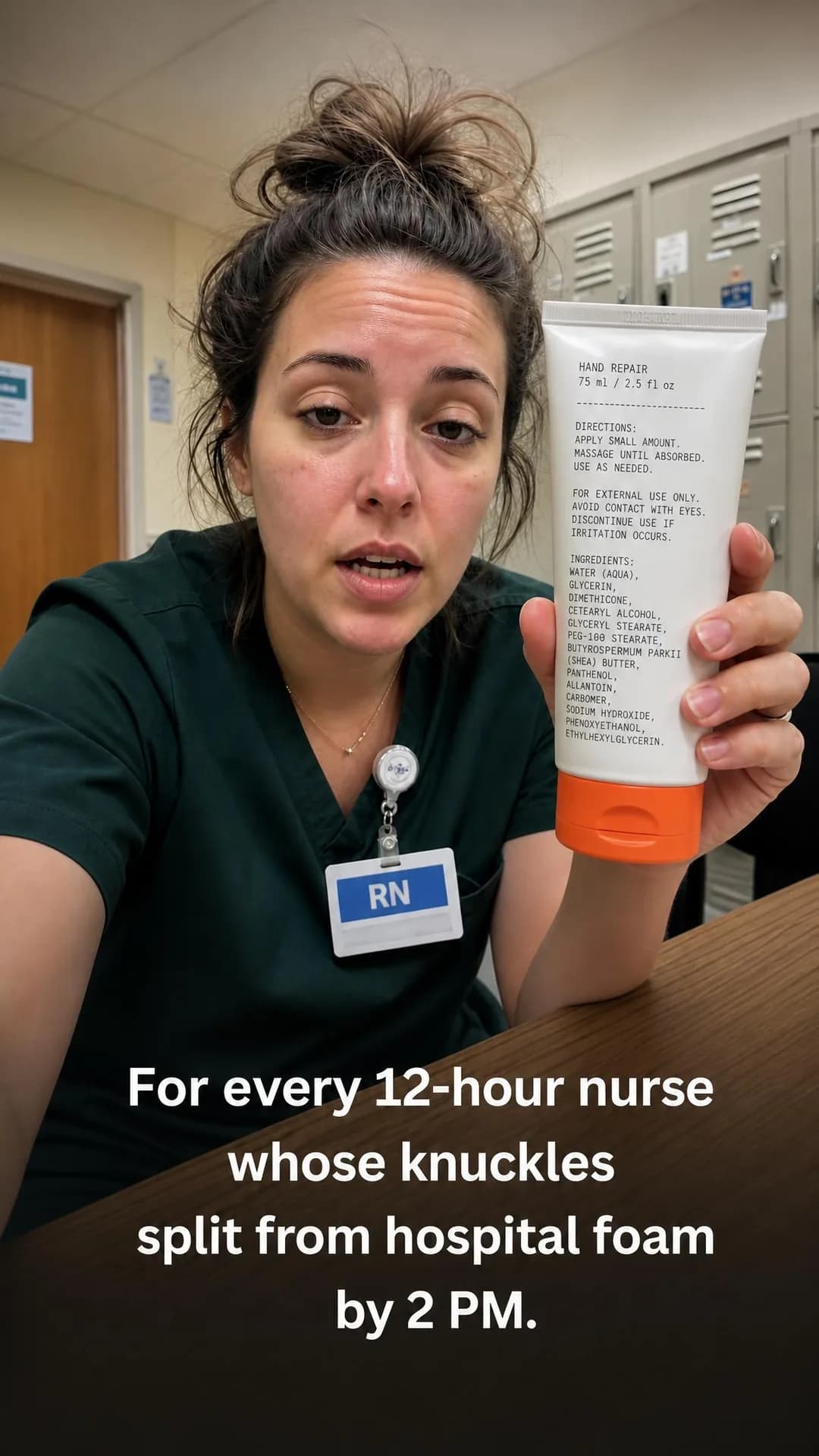
Identity & Emotion · 9:16 · Traffic
Built for 12-Hour Hospital Shifts
Written for: People who wash their hands thirty times a shift.
How this one was made →
Skincare offers to point it at
Fourteen, from the Facebook guide, running from the first jar to the second. Do not run fourteen. Pick the first-jar offer your best product earns and the second-jar offer that suits how long it lasts, and type each into the Emphasize box when you start its ad. Three need real people or real skin, so they are built in Ads Manager: the before-and-after and the shade range from your own photographs, the creator's post from theirs. They are marked below. Each links to its row in the guide: who it is for, the argument that wins it, and the objective to buy it with.
- Your hero product, argued by how to use it
- The problem people blame on the wrong product
- A product for a situation
- A routine set sized to a date
- The price per night
- A shade range on real skin, your photos in Ads Manager
- A before-and-after of real customers, built in Ads Manager
- A creator's post as a partnership ad, built in Ads Manager
- A refund that does not need the bottle back
- Gift sets
- A seasonal batch with a real cap
- The second jar, as the first runs out
- Subscribe and save
- A letter when something went wrong
Our examples pushed claims about skin one way: towards repair and renewal, the words that can turn a cream into a drug
In most trades a stronger claim is a louder ad. In skincare it can be a different product. The FDA decides whether a jar is a cosmetic or a drug from what it is claimed to do, in advertising and online as well as on the label: a product that makes lines “less noticeable, simply by moisturizing” is a cosmetic, and one that claims to “increase the skin's production of collagen” is a drug. Meta reads the same ad for what it says about the reader. So before an ad runs, read it for these:
- Every verb applied to skin: repair, rebuild, renew, heal, treat, protect against the cold, and anything “clinical”. Softer, smoother, less rough, and how skin looks or feels, stay on the cosmetic side.
- Every hedge and every exact figure. Put back the “often” and “about” your site used, and take out any “precisely” or percentage you could not show evidence for.
- Every word printed in the picture, against your real pack and your real claims: labels, ingredient lists, captions, a masthead.
- Every face: what skin tone it shows, whether the person exists, and whether the ad says or implies they used the product.
- Every sentence that tells the reader about their own skin or age.
- The age floor of the ad set you publish into. A before-and-after needs 18 and over, and so, as the safe default, does a sunscreen.
That is the read any skincare ad needs, whoever drafted it. Our ten examples show where this tool's drafts need it most. They had no websites behind them: a model wrote each invented brand a business summary from a one-line brief, told to invent a whole business, standing in for the site you would paste. The steps after it are the steps that run for you, except that we chose each ad's audience, angle and style ourselves and told every step the business had no name. Eight of the ten briefs described a cosmetic in cosmetic terms, and every change we traced in a claim about skin ran the same way.
Much of that drift started in those summaries, which is the part your site replaces. Written from cosmetic briefs, they called one brand's products “barrier treatments” whose ceramides “reinforce the extracellular matrix”, and turned its brief's photographs of one customer into “real people”; sold a hand cream on “genuine barrier repair” and a balm as a “shield against biting frost”; named a serum “Barrier Repair Emulsion”; made the cleanser brief's “often” into “almost always”; and turned “about one in twelve” into “roughly 8.3%”. The ads carried these forward. Yours is written from your own pages, under an instruction to use only what they say, but it is still a model's summary: read it for the list above before you approve it.
The later steps, which run for you, pushed further. The retinal serum's summary described its effect in cosmetic terms; its concept wrote that it “accelerates cellular renewal”. The moisturiser's concept wrote that its ceramides “rebuild rough winter skin”. The step that writes instructions for the picture gave the serum's science-article image a masthead, “DERMAL MECHANICS REVIEW”, and the sentence “activating cellular pathways”, although the instructions for that style tell it never to invent a named journal and never to write a medical or health claim. For the moisturiser, whose brief promised unretouched photographs of a customer, the concept asked for an “unretouched” diptych and the picture's instructions described its subject as “a real person's bare cheekbone”: a promise about photographs, applied to a drawing.
The drawing added more. A hand-cream tube whose instructions asked only for plain technical labelling came back reading “HAND REPAIR”, over thirteen ingredients, eleven of which nobody chose. Styles differ in how much they print: the macro-texture style is told to carry “no claim, no label, no logo”, and our balm ad in it printed nothing, while a science article or a notes-app screenshot is a picture made of sentences.
The copy went furthest in words: “Potent retinoid renewal, no burn”; “Clinical” added to the hand cream's barrier repair; “8.3%” on its own in two primary texts; “skin saturation happens at precisely 0.33 ml”, the summary's division of 30 ml by ninety nights presented as a fact about skin; and, above the drawn face, “Photographed above: unedited morning daylight”.
Each kind of mistake has its own fix. Claims and hedges in the summary are fixed there, before the next ad, and kept in cosmetic words in your brand settings. Words in the copy are edited in place before you publish, which is where “rebuilds” becomes “softens” and “Potent retinoid renewal” becomes what the serum does for the look of lines and texture.
Anything inside the picture, from a label to a masthead, can only be changed here by drawing it again: in the step-by-step path, choose a style told to print nothing (our one ad in it printed none), edit the square with a sentence before the other sizes are made, or generate again, then read every size, because each is redrawn. We have not yet published a skincare batch made with product photos or the one-sentence edit, so neither replaces the read.
A face offered as proof, a before-and-after or a customer's result, has to be a photograph of a real person, built into an ad in Ads Manager: a drawn face is evidence of nothing.
The FDA and FTC rules on this page are United States rules, and other countries have regulators of their own. None of this is legal advice.
Questions
- Can AI make Facebook ads for my skincare brand?
- Yes. Paste your skincare or beauty brand's website and it reads your products, ingredients, prices and claims, shows you what it learned so you can correct it, then writes a concept, draws the image in four sizes for Facebook and Instagram, and drafts five headlines, five primary texts and a description. In our published skincare examples the prices and active percentages the briefs gave came back right wherever the ads printed them (0.1% retinal, 20% zinc oxide, SPF 30, $74, 42 cents a night), hedged figures lost their hedges, claims about skin moved from how skin looks towards what the product does to it, and three ads invented their evidence. Every ad lands paused by default, so you can read it before anything runs.
- Will it write drug claims into my skincare ads?
- It can, so read for them. Eight of our ten skincare examples were written from cosmetic briefs; four of those came back with repair, rebuilding, renewal or cold protection in the copy, and a fifth used “Barrier Repair” in a product name. Some of those words were already in the business summary, the part your own pages replace: the hand cream's barrier repair, the balm's shield against frost, the product name. Others were added after it, by steps that run for you: the retinal serum's “cellular renewal”, the moisturiser's “rebuild”, and “HAND REPAIR” printed on a tube. The first three items of the caution above are the read for them.
- Can it make before-and-after ads?
- Not ones you can run. It draws every picture new, so a before-and-after it draws shows a person who does not exist; ours came back captioned “unedited morning daylight”. When an ad represents that the person in it uses the product, the FTC's endorsement guides say they must have been a real user, and a before-and-after represents exactly that. Photograph real customers to a fixed protocol (same window, same light, same camera, no makeup or retouching) with their written consent, and build that ad in Ads Manager, targeted 18 and over, with creative enhancements turned off.
- Can I use my own product photos?
- Yes, as the reference for a new picture rather than as the picture itself. Add the product under “What are we advertising?” with up to six photos, from the angles you want shown, and pick it before you generate. The AI is told to build the new image around your pack as photographed. We have not yet published a skincare batch made that way, and a drawn label can carry words your real one does not, so read every word on the pack in every size. The photos on your website set the colours and style but never appear in the ads.
- Does it work for makeup and beauty brands, not only skincare?
- It reads a makeup or hair-care site the same way: products, shades, prices, claims. Two things change. Meta's Health and Wellness standard exempts non-permanent cosmetics such as makeup from its age restrictions, so a makeup ad that shows no before-and-after can run to anyone Meta allows ads to reach: 13 and over, higher in some countries. And shade matters more: name your shade range on the site, so the ads can name it, and look at whose skin appears in every picture, because in our batch the faces nobody described came back light.
- Can it make influencer, UGC or partnership ads?
- No. A partnership ad is made from a creator's partnership ad code, with their account, yours or both in the header, and our publisher posts under your Page only, so that ad is built in Ads Manager. What it can make is your own ads to run beside it. The Facebook guide covers what a creator's caption has to pass before you run it, because in your ad their words are your claim.
- Will it post ads or spend money without me?
- No. It publishes into an ad set you choose in your own Meta Ads Manager account, and every ad lands paused unless you switch that off when you publish. It never creates campaigns or ad sets, never edits ads you already have and never spends budget. A paused ad runs only when you switch it on in Ads Manager, which is where the read for drug claims belongs.
- I've never used Ads Manager. Can I still use this?
- Yes. You can generate, edit and download everything without it: Download all saves the images and Copy all the text. To publish from here you need a campaign and an ad set in your own Ads Manager account, because it will not create them, and the ad takes that ad set's targeting, age range included. The Facebook guide works out the objective, the age floor and the audiences for a skincare brand.
- Can I see what it makes for a skincare brand before signing up?
- Yes. The skincare Facebook examples page has ten finished ads published as they were generated, for brands that do not exist, each with the audience, angle and objective it was written for. Nothing was retouched or regenerated. The flaws are named rather than cropped out: the invented journal, the invented face captioned as unedited, the tube printed with “HAND REPAIR”, and the hedges the later steps dropped. So is what came back as briefed: 0.1% retinal, 20% zinc oxide, SPF 30, $74 and 42 cents a night. Four of the ten are on this page.
Not ready to generate anything yet?
- Facebook ads for skincare and beauty brands → the playbook: objectives, offers, targeting and the mistakes specific to this trade.
- Skincare Facebook ad examples → every ad above and the rest of the batch, each with the audience, angle and objective it was written for.
Enter your skincare or beauty brand's website
Your website is the whole brief: the ads start from what your product pages claim, and in our examples the steps after that pushed further. You see and correct the summary it writes before any ad is made, and every ad lands paused unless you choose otherwise, so you can read it for repair, renewal and anything printed in the picture before it runs.