
Ad Guides · SaaS × Facebook
Facebook ads for SaaS companies
Instagram reaches the person who will use your software. Facebook reaches the person who signs for it — and that is a different ad, a different objective and a different funnel.
Most software companies that try Meta run one campaign on both apps from one export, read a blended cost per acquisition, and conclude that B2B does not work here. What actually happened is that they ran one ad at two different people. Pew's November 2025 survey puts Facebook at 80% of adults aged 30 to 49 and 74% of 50- to 64-year-olds, against Instagram's 62% and 40%. Those two apps do not reach the same buyer, and in software the gap between the buyers is larger than in any other industry on this site.
This page is about the person on this one: the owner. Three trucks, four service bays, two childcare rooms, one restaurant floor, a practice with a front desk. They are not on LinkedIn, so nobody is bidding your CPM up to reach them. They are not going to enter a card on a phone at eleven at night, so the self-serve funnel everybody writes about does not apply to them. And they are the entire buyer for vertical software, which is the half of this industry that has no Meta playbook at all.
What follows is that playbook: which objective to buy when the purchase needs a conversation, why the learning-phase arithmetic that makes SaaS the best-placed industry on Instagram stops working the moment you change the reader, whether the click should land on a trial, a form or a call, what a headline written to 27 characters looks like, and the two ways a software ad can end up in a special ad category or an account restriction without anyone having decided anything. Every platform claim is footnoted and dated at the foot of the page.
The ads are real output rather than mock-ups. Six come from the ten on the SaaS Facebook examples page, generated for software companies that do not exist and published exactly as produced. Four of those ten must not be run as they stand, and the reason is the thing to carry into every brief you write here: in a vertical, the model reaches for the vertical's real vendor list. One ad renders three live veterinary products by name, under a tombstone, each beside a password. Another names its own modules after a real electronic logging device. A third stamps "ACTUAL CUSTOMER RESULT" into the pixels above numbers nobody measured. See the mistakes section, which is mostly about this.
No benchmark numbers anywhere. No cost per lead, no "SaaS companies typically see", no CAC multiple. The budget section gives you arithmetic to run against your own figures instead, and for this industry the honest answer is that the number you need — how many months of subscription repay the ad — is one you can compute by the end of the first quarter and nobody else's average can tell you.
Generate Facebook ads for your own software
Paste your site and best-in-slot reads it the way these invented software companies were read — product, audience, positioning — then writes the concepts, renders the images and drafts the copy. Free to start, no card.
Instagram reaches the user. Facebook reaches the owner.
Start with the number, because it is the whole page. Facebook reaches 80% of adults aged 30 to 49 against Instagram's 62%, and 74% of 50- to 64-year-olds against 40%. Those are the bands in which somebody owns the business rather than works in it. Now hold that against how software is actually sold. A horizontal, product-led tool — the note-taker, the analytics dashboard, the invoicing app — is bought by the person who will use it, and that person skews to the other app, which is why the Instagram twin of this page is written for them. Vertical software — the routing system for a pest control company, the practice management system for a clinic, the shop system for four bays — is bought by the person who signs, and that person is here. Same industry label, two different companies, two different playbooks.
The consequence shows up first in the objective mix, and it is the only place in this whole cluster where the platform axis moves it. The Instagram batch was pinned as five Traffic, three Leads, two Sales and no Awareness — Traffic-led because a self-serve subscription completes in the ad's own session. This batch is six Leads, two Traffic, one Sales and one Awareness. Nothing about the industry changed. The buyer did, and an owner with staff and a contract does not complete a purchase in a feed.
Second, the shelf, which Instagram does not have. Meta's placement picker for an image ad lists Facebook Feed, in-stream video, video feeds, Marketplace, Stories, ads on Reels, search results, Business Explore and the right-hand column — nine surfaces against Instagram's four — and Advantage+ placements fill all of them from one image and one headline. Their recommendations disagree: Facebook Feed wants 4:5 at 1440 × 1800 with primary text of 50–150 and a headline of 27, and lists no description at all; Marketplace wants 1:1 at 1080 × 1080 with primary text of 125, a headline of 40 and a description of 30. So the working rule is the same one the gym guide arrived at from a different direction — write the headline to 27 and compose the portrait so a square crop out of its middle is still the ad.
The measurement is worth having in front of you, because it is now three Facebook batches deep and it does not move. The ten ads on the Browse page produced fifty headlines: five fit Facebook Feed's 27 characters, and all fifty fit Instagram's 40. That is the same five-in-fifty the gym Facebook batch produced. Nine of the ten lead headlines clear 27 and none clears 40. Every primary text overruns Meta's 50–150 recommendation, and this batch overruns it harder than any before it — 322 to 708 characters, against the gym batch's 218 to 542. B2B copy is the longest copy this pipeline writes, which makes the first clause more load-bearing here than anywhere else on this site.
Finally, the surfaces this app has that the other does not, and what they are actually good for. The right-hand column and search results take a 1.91:1 asset; Instagram Feed accepts that ratio too (corrected across this cluster on 7 September 2026 — the shape is allowed there, the surfaces built to want it are not) but has nowhere to route it. For software that matters more than it does for a local trade, because the comparison ad — "X vs Y", the format a large share of SaaS budget goes into — works best against somebody who has just typed a competitor's name, and search results are the only placement in either app that is adjacent to that. Two things to know before you spend on it. Those surfaces render a wide asset small, so one line of type is the budget; the Browse page's wide compliance ad puts six lines in and is unreadable in the right column. And in a vertical, naming the competitor is exactly where this pipeline goes wrong on its own — see the mistakes section.
Which objective to buy
The Instagram twin of this page argues for Traffic by default and calls it the reverse of every other industry on this site. That argument is correct and it does not survive the app change, which is worth saying plainly rather than quietly writing a different table. Traffic leads there because a self-serve subscription completes in the ad's own session. Nothing an owner-operator buys completes in the ad's own session, so the table below looks much more like the dentist's than like its own twin's.
The Browse batch reflects it: six Leads, two Traffic, one Sales, one Awareness. The one Sales ad is the one with a published per-truck price and an online signup behind it — which is the test, rather than anything about the industry. If a stranger can finish buying without speaking to you, Sales is on the table. If the purchase involves moving data, training a front desk, or a signature, it is a lead however much your pricing page wishes otherwise.
The place to be careful is Leads itself, because it has two conversion locations here and choosing the wrong one is the most expensive default in this account. An Instant Form collects an email address from somebody who has never seen the software, which for a $150-a-month vertical product is a name and a nurture sequence rather than a prospect. The destination section is about which instrument to use and when; the short version is that on this app the qualifying step you add is the one that pays for itself.
- LeadsDefault
Six of the ten Browse ads, and most of the budget. A demo, a migration call, a walkthrough, a question answered — anything whose next step is a conversation. Pick the conversion location deliberately: Instant Form on Higher intent with a qualifying question, or a call, which on this app is a real option for a buyer who would rather talk than type.
- TrafficSometimes
Two of the ten, and both are ads that have described a problem without naming a product. Correct where the argument needs a page to finish it — a comparison against four tools the reader already runs, an identity callout that has not said what the software is. Cap it: Traffic buys the click and stops caring, and the same reader is worth more inside a Leads campaign a fortnight later.
- SalesSometimes
Real, but on a narrower test than the Instagram twin applies. It needs a purchase event at a checkout a stranger can reach unaided — a published price, an online signup, no migration in the way. One of the ten Browse ads meets that. If your product needs data moved before anyone can use it, this is a lead wearing a pricing page, and buying Sales for it starves delivery of the event it is optimising on.
- AwarenessSometimes
More defensible here than on the Instagram twin, where it scored zero of ten. The reason is the founder ad: an argument about who built the software and what they did before is not an offer, and it is the single most persuasive thing you can say to somebody who has bought a tool written by people who have never done their job. Give it the feed rather than Stories — it is a 400-word argument and a full-screen placement buries it.
- App promotionRarely
The Instagram twin calls this the only industry on the site where it is a serious answer, and that is a claim about product-led mobile-first software. A vertical tool usually has a field app that comes after the account rather than instead of it, so paying install costs here buys downloads from people who cannot sign up. Buy it only if the install genuinely is the activation.
- EngagementRarely
Skip it, and on this app for a reason the Instagram twin does not have. A vertical is a small world: the comment thread under your ad is where a competitor's salesperson, a former customer and somebody who confused you with a different vendor all argue in front of the owner you are trying to reach. Buying the cheapest reaction available is buying that thread. If conversations are how you actually sell, buy Leads with a messaging conversion location and pay for the conversation instead.
What to advertise, and the argument that wins it
The Instagram twin organises this section around a role and a moment, because its reader is a practitioner having an ordinary evening. That is the wrong unit here. An owner is not being asked to recognise their Tuesday; they are being asked to recognise a fact about their business — a cost, a contract, a dependency, a thing only they can do. So each row below pairs an owner with a decision they have already half-made and are avoiding.
Ten of the twelve rows have a finished ad behind them, which is a first for this cluster's SaaS pages. The Instagram batch used only six of the ten angle families and named the four it skipped — Offer & Economics, Product & Mechanism, Scarcity and Founder POV — as the four hardest to do honestly for software. This batch ran all ten, and those four turn out to be the easy ones once the buyer is an owner-operator: there is a published price to divide, a migration to draw, a contract with a renewal date, and a founder who used to do the job. The two rows without an example are without one on purpose and say why.
One structural note that holds across all of them, inherited from the twin and unchanged: the first line names the reader, because the ad set cannot. "Owners of three to eight bay independent shops" is a superb targeting instrument and it is not in the picker.
The price, divided by something they count
Sales- Who it is for.
- An owner who prices their own jobs and will do arithmetic in their head before they finish the sentence.
- Angle.
- Offer & Economics — Cost Per Day / Use only works with a real published price, and vertical software has one. Divide it by the unit the business already counts — per truck, per bay, per chair, per room — and the reader checks it against a number they know. Do the division honestly and put the unit in the sub-line; a per-year figure sounds like marketing and a per-unit figure sounds like measurement.
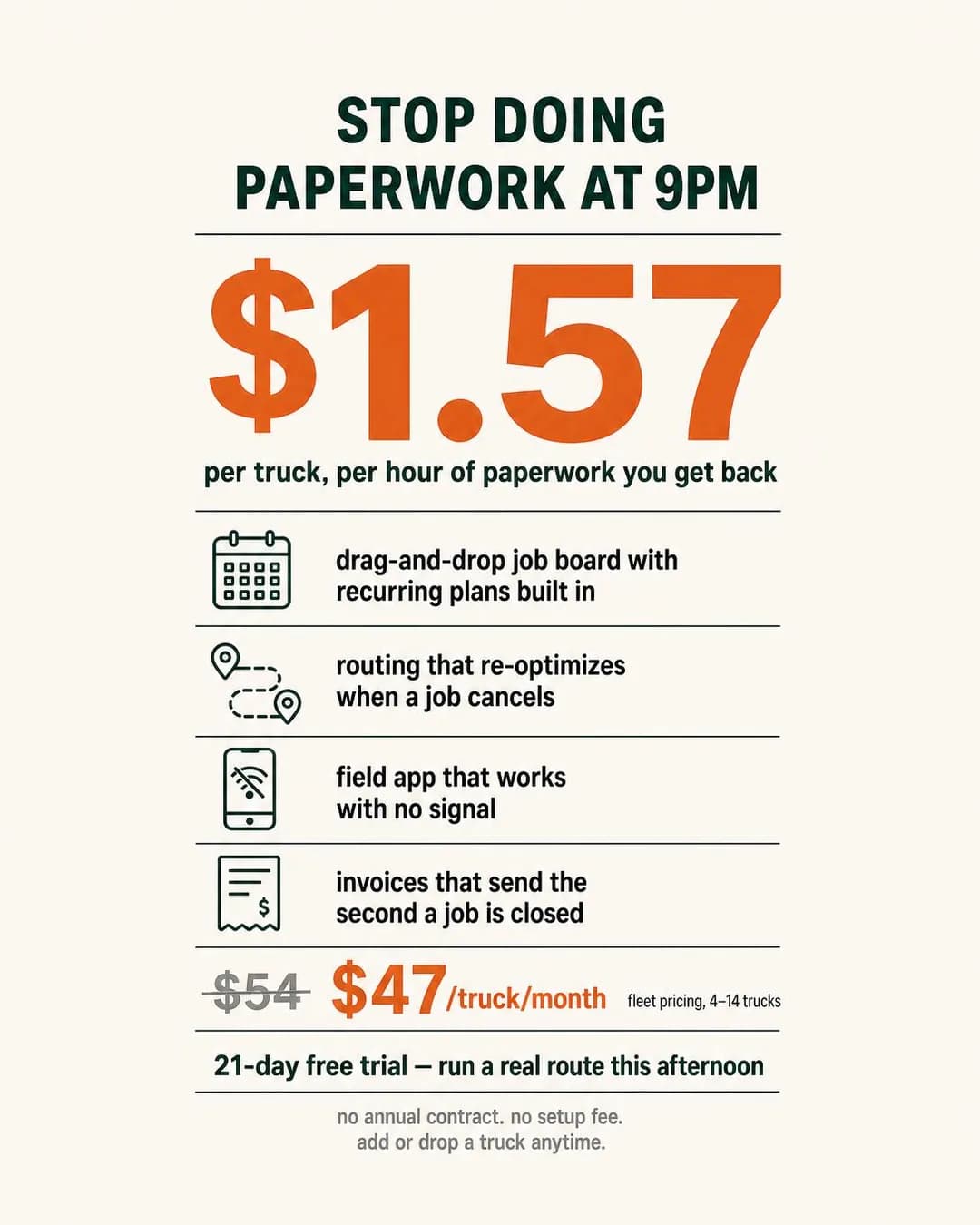 Example ad$1.57/hour to stop working at 9pmSee the brief →
What happens to the data they already have
Leads- Who it is for.
- An owner who has already priced the software and is stuck on a different question: what happens on the day the old system goes off.
- Angle.
- Product & Mechanism — In vertical software the last objection is never price, it is the switch — and unlike most mechanism arguments this one draws in three steps, because the reader already understands the problem. Answer it concretely: what is pulled, from where, how long it takes, and who checks it before go-live. A vague reassurance confirms the fear.
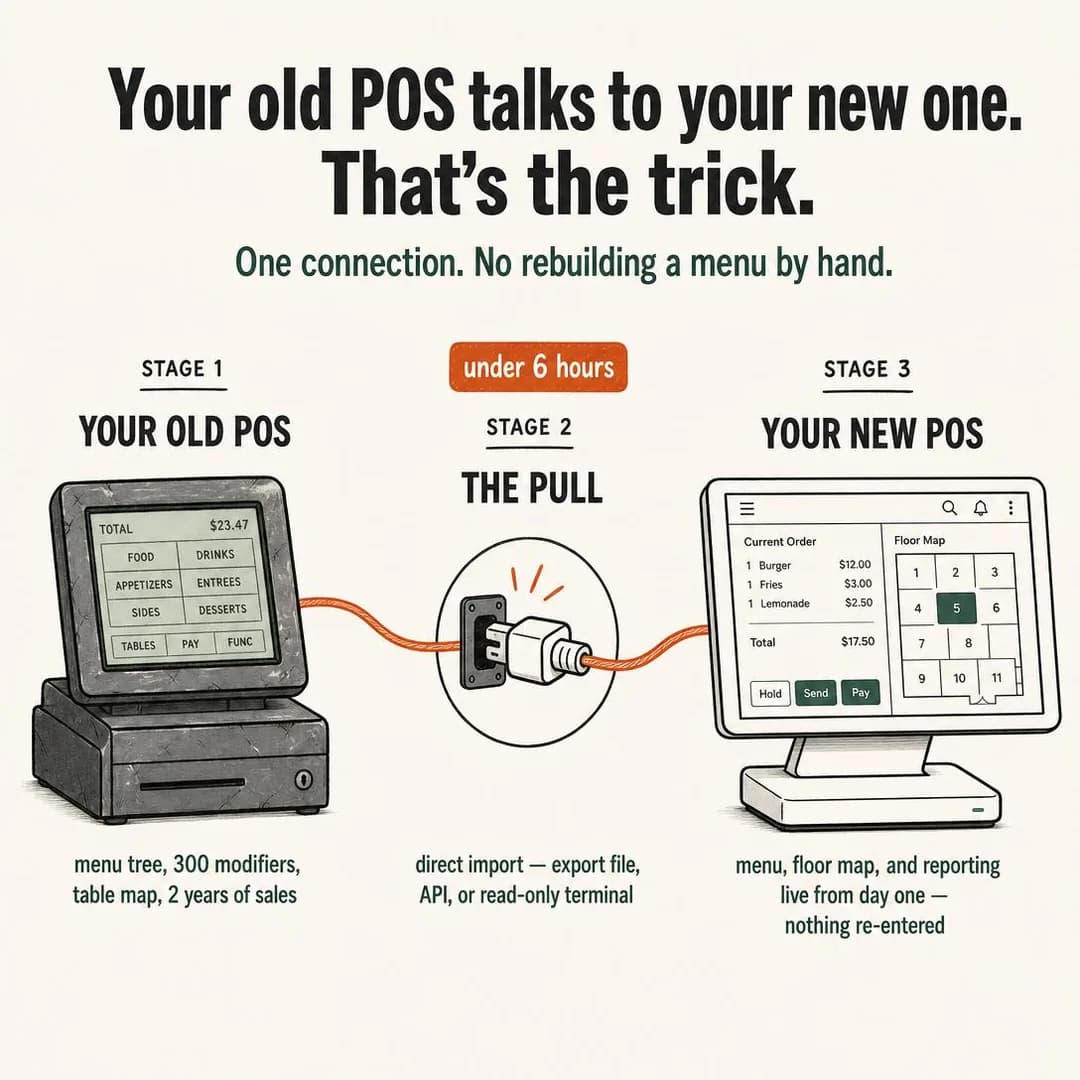 Example adNo re-entry. Just a direct pull.See the brief →
The contract they are already in
Leads- Who it is for.
- An owner who signed something in a hurry after an audit or an outage and has not read it since.
- Angle.
- Scarcity, FOMO & Timing — The only honest deadline software has, and it belongs to the buyer rather than the seller. A notice window on an auto-renewing contract is a real date, nobody invented it, and it cannot be extended by a countdown timer. This is the shape of urgency to run in a category where a manufactured one reads as a lie.
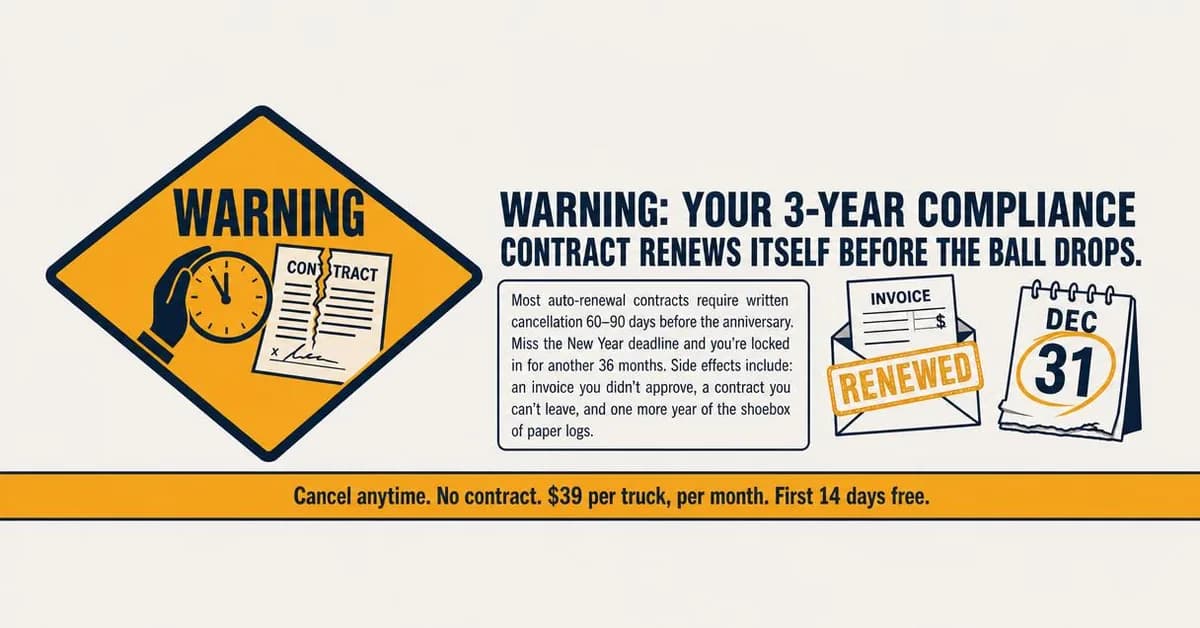 Example adYour contract renews before January 1See the brief →
Who built it, and what they did before
Awareness- Who it is for.
- A trade owner who has bought software written by people who have never quoted a job and could tell within a minute.
- Angle.
- Story & Founder POV — The argument this app rewards most and the other one rewards least. On a leisure surface an origin story is a scroll-past; in front of somebody deciding whether to trust you with the thing that runs their business it is the strongest sentence available. It only works if it is true, and it is the row where a fabricated version is fraud rather than puffery.
 Example adBuilt after a $4K bidding mistakeSee the brief →
The hours the owner works after close
Leads- Who it is for.
- Somebody who runs the business all day and does the billing at the weekend, from three systems and a folder.
- Angle.
- Benefit & Outcome — Save Time is usually empty because it is stated as a percentage. It works here because the unit is something the reader personally sits through, so the claim is about their own calendar rather than an industry average. Name the evening, not the efficiency.
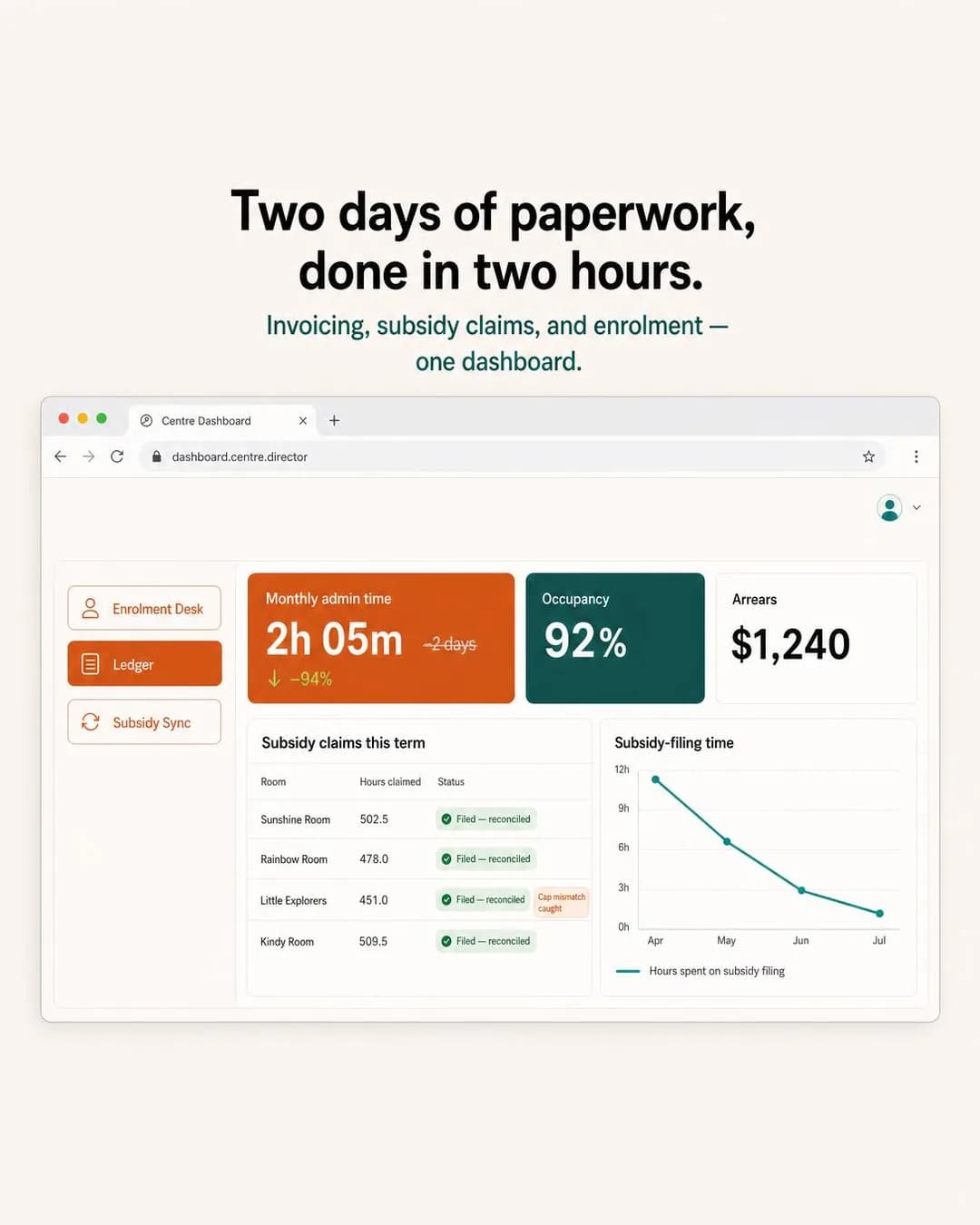 Example adTwo days of admin, done in two hoursSee the brief →
The four things it replaces
Traffic- Who it is for.
- An operator whose real competitor is not a company but a booking page, a payments app, a spreadsheet and a folder.
- Angle.
- Comparison & Positioning — Alternative / Substitute is the comparison to reach for when nobody is evaluating your category. Each of those four tools was a reasonable decision on the day it was made, so the ad does not attack them — it draws the arrows between them and lets the reader count their own logins.
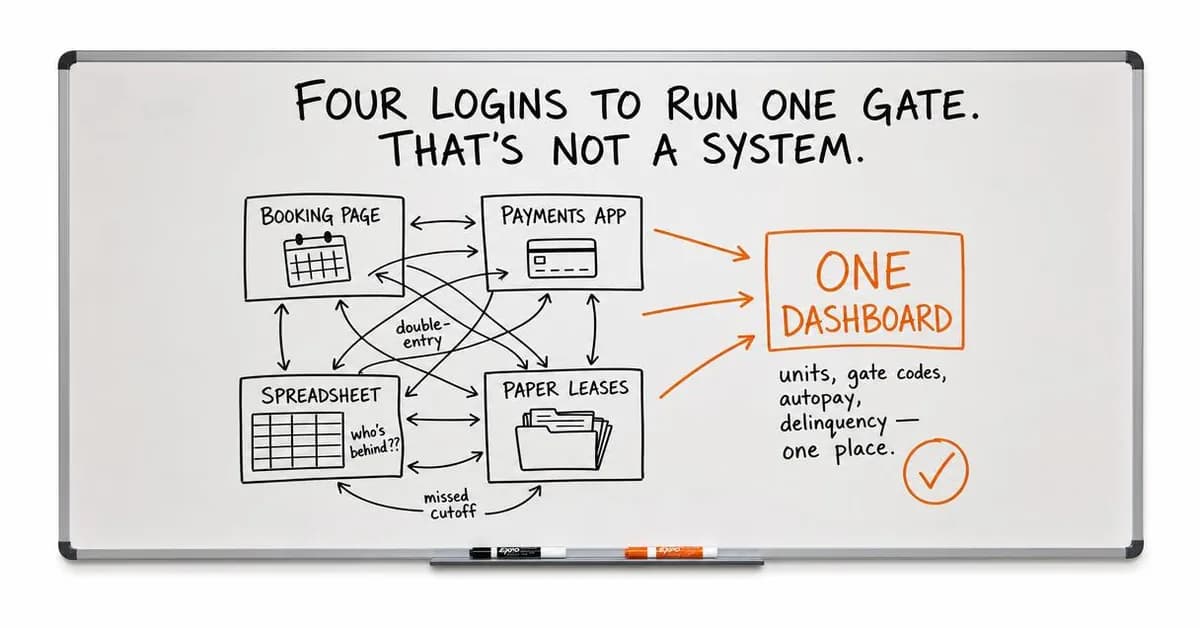 Example adFour logins is three too manySee the brief →
The money already leaving
Leads- Who it is for.
- An owner-clinician or operator who knows some revenue falls through and does not know which.
- Angle.
- Problem & Pain — Cost of the Problem refuses to describe the product at all and simply prices the status quo. In a business with a schedule and an invoice there are usually two prices to name — the money not billed and the weekend spent looking for it — and leading with the second one lands first because it is the one a person feels.
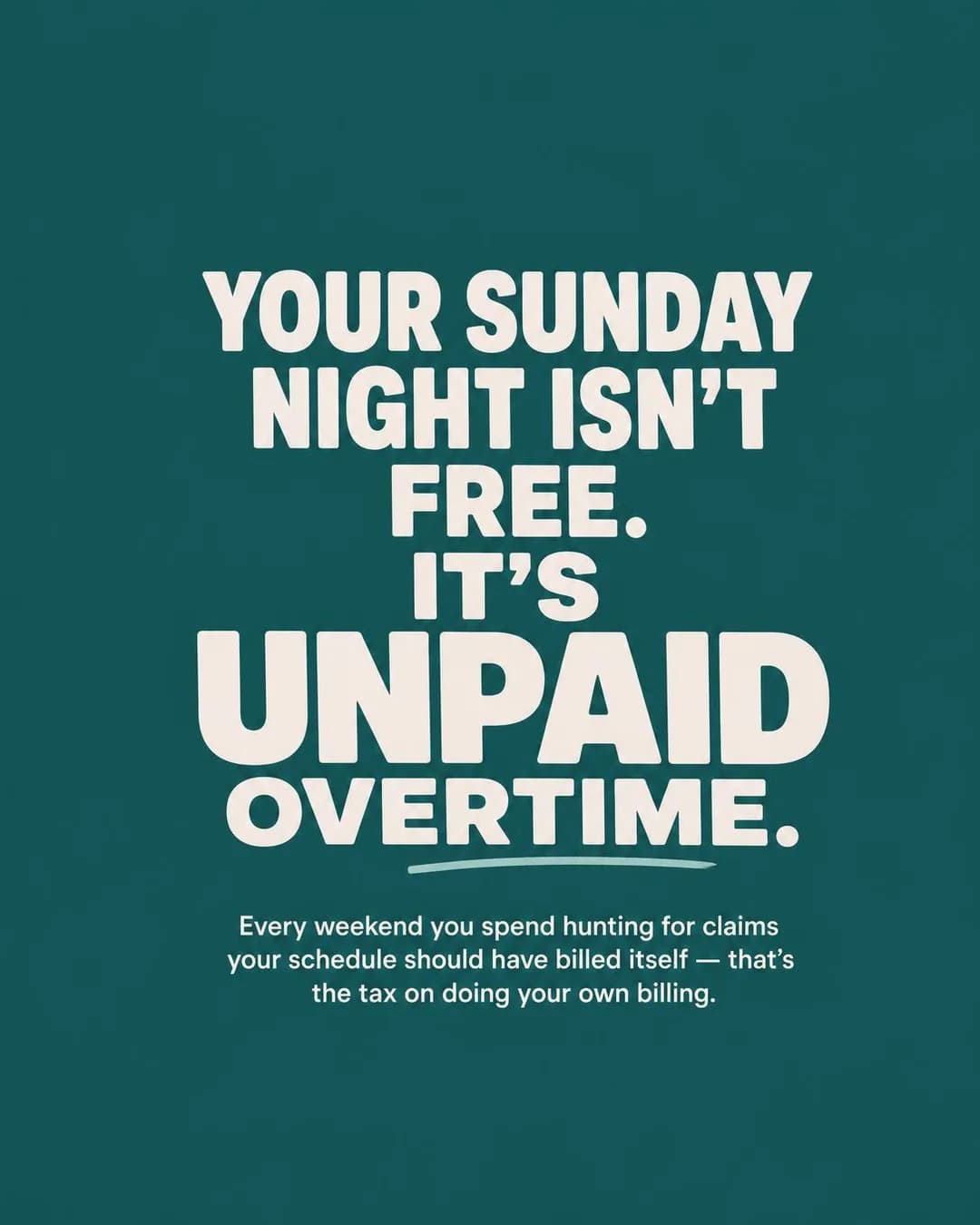 Example adStop working Sundays for freeSee the brief →
The system they bought and abandoned
Leads- Who it is for.
- A manager whose last rollout was quietly dropped by the front desk and who will not be that person twice.
- Angle.
- Objection & Risk Reversal — "I've Tried Everything" is the objection nobody advertises against and the one that decides most vertical software deals. Do not answer it with features — the last system had features. Answer it with a procedure: a named person, a flat fee, a date, and something the buyer watches happen.
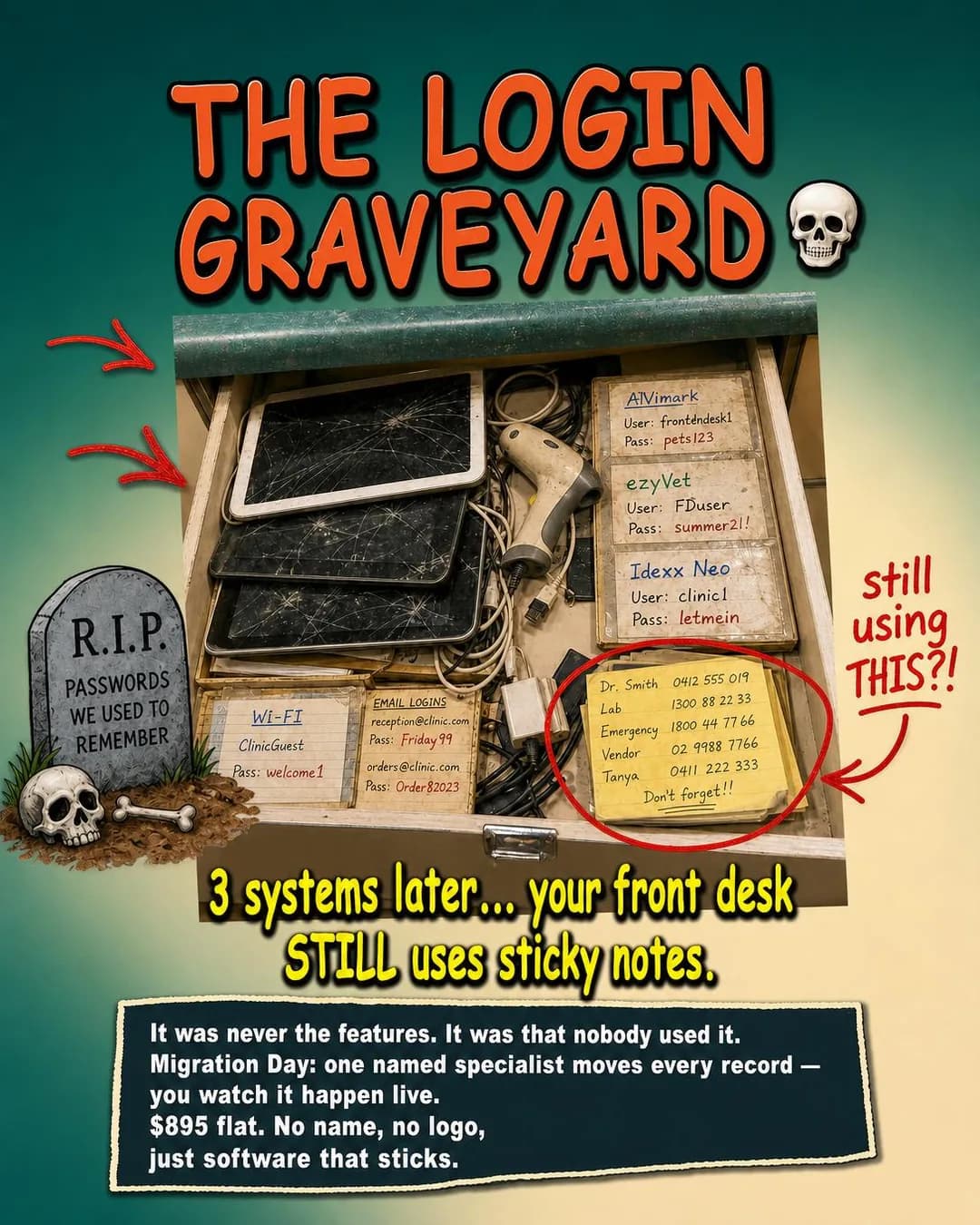 Example adSoftware your team actually opensSee the brief →
One business like theirs, two numbers
Leads- Who it is for.
- An operator who wants to see it working somewhere shaped like their own place before they believe any of it.
- Angle.
- Proof & Trust — The highest-ceiling format in the category and the most dangerous to fake. Specificity carries it — three warehouses, ninety days, fourteen to two — and specificity is exactly what makes an invented version indefensible. In this trade you can usually publish the numbers under an unnamed description long before you can publish a logo.
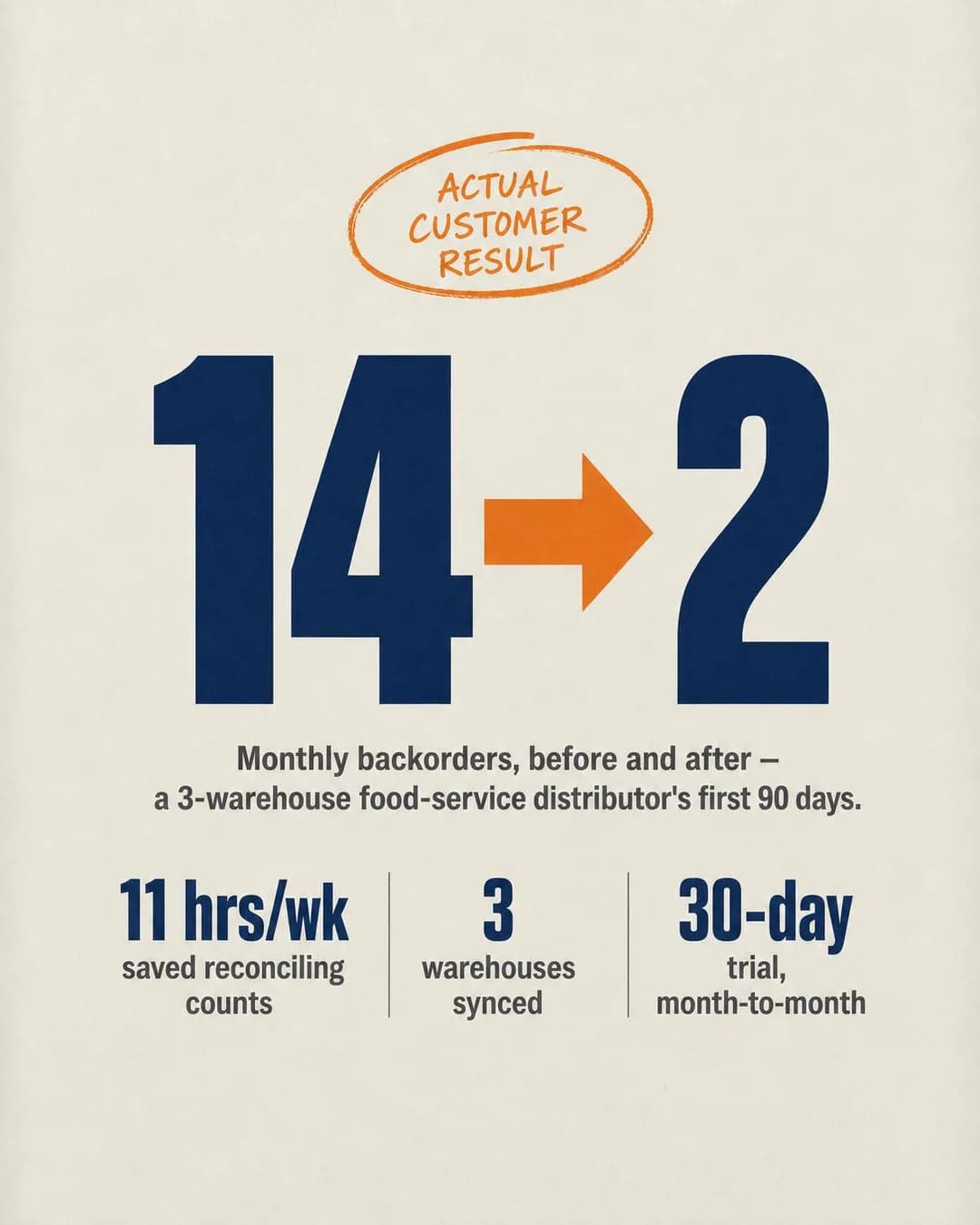 Example ad14 backorders to 2 in 90 daysSee the brief →
The thing only they can do
Traffic- Who it is for.
- An owner who cannot take a week off because the schedule lives in their handwriting and their head.
- Angle.
- Identity & Emotion — Identity Callout does the qualifying the ad set cannot, and on this app the identity is structural rather than a moment: being the bottleneck is a fact about the business, noticed at forty-five and not at twenty-five. It reframes indispensability as a system nobody built, which is a sentence an owner has thought and never said.
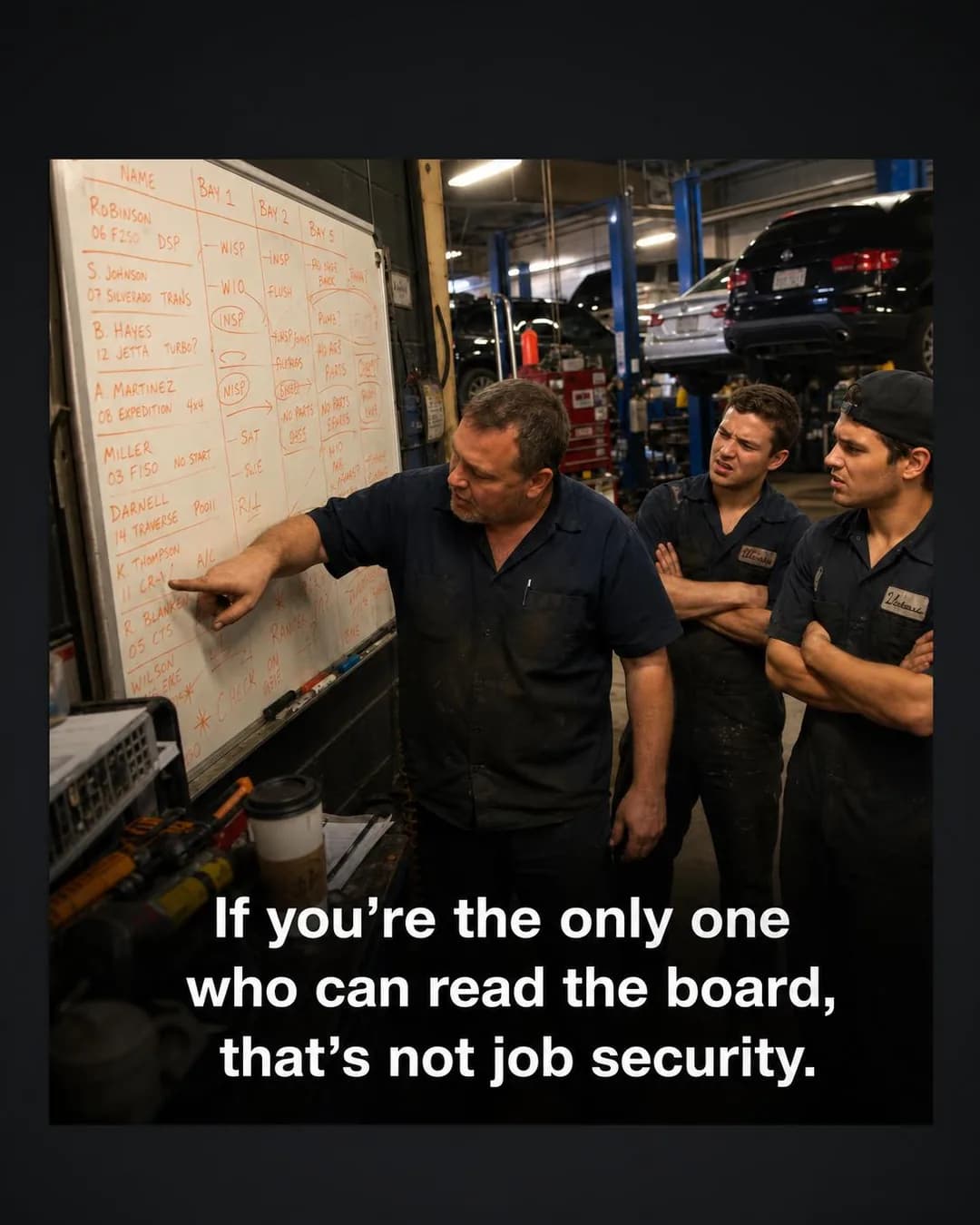 Example adThe board only you can readSee the brief →
The software or the part-time admin
Leads- Who it is for.
- An owner who has costed a half-time office person and is deciding between them and a subscription.
- Angle.
- Comparison & Positioning — The comparison nobody in software writes, because it is not against a competitor. For a business at this size the genuine alternative to $200 a month is $1,800 a month of somebody's time, and putting the two side by side is the most favourable arithmetic this category has. No ad in the batch does it — it needs a real wage figure for a real market, which is precisely why it is worth writing yourself.
No example ad for this offer on the examples page yet.
Who picks up when it breaks on a Saturday
Leads- Who it is for.
- An owner whose business stops if the system does, and who has been through a support queue at the worst possible moment.
- Angle.
- Objection & Risk Reversal — The second row without an ad, and the objection that decides renewals rather than purchases. For a shop or a clinic the software is the till, so a support answer is a risk answer: publish the hours, the channel and the name. It needs a promise you can keep every Saturday, which is why it is not something to generate.
No example ad for this offer on the examples page yet.
Reaching an owner you cannot select
The good news first, and it is the same good news the Instagram twin opens with: software is not a special ad category. Meta accepts exactly four — housing, employment, financial products and services, and social issues, elections and politics — and none of them is an industry list you belong to. Age, geography, lookalikes, exclusions and custom audiences are all yours. Note that you must still declare something: since 31 March 2020 every campaign created through the Marketing API has had to specify a value, and businesses offering none of the four specify NONE.
The bad news is the second half of that sentence, and it is new to this page rather than inherited. The category attaches to what an ad offers, not to what your company is filed under. A software ad whose creative offers financing, a payment advance, a deferred first invoice, or a lending feature inside the product is a financial-products ad, and that category has been required for advertisers based in or reaching the United States since January 2025 — Meta's own reference gives two dates on the same page, 14 January in its banner and 21 January in its milestones table. Its restrictions are identical to housing's: fixed 18–65+ age, no lookalikes, no saved audiences, a forced minimum radius. Declaring it costs reach; not declaring it costs the campaign, because Meta reads the creative regardless and treats working around a category as evasion. If your product line includes anything that moves money before the customer earns it, that is a decision to make deliberately at campaign level rather than discover at review.
Then the practical problem, which is the twin's problem with a different answer. You want people who own a business of a particular kind and size, and the ad set cannot ask for that any more than it can ask for a job title. Meta has narrowed detailed targeting repeatedly and its own documentation on what survives is not safe to paraphrase, so do what the twin says: open the picker in your own account and plan from what is actually in it. The recommendation does not depend on the answer. Go broad and let the first line name the business — three to fifteen trucks, four bays, two centres — which excludes everybody else for free and keeps the audience large enough for delivery to work with.
Where this app genuinely gives you something the other does not is geography, and it is worth using rather than defaulting past. Vertical software is often sold market by market — a state's subsidy rules, a province's compliance regime, a county's licensing — and an owner-operator audience is dense in exactly the places a broad national buy wastes money on. Set the geography to the markets you can actually support and invoice in, exclude your own customers and current trialists, and seed lookalikes from paying accounts rather than from trial signups.
One trap that is in the account rather than in the ad, and that only bites part of this industry. If your customers are clinics, Meta's Business Tools terms prohibit sending data derived from health information — and that prohibition explicitly covers the names given to events, conversions and custom audiences. A pixel event called physio_claim_recovered, or a custom audience called "dental practices", is health information in the field nobody audits. Name events after the commercial action and nothing else.
- Special ad categoryUsually NONE — check the creative
- Software is not one of the four, so declare NONE. But the category follows what the ad offers: creative promoting financing, an advance or a lending feature is a financial-products ad, required in the US since January 2025, with housing's exact restrictions. Decide it at campaign level, not at review.
- Detailed targetingCheck first
- Meta has narrowed this repeatedly and business-owner categories are among the affected. Open the picker in your own account before planning around any guide's description of it, including this one. The recommendation below does not depend on what you find.
- Broad + creative filterUse it
- The answer to the owner-you-cannot-select problem. Name the business size and shape in the first line — three to fifteen trucks, two to four centres — and everybody else scrolls past for free, while the audience stays big enough for delivery to optimise.
- AgeUse it, widely
- Available, and this is the app where it does real work. The bands that own businesses are the ones Facebook over-indexes on: 80% of 30- to 49-year-olds, 74% of 50- to 64-year-olds. Set a wide floor rather than a narrow band — you are excluding students, not selecting owners.
- GeographyDecide it
- Not "near the building", but not worldwide either. Vertical software is usually sold against a market's own rules — a state's subsidy scheme, a compliance regime — so restrict to what you can support, price and invoice, and treat each expansion as a launch.
- LookalikesUse it — mind the seed
- Available. Seed from paying accounts, not from trial or demo-request lists: a demo request from an owner who never showed up is not a signal worth modelling an audience on.
- Custom audiencesUse it
- The one place the ad set knows something the first line had to guess at. Build a separate audience from people who opened a form and did not submit — in a long vertical cycle that is the largest and most under-used pool you have, and it is full of owners who were interrupted rather than uninterested.
- ExclusionsUse it
- Upload the customer list and subtract it, and subtract open trials too. In a vertical the account list is short enough that failing to do this is visible: your own users see the ad, screenshot it, and ask the front desk why they are being sold something they pay for.
- Event and audience namesCareful
- Not a targeting control, and the one thing on this list that can cost you the account rather than the campaign. Meta's Business Tools terms prohibit health-derived data including the names of events, conversions and audiences. If you sell to clinics, name events after the commercial action only.
Trial, form, or a phone call?
The Instagram twin's verdict is a landing page almost always, and Instant Forms only for a genuinely sales-led motion. Here the sales-led motion is the normal case, so the whole recommendation moves — and the reason is not the platform, it is that an owner buying a system for a business with staff does not start a trial at eleven at night and discover the product alone.
So the default is a form, and the type matters more than the fact. Meta's two Instant Form types differ by one step: More volume submits in a thumb movement from pre-filled profile data, and Higher intent adds a review screen. On this app that screen is a filter worth paying for, because a cheap lead from an owner who half-remembers tapping something costs you a sales call rather than an email. Add one qualifying question that changes what happens next — how many trucks, how many locations, which system you are on now. The last of those three is the most useful question in vertical software and the one people are most willing to answer.
The call is a real destination here and it is under-used. Call ads are mobile-only, deliver on Facebook Feed, Marketplace, Reels and video feeds, and Ads Manager reports calls placed, 20-second calls and 60-second calls separately. For a buyer who runs a business by phone all day, that last column is a qualification metric no form gives you: a 60-second call is somebody describing their current setup. If you have anyone who answers during the hours you advertise, test it against the form rather than assuming the form wins.
The trial page belongs to the one case that passes the Sales test — a published price, an online signup, no migration in the way — and to nothing else. And there are two nevers. Never the pricing page: an owner who has not yet decided the problem is solvable is being asked to evaluate cost before value. And never a demo booking that is really a sales call in a calendar widget; if the next step is a person, say so in the ad, because an owner-operator's tolerance for a bait-and-switch is zero and they will tell the front desk of every other business in town.
The recommendation: Instant Form on Higher intent with one qualifying question — ideally "which system are you on now?" — as the default. Test a call ad against it wherever somebody answers during the hours you advertise, and optimise on 60-second calls rather than volume. A trial page only where a stranger can finish buying unaided. Never the pricing page, and never a demo that is a sales call in disguise.
Creative direction
Two rules carry over from the twin unchanged and one inverts. Unchanged: do not make the product screenshot the hero, and let the first line name the reader because the ad set cannot. The Browse page has exactly one dashboard ad in ten and it escapes the rule for a specific reason — it is not showing the product, it is showing one tile at poster size with a browser window arranged around it. That is a stat-hero in disguise, and it is the only defensible way to use a UI on this app.
What inverts is the evidence rule. On Instagram the risk is that a B2B ad announces itself as marketing and gets flicked past, so the twin's advice is to render a situation. Here the reader is older and comparing terms, and the ad is pulled toward proof — and proof is where this pipeline invents. The gym Facebook batch established that. This one shows the vertical-specific version, which is worse: four of the ten must not run, and the failures are a competitor's real product names rendered in the frame, a real electronic logging device's name reused as a module name, an invented case study stamped "ACTUAL CUSTOMER RESULT", and a first-person founder biography under a face that belongs to nobody.
The most useful single finding is structural rather than a warning. The one ad in ten with no fabrication anywhere is the solid-colour quote card, and it has none because the direction has no evidence slot in it — no chart, no screenshot, no receipt, no face. Where the direction offers a place to put proof, the model fills it. That is a lever: if you are not in a position to substantiate a number this week, pick a direction with nowhere to put one.
- Write the headline to 27 characters. Meta recommends 27 for Facebook Feed and 40 for Instagram Feed; of the fifty headlines on the Browse page, five fit the first and all fifty fit the second. That is the same five-in-fifty the gym batch produced, which makes it a property of this platform rather than of a trade.
- Compose the 4:5 so a square crop out of its middle is still the ad — Marketplace recommends 1:1 and Advantage+ will take your portrait there without asking.
- The first clause is the ad. Every primary text in this batch overruns Meta's 50–150 recommendation, at 322 to 708 characters — the longest of any batch on this site — and truncation lands first on the smallest surface.
- Read every rendered word in the frame before it runs, and in a vertical read it twice. This batch put three real veterinary products on sticky notes under a tombstone, next to passwords, without being asked. The model knows your category's vendor list.
- Check the names your own brand invents, not just the claims. One ad's modules came back as RoadLog, GateCheck and AuditTrail; VDO RoadLog was a real Continental electronic logging device in that exact category.
- Never certify a claim inside the image. "ACTUAL CUSTOMER RESULT" is drawn into one of these ads in a hand-lettered circle, above numbers nobody measured, where no alternate headline can reach it.
- Check the derived number, not just the two it came from. "Two days" to "2h 05m" is −87%, and both the image and one headline say −94%. Three batches of rendered sums have held; this is the first rendered percentage to fail.
- Never write a struck-through price you did not charge. One ad anchors $47 against a crossed-out $54 that no company ever asked for, and that is a claim about your own pricing history rather than a design flourish.
- Never state as fact how a competitor's contract, integration or pricing works. "Most auto-renewal contracts require 60–90 days' written notice" is in this batch and nobody checked it; hedge it or cite it.
- One line of type in a 1.91:1 export. It routes to the right-hand column and search results, which render it small — the wide ad in this batch fills its middle third with a paragraph.
- Real people only. The founder ad is an invented biography in the first person under a photorealistic face; the shop ad is three generated employees. Photograph your own founder and your own bay, or do what the gym batch did and crop at the neck.
- Check the re-framed export, not just the square. The 4:5 version of the shop ad is the square draft padded with black bars rather than re-composed.
- Do not fight the model for a lo-fi look. A whiteboard brief asking for handheld tilt, marker ghosting and fluorescent glare came back clean and straight-on, and a "raw phone pic" brief came back as a lit three-person scene. If the roughness is load-bearing, shoot it.
Funnel structure
Three stages, and the shape differs from the twin's in one important way: the middle stage carries more here, because the gap between "this is a real problem" and "I will move my business onto your system" is measured in months rather than in a browsing session. An owner-operator does not evaluate software continuously. They think about it, do nothing, and then move fast when a contract renews or something breaks.
That argues for patience in the retargeting window rather than intensity in the cold one. Keep the cold stage narrow and cheap — two or three arguments about the business, not a rotating catalogue of features — and put the migration answer, the support answer and the proof in front of the people who came back. The customers' stage is smaller than the twin's because expansion revenue in a vertical usually comes from adding trucks or chairs, which is a conversation your own team has rather than an ad.
Cold
≈45% of budgetAudience. Broad, with a wide age floor rather than a band, restricted to the markets whose rules you actually support. Customer list and open trials subtracted.
Running. Two or three owner-and-decision ads — the cost, the contract, the dependency. Leads with an Instant Form on Higher intent, or Traffic where the argument needs a page.
Warm
≈40% of budgetAudience. Everyone who opened a form and did not send it, plus site visitors and video viewers. Lookalikes off paying accounts, never off demo requests.
Running. The migration answer, the support answer, the named result, the founder. This is where a vertical deal is actually won, and it is worth more of the budget than the twin gives it.
Customers
≈15% of budgetAudience. Your own list, split by tenure — first ninety days separately from everyone else.
Running. Activation during onboarding, the module they are not using, the second location. Smaller than on the Instagram twin because expansion here is usually a phone call, not an ad.
Budget, and the learning-phase advantage that does not survive this app
The Instagram twin makes an argument worth repeating before contradicting it, because it is correct there and it is the best material on that page. Meta's delivery system needs roughly 50 optimisation events per ad set per week to leave the learning phase. For a dental practice, 50 booked implant consultations a week is not a real number. For a self-serve software product, 50 trial starts a week is entirely achievable — so SaaS is the one industry on this site that can buy the optimisation everybody else is priced out of.
Change the reader and it stops being true. Fifty demo requests a week from owners of three-to-fifteen-truck operations is a dentist-scale number, not a software-scale one, and the advantage evaporates — not because the platform changed but because the business did. This is the clearest illustration in the whole cluster that "industry" is the wrong unit of planning: the same word covers two companies with opposite arithmetic. So plan for learning-limited delivery as the normal state rather than as a failure, which means fewer ad sets, longer reading windows, and a real reluctance to split the budget.
Practically: run one ad set with several ads in it rather than several ad sets, because every extra ad set divides the same thin evidence into thinner piles. Keep the optimisation event as shallow as you can defend — a form submission or a call rather than a closed deal — and accept that the deeper event is a reporting number rather than an optimisation target at this volume. Then leave it alone. Pausing an ad set, or changing its optimisation event, audience or creative, is a significant edit and restarts the learning phase; at fifteen or twenty events a week you cannot afford to restart it monthly.
Judge it on payback months rather than cost per acquisition, exactly as the twin says, but with two changes to the arithmetic. Vertical software has better retention and worse volume than product-led software, so the payback window you can tolerate is longer and the number of chances you get is smaller. And there is a seasonality here the twin does not have: a compliance deadline, a licensing renewal, a school or fiscal year, a trade's own quiet season. Spend into the month before the thing your customers plan around, not into the month of it.
- Vary the size of business the first line describes. Three trucks and thirty trucks buy differently enough to be separate campaigns, and finding out which end of your range converts is worth more than any headline test you will run.
- One ad set, several ads. At this volume the ad set is the unit of evidence and splitting it is the most common way a vertical account never leaves the learning phase.
- Give it a fortnight, not a week. The learning phase is measured over seven days and you are unlikely to fill seven days with fifty events, so read on a longer window or you are reading noise.
- Ask "which system are you on now?" on the form. It is the highest-information question in this category, people answer it, and it tells you which competitor to write the next ad against.
- Track demo-to-close by ad, not demos by ad. The ad with the cheapest form fill is very often the one filling it with businesses too small to onboard.
- Read cohorts against your own calendar. If your customers renew a contract in January, the ad that ran in November is the one that worked.
Seven of these ads, in full
Every ad below was generated by best-in-slot for a SaaS company that does not exist, with its audience, angle and objective pinned before the run — and published exactly as it came back. They are seven of the Facebook examples for a SaaS company; the rest, with the full brief and the alternate headlines behind each one, are on that page.
Objection & Risk Reversal · 4:5 · Leads
Software your team actually opens
Written for: Practice managers at two to four site veterinary groups.
The full brief and why it works →
Offer & Economics · 4:5 · Sales
$1.57/hour to stop working at 9pm
Written for: Owner-operators, three to fifteen trucks.
The full brief and why it works →
Product & Mechanism · 1:1 · Leads
No re-entry. Just a direct pull.
Written for: Independent restaurant owners.
The full brief and why it works →
Scarcity, FOMO & Timing · 1.91:1 · Leads
Your contract renews before January 1
Written for: Owners of eight to forty truck fleets.
The full brief and why it works →
Problem & Pain · 4:5 · Leads
Stop working Sundays for free
Written for: Owner-clinicians at one to three site practices.
The full brief and why it works →
Story & Founder POV · 9:16 · Awareness
Built after a $4K bidding mistake
Written for: Trade business owners, four to twenty on the tools.
The full brief and why it works →
Proof & Trust · 4:5 · Leads
14 backorders to 2 in 90 days
Written for: Operations owners at ten to sixty person distributors.
The full brief and why it works →
Mistakes specific to software on this app
The first is the one that produces the "B2B does not work on Meta" conclusion, and the rest are mostly about what happens when a generator is pointed at a vertical.
Running one ad on both apps and reading a blended number
Facebook reaches 80% of 30- to 49-year-olds and 74% of 50- to 64-year-olds against Instagram's 62% and 40%. Those apps deliver your ad to the practitioner and to the owner respectively, and an ad written for one persuades neither when it is written for both. Split the campaigns, write two ads, and compare them as two experiments rather than averaging them into a verdict about the channel.
Inheriting the Traffic-first advice from the product-led playbook
Traffic is the right default on the Instagram twin because a self-serve subscription completes in the ad's own session. Nothing an owner-operator buys does. Six of the ten Browse ads here are Leads and one is Sales, and the test for Sales is narrow: can a stranger finish buying without speaking to you and without anyone moving their data?
Letting a competitor into the creative by accident
This is the category's live hazard and the Browse page has a worked example. Its veterinary ad renders AVimark, ezyVet and Idexx Neo — three real, currently sold products — on sticky notes in a drawer, under a tombstone, each beside a password, and nobody asked for a competitor. In a vertical the shortest path to "the system you have outgrown" is the name of the system, and the model knows the names. Naming a rival is a legitimate decision; having one arrive under a gravestone is not one.
Shipping product names nobody checked
The same page's fleet-compliance ad calls its own modules RoadLog, GateCheck and AuditTrail. VDO RoadLog was a real Continental electronic logging device in exactly that market. Generated brand material fills in plausible product names, and in a category with an established vendor list the most plausible name is often somebody's.
Stamping a claim as verified inside the image
The distribution ad on the Browse page carries "ACTUAL CUSTOMER RESULT" hand-lettered into the frame above numbers from a customer who does not exist, and "Real numbers. Real customer." as a headline. An invented statistic is a placeholder you can replace. A certification burned into the pixels is a claim no alternate headline can reach, and it converts a placeholder into a misrepresentation.
Inventing the founder
The Instagram twin's hazard is a fabricated customer testimonial. Here it is a fabricated founder: a first-person story about a decade running electrical crews and a $4,000 mistake, under a photorealistic face belonging to nobody. The angle works precisely because readers assume the person is real. Photograph your own founder, or sign it the way the gym batch's best ad did — "the guy who owns the place", cropped at the neck.
Advertising a financing feature without declaring the category
Software is not a special ad category. An ad that offers financing, a payment advance, a deferred invoice or a lending feature is one anyway, and financial products and services has been required for US advertisers since January 2025 with housing's exact restrictions. Meta reads the creative regardless, so the whole downside is on the not-declaring side.
Naming a pixel event after your customers' medical work
If you sell to clinics, Meta's Business Tools terms prohibit sending data derived from health information — including the names given to events, conversions and custom audiences. An event named "physio_claim_recovered", or "dental practices" as an audience name, is health information in the one field nobody audits. Name events after the commercial action only.
Buying the More volume Instant Form
It submits in a thumb movement from pre-filled data, which on this app buys you a phone number belonging to somebody who half-remembers tapping. Higher intent adds a review screen, and that screen is a filter worth paying for when the follow-up is a sales call rather than an email. Add one qualifying question — which system are you on now.
Running five ad sets on a vertical budget
Fifty optimisation events a week is achievable for a self-serve product and not for a product sold to owner-operators. Every extra ad set divides the same evidence, so a vertical account with five of them is five learning-limited ad sets rather than one that works. Vary at the ad level.
Reusing the Instagram headline
Meta recommends 27 characters here and 40 there. Fifty headlines on the Browse page: five fit Facebook, fifty fit Instagram. The same file posted to both apps arrives a third too long on this one, and it truncates first on the surfaces that convert most cheaply.
Sending the click to the pricing page
Inherited from the twin and just as wrong here. An owner who has not yet decided the problem is solvable is being asked to evaluate cost before value. Send them to the page about the thing the ad promised — the migration, the fee, the Saturday — and let the price arrive after the argument.
Questions
- Facebook or Instagram for a software product?
- It depends which software company you are, not which app you prefer. Facebook reaches 80% of adults aged 30 to 49 and 74% of 50- to 64-year-olds against Instagram's 62% and 40%, which puts the owner-operator here and the practitioner there. Horizontal, product-led software bought by its own user usually belongs on Instagram. Vertical software sold to somebody who owns the business belongs here, and it is the cheapest place to reach that person — nobody is bidding for them the way they bid on LinkedIn.
- Which objective should a SaaS company buy on Facebook?
- Leads, in most cases, which is the reverse of our SaaS Instagram guide and for a reason that is about the buyer rather than the platform. A self-serve subscription completes in the ad's own session; a system that needs data moved and a front desk trained does not. Our Facebook batch is six Leads, two Traffic, one Sales and one Awareness against Instagram's five Traffic, three Leads, two Sales and none. Buy Sales only where a stranger can finish purchasing unaided.
- Is 50 optimisation events a week realistic for B2B software?
- For a self-serve product, yes — that is the Instagram guide's strongest argument. For software sold to owner-operators, no: fifty demo requests a week from three-truck businesses is not a number that exists. Plan for learning-limited delivery as the normal state. That means one ad set with several ads rather than several ad sets, a shallow optimisation event, a fortnight's reading window, and real reluctance to make significant edits, since each one restarts the learning phase.
- Should the ad send people to a free trial?
- Only if a stranger can finish signing up without speaking to anyone and without a migration in the way. Otherwise the default is an Instant Form on the Higher intent type with one qualifying question — "which system are you on now?" is the most informative question in vertical software and people answer it. And test a call ad wherever somebody answers during the hours you advertise: Ads Manager reports 60-second calls separately, and a 60-second call is a qualification your form cannot buy.
- Is software a special ad category on Meta?
- No — Meta accepts four, and software is not one, so every targeting lever survives. You must still declare a value; businesses offering none of the four declare NONE. But the category follows what the ad offers rather than what the company sells, so a creative promoting financing, a payment advance or a lending feature is a financial-products ad, required for US advertisers since January 2025 with the same restrictions housing carries. Declaring it costs reach and not declaring it costs the campaign, because Meta reads the creative either way.
- Can I name a competitor in the ad?
- You can, and it is ordinary practice — but make it a decision. One ad on our SaaS Facebook examples page renders three real veterinary products by name, on sticky notes, under a tombstone, next to passwords, and nothing in the brief asked for a competitor. That is the specific risk of running a generator inside a vertical: the model knows your category's vendor list better than your marketing team does, and the shortest route to "the system you have outgrown" is its name.
- How long should a Facebook software ad be?
- Headline to 27 characters, which is shorter than Instagram's 40 and shorter than almost anybody writes. Our batch produced fifty headlines: five fit Facebook Feed's recommendation, fifty fit Instagram's. Primary text overruns the 50–150 recommendation on every single ad, at 322 to 708 characters — the longest of any batch on this site — so the argument has to survive inside the first clause and everything after it is for the reader who already stopped scrolling.
Sources
Every platform claim on this page was read against these on . Meta’s policies move; if one of these disagrees with this page, it is right and we are stale.
- Meta Marketing API — special ad categories (four categories; software is not one; NONE required since 31 March 2020; financial products and services required in the US from January 2025 — the page gives both 14 and 21 January)
- Meta ads guide — image ad specifications, Facebook Feed (4:5 at 1440 × 1800; primary text 50–150, headline 27)
- Meta ads guide — image ad specifications, Facebook Marketplace (1:1 at 1080 × 1080; primary text 125, headline 40, description 30)
- Meta ads guide — image ad specifications, Instagram Feed (headline 40; minimum ratio 4:5, maximum 1.91:1)
- Meta Business Help Centre — about the learning phase
- Meta Business Help Centre — significant edits and the learning phase
- Meta Business Help Centre — about Instant Form types
- Meta Business Help Centre — about call ads
- Meta Business Help Centre — updates to detailed targeting
- Meta Business Tools terms — restrictions on health-related event, conversion and audience names
- Meta Pixel — standard events reference
- Pew Research Center — Americans' social media use, November 2025
That is the playbook. Now make the ads.
Paste your product site. It reads what you do, who it is for and how you sound, then writes the concepts, renders the images and drafts the copy — for the one audience you cannot target by job title.
No credit card · 50 free credits (about 5 ads or Instagram posts)
Every angle recommended above is documented in the best-in-slot ad angle library, and the ads are from saas facebook ad examples. More industries are at all ad guides.