
Ad Generator · Real estate agents
Facebook & Instagram ad generator for real estate agents
Paste your site. It reads your listings, your market and your brand, then writes the concepts, renders the images and drafts the copy — for a category where the ad set cannot do your targeting.
Enter your agency or brokerage website
That is the whole brief. No questionnaire, no uploads, no brand kit to fill in. Free to start, no card — and every ad lands paused, which in this category is the setting that matters most.
No credit card · 50 free credits (about 5 ads or Instagram posts)
What it takes off a real estate website
- Your listings, and what they say about the market you actually work — price band, property type and how long things sit are the difference between an ad for first-time buyers and one for downsizers.
- Whether you list, buy-side, manage rentals, or all three. Property management and short-term-rental services are usually buried three clicks down and they are the two offers on your site that do not depend on somebody deciding to move.
- Your about and team pages — one agent or twelve, whether the person in the photograph is the person who turns up. That is the claim a two-person brokerage can make and a franchise structurally cannot.
- The areas you name. Useful for the copy and useless for the ad set: the housing special ad category makes neighbourhoods, ZIP codes and metro areas unselectable, so those names belong in the sentence rather than in the targeting.
- Your sold results, days-on-market figures and any market report you publish. Those are the numbers an ad can carry — and the ones you can defend in a listing appointment.
- Your photography, colours and type, so the ads look like they came from your brand rather than from a stock library of granite worktops.
What one click gives you
A concept written for one kind of client
Not “real estate ad” — a specific person, like the seller whose listing expired and has been told it was the price, or the renter who believes they need twenty percent down. In this category that is not flavour; it is the only targeting instrument you have left.
A finished image
Rendered in a visual direction picked for the concept, in your brand's colours and type. Often not a photograph of a house at all — six of the ten ads on our examples page are documents, calendars and comparison tables, because listing photography is shot landscape and Instagram has no landscape placement.
All four Meta shapes
The same image re-framed for every placement, so the same concept can run in a 4:5 feed, a 9:16 story or reel, and Facebook's 1.91:1 right-column and search surfaces — which is where the older, seller-side audience actually is.
Five headlines, five body texts, a description
One run, so you are choosing between versions of the same argument. Read all five against the caution below before you pick one, because that is where the difference between naming a situation and describing a neighbourhood's residents shows up.
Published paused, into an ad set you pick
It never creates campaigns or ad sets, never edits your existing ads, and never spends. You still have to declare the housing special ad category yourself and flip the ad live — and in this category that human step is the point rather than a formality.
The step-by-step path swaps the one click for choosing the audience, the angle, the concept and the image style from a gallery of 66 — same output, more decisions.
What it made for four brokerages that do not exist
Generated by best-in-slot. Published exactly as they came back — nothing retouched, no headline rewritten, the flaws named on the page they came from. Notice how few of them are photographs of houses.
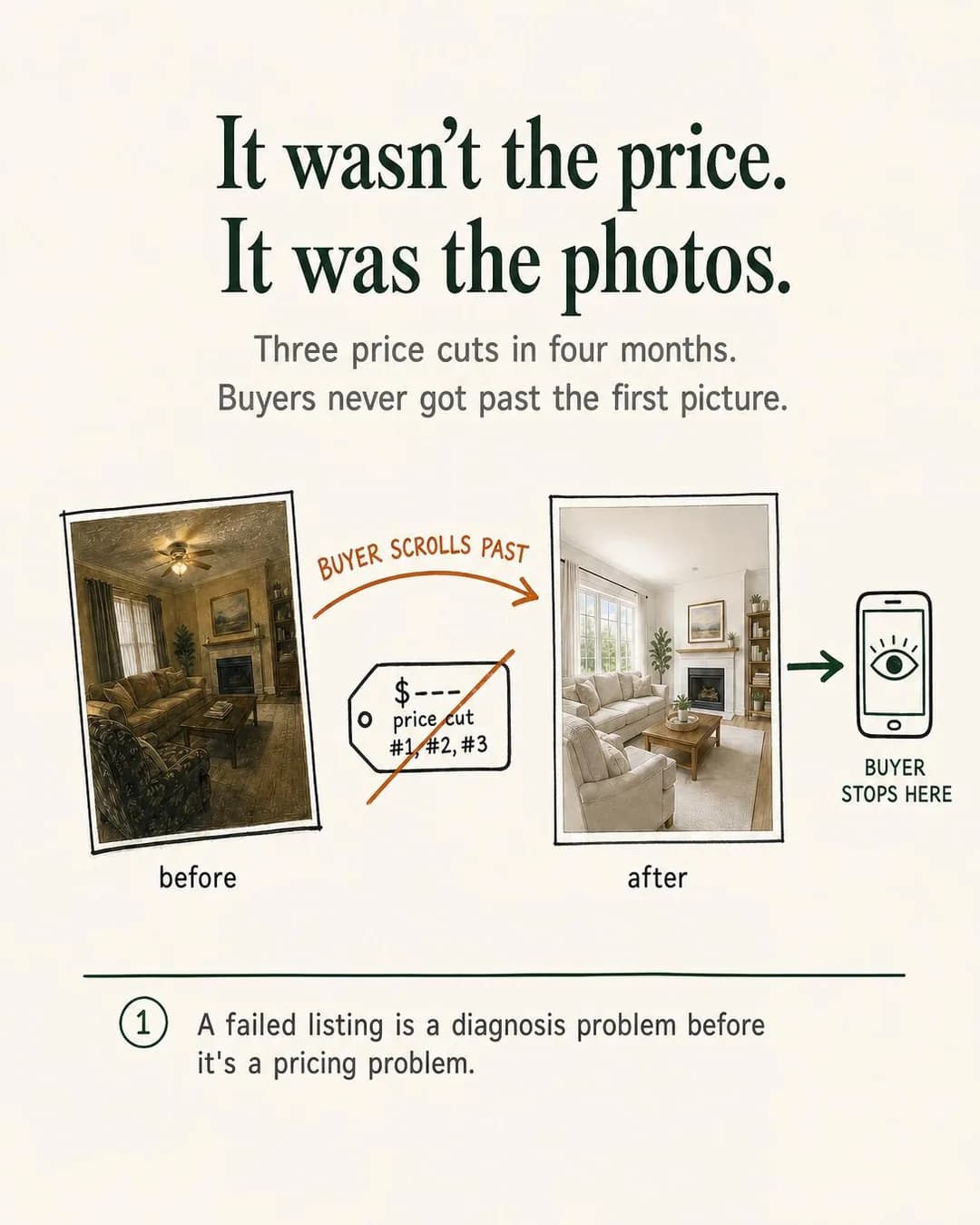
Problem & Pain · 4:5 · Leads
It wasn't the price. It was the photos.
Written for: Sellers whose listing expired unsold.
How this one was made →
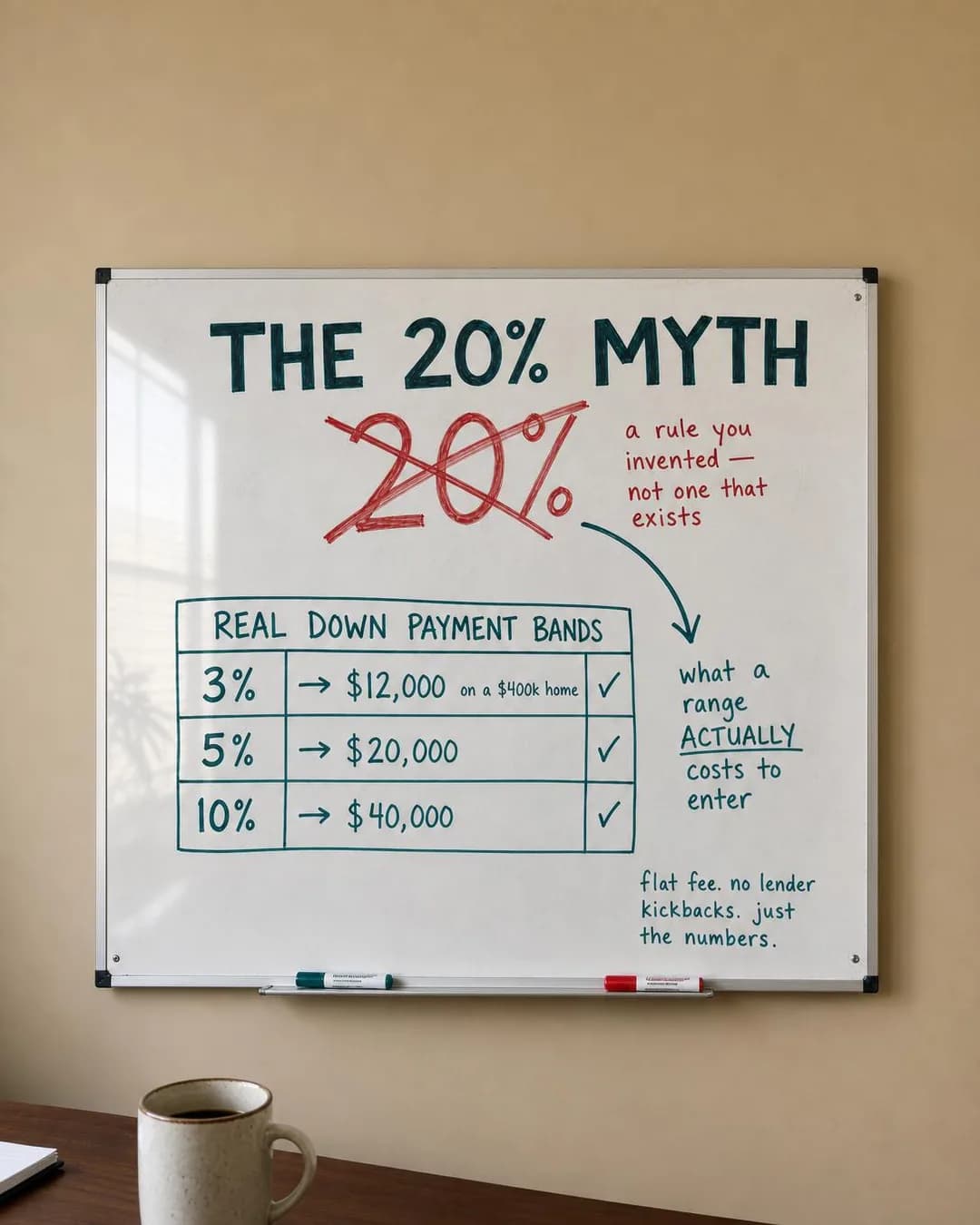
Comparison & Positioning · 4:5 · Leads
20% down is a myth you invented
Written for: Long-term renters who think they cannot buy yet.
How this one was made →

Benefit & Outcome · 9:16 · Leads
Your phone. Silent. Every night.
Written for: Accidental landlords managing one house.
How this one was made →
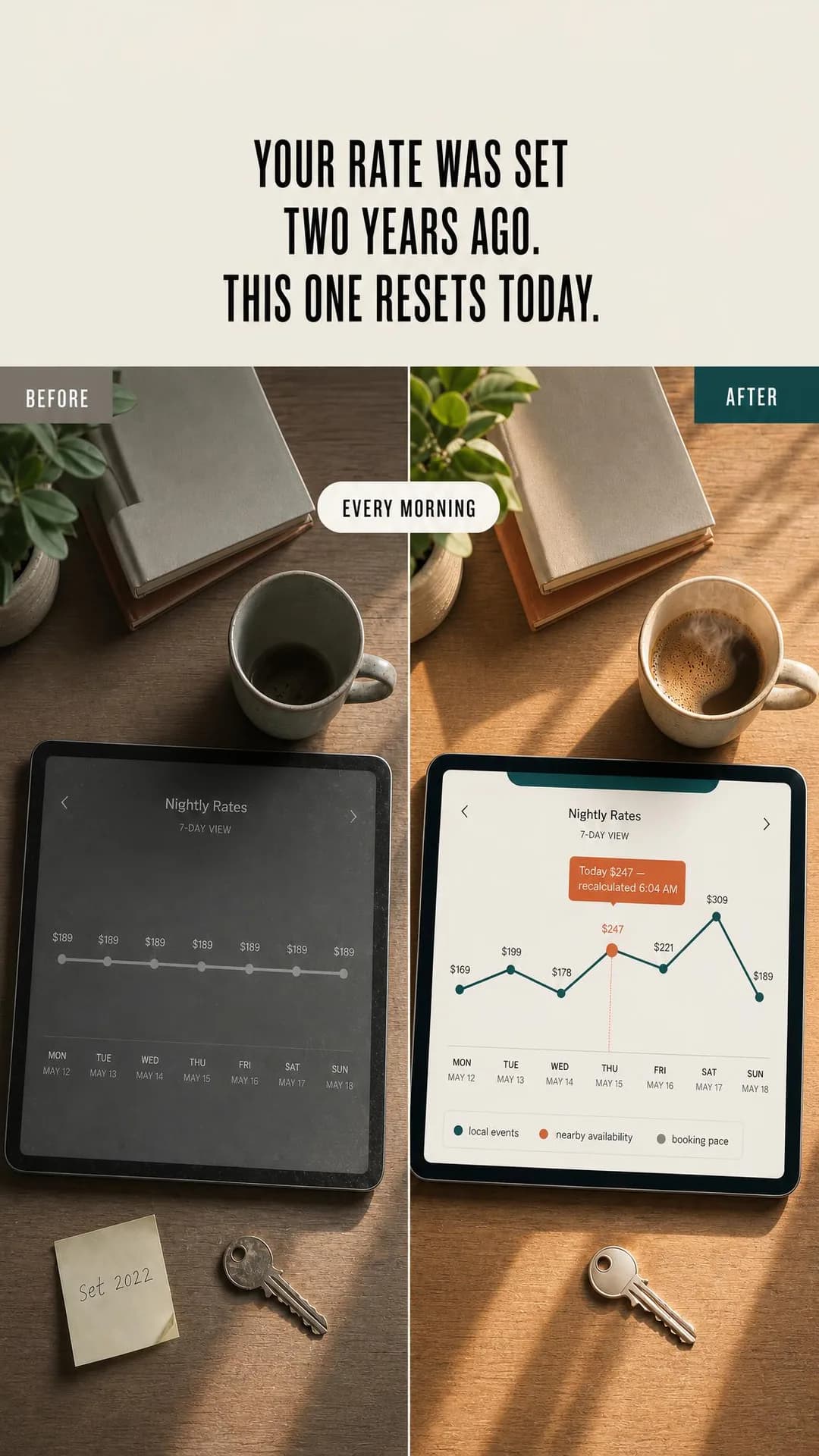
Product & Mechanism · 9:16 · Leads
Daily pricing that resets at dawn
Written for: Owners self-managing one short-term rental.
How this one was made →
The offers it will propose
Read off your own site rather than from a list of real estate clichés. Each has a row in the Instagram guide explaining who it is for and which argument wins it — including which ones belong on Facebook instead.
- Free home valuation
- Expired and withdrawn listings
- First-time buyers and the down-payment myth
- Relocation and out-of-state buyers
- Downsizing and estate sales
- New construction and phase releases
- Property management for accidental landlords
- Short-term rental management
- The street-level market report
- The agent or the brokerage itself
- Just listed and open houses
Read every line against Fair Housing before anything runs.
Every other industry on this site can treat a generated headline as a marketing decision. Housing cannot, and the reason is uncomfortable: the advice that makes these ads work is also what makes them risky. Because the special ad category strips the ad set of age, gender, ZIP codes, neighbourhoods, lookalikes and even location exclusions, the only way to reach the right person is to name them in the first line — so the product is being asked, deliberately, to write copy that describes a reader. That is one sentence away from describing who a neighbourhood is for, and that sentence is steering.
The test is simple and worth applying to all five headlines every time. Naming a situation is fine: a listing that expired, a renter who has never run the numbers, a house that outlasted the family in it. Naming a kind of person is not: “perfect for young families”, “a great fit for people like you”, “an ideal starter neighbourhood for professionals”. The first describes something that happened. The second describes who belongs where, and the special ad category exists because of a Justice Department settlement over exactly that.
Two more that a generator will produce cheerfully and you have to catch. It will invent numbers — sold prices, days on market, occupancy rates — and in this trade a published figure is one you have to defend in a listing appointment, so replace every one with something from your own MLS. And it will write freely about schools and neighbourhood safety, which since HUD's Dear Colleague letter of 24 April 2026 is permitted rather than prohibited — but only when shared consistently and without discriminatory intent. Courts have treated racially-coded commentary about crime and schools as evidence of intent even where the data was accurate, so the rule is not “avoid it” and it is certainly not “say whatever the model wrote”. It is: same information, every client, factual, no editorial.
One last thing that is not about copy. You still have to declare the Housing special ad category on the campaign yourself — this product does not do it for you, and Meta's classifiers will apply it from the creative anyway. Discovering that mid-flight, when your ad set's targeting is quietly rebuilt underneath you, is worse than doing it deliberately at setup.
Questions
- Does it know about the housing special ad category?
- It writes creative; it does not configure your campaign. You declare the category yourself in Ads Manager, and you should — Meta's classifiers apply it from the creative regardless, and finding out that way means finding out after your ad set has been rebuilt. What the product does do is write ads that work under that regime, by naming a person in the first line, because the ad set no longer can.
- Will it publish ads to my account on its own?
- No. It publishes into an ad set you choose and every ad lands paused. It never creates campaigns or ad sets, never edits ads you already have, and never spends budget. In this category that pause is where the Fair Housing check above belongs.
- Can I use it for rentals and property management, not just sales?
- Yes, and those are often the strongest offers on an agent's site because they do not depend on anyone deciding to move. Two of the four ads on this page are for exactly that. Note that ads promoting the rental of housing sit in the same special ad category as sales.
- Can I see what it produces before signing up?
- Yes — twenty of them, across two pages, published exactly as they were generated for brokerages we invented, including the flawed ones with the flaws named. The Instagram page is the buyer side and the Facebook page is the seller side; four of the Instagram ads are on this page. The Facebook page is the more useful read before you run anything, because four of its ten ads must not run as they are and it says why in each case.
Not ready to generate anything yet?
- Instagram ads for real estate agents → the playbook: objectives, offers, targeting and the mistakes specific to this trade.
- Facebook ads for real estate agents → the playbook: objectives, offers, targeting and the mistakes specific to this trade.
- Real estate Instagram ad examples → every ad above and the rest of the batch, each with the audience, angle and objective it was written for.
- Real estate Facebook ad examples → every ad above and the rest of the batch, each with the audience, angle and objective it was written for.
Enter your agency or brokerage website
That is the whole brief. No questionnaire, no uploads, no brand kit to fill in. Free to start, no card — and every ad lands paused, which in this category is the setting that matters most.