
Ad Generator · Gyms & Fitness Studios
Facebook & Instagram ad generator for gyms and fitness studios
Paste your site. It reads your timetable, your memberships and your coaches, then writes the concepts, renders the images and drafts the copy — for a category where the image can break a rule the copy never mentions.
Enter your gym or studio website
That is the whole brief. No questionnaire, no uploads, no brand kit to fill in. Free to start, no card — and every ad lands paused, which in this category is a requirement rather than a preference.
No credit card · 50 free credits (about 5 ads or Instagram posts)
What it takes off a gym or studio website
- Your timetable, and which business it describes. A packed class grid with named instructors is a studio; an empty hours block with a door code is an access gym. The two sell opposite offers, and which one your site turns out to be decides everything the generator writes next.
- Your join and cancellation terms — what a membership costs and what leaving actually takes. The difference between “cancel anytime” and “cancel in two taps, no phone call” is not a nuance; it is the difference between a claim and an ad you can defend.
- Your coaches. A named coach with a real background is a boutique studio's strongest argument and the thing a chain structurally cannot offer; the page tells the generator which humans exist so it stops before inventing one.
- How 24/7 access actually works — the app, the door, the cameras, whether joining completes online. That last one decides whether the offers it proposes are leads or purchases, which is this trade's version of choosing an objective.
- Your pricing: the drop-in rate, the pack price, the monthly figure. A class-pack ad lives on arithmetic that foots — ten classes, the struck-through total, the per-class price — and it cannot do that from a template.
- Your photographs, colours and type, so the ads look like your floor rather than a stock library of kettlebells. Also the floor itself: doubled racks, an occupancy counter, anything the building can actually show.
What one click gives you
A concept written for one business model
A studio ad sells a coach, a capped room and a pack; an access-gym ad sells the building — the door, the price and the way out of the contract. The generator writes one per brief and never blends them — an ad that tries to be both reads as a chain, and neither of your audiences is looking for a chain.
A finished image that sells the building, not a body
Rendered in your brand's colours and type, from a visual direction picked for a category where the transformation post is the one ad a paid slot mostly cannot carry. Rack, door, receipt, coach, timetable — the argument a gym can make that a creator cannot. (The caution below is about the image, not the copy.)
All four Meta shapes
The same image re-framed for 4:5 feed, 9:16 Stories and Reels, and the 1.91:1 asset that routes to Facebook's right column and search — a Facebook-only surface, and Facebook is where an access gym's older, price-led half sits.
Five headlines, five body texts, a description
One run, so you are choosing between versions of the same argument. Read all five against the caution below before you pick one.
Published paused, into an ad set you pick
It never creates campaigns or ad sets, never edits your existing ads, and never spends. In this category the pause is not a courtesy — see the caution below for what skipping it costs.
The step-by-step path swaps the one click for choosing the audience, the angle, the concept and the image style from a gallery of 66 — same output, more decisions.
What it made for four gyms that do not exist
Generated by best-in-slot. Published exactly as they came back — nothing retouched, the flaws named on the page they came from. Four different shapes, and not one of them is an ad about anybody's body: a receipt whose arithmetic foots, a credentials wall for a coach who does not exist, a solid-colour card with no person in it at all, and a three-panel diagram of a door.
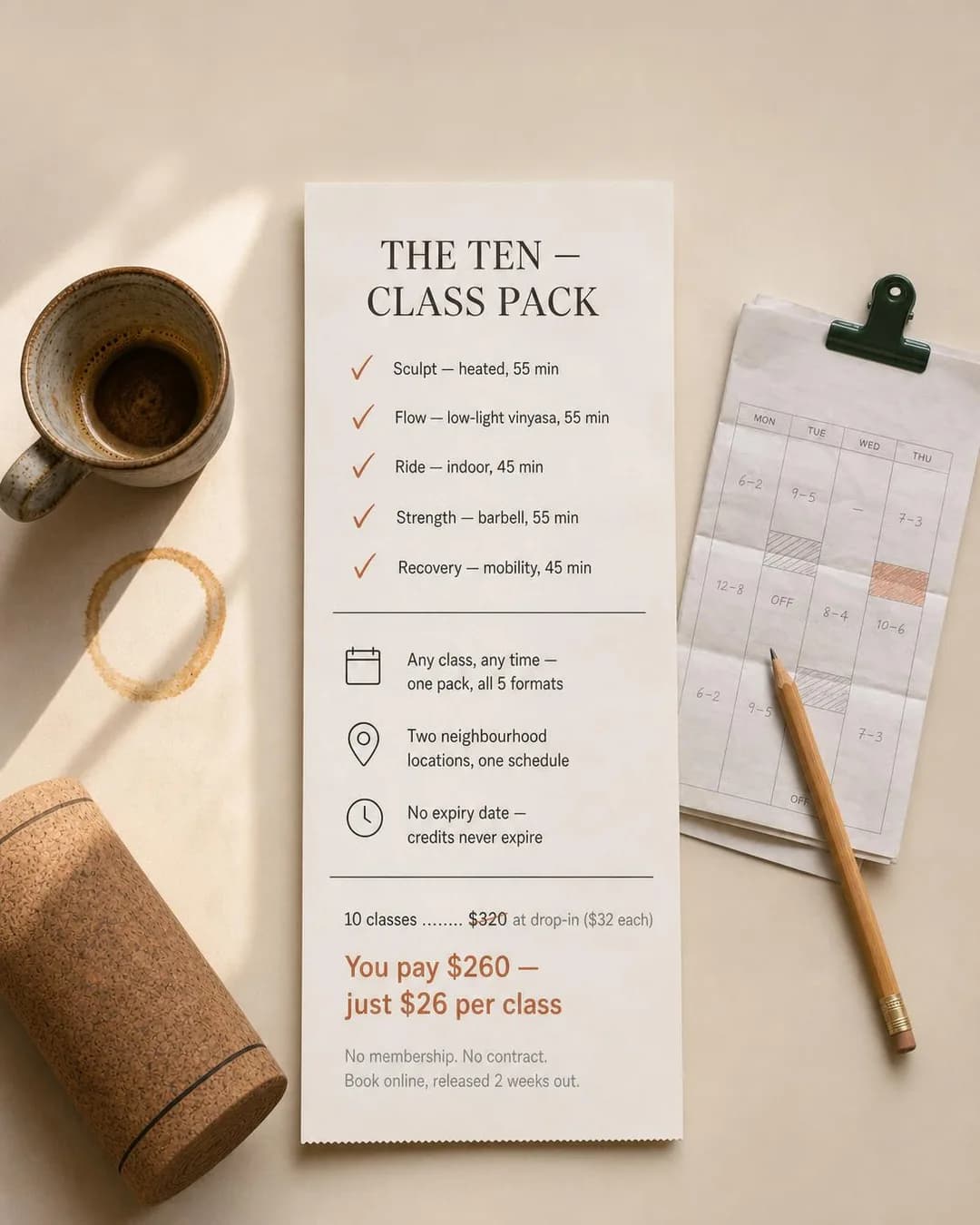
Offer & Economics · 4:5 · Sales
Ten classes, five formats, $26 each
Written for: Shift workers who cannot commit to the same weeknight.
How this one was made →
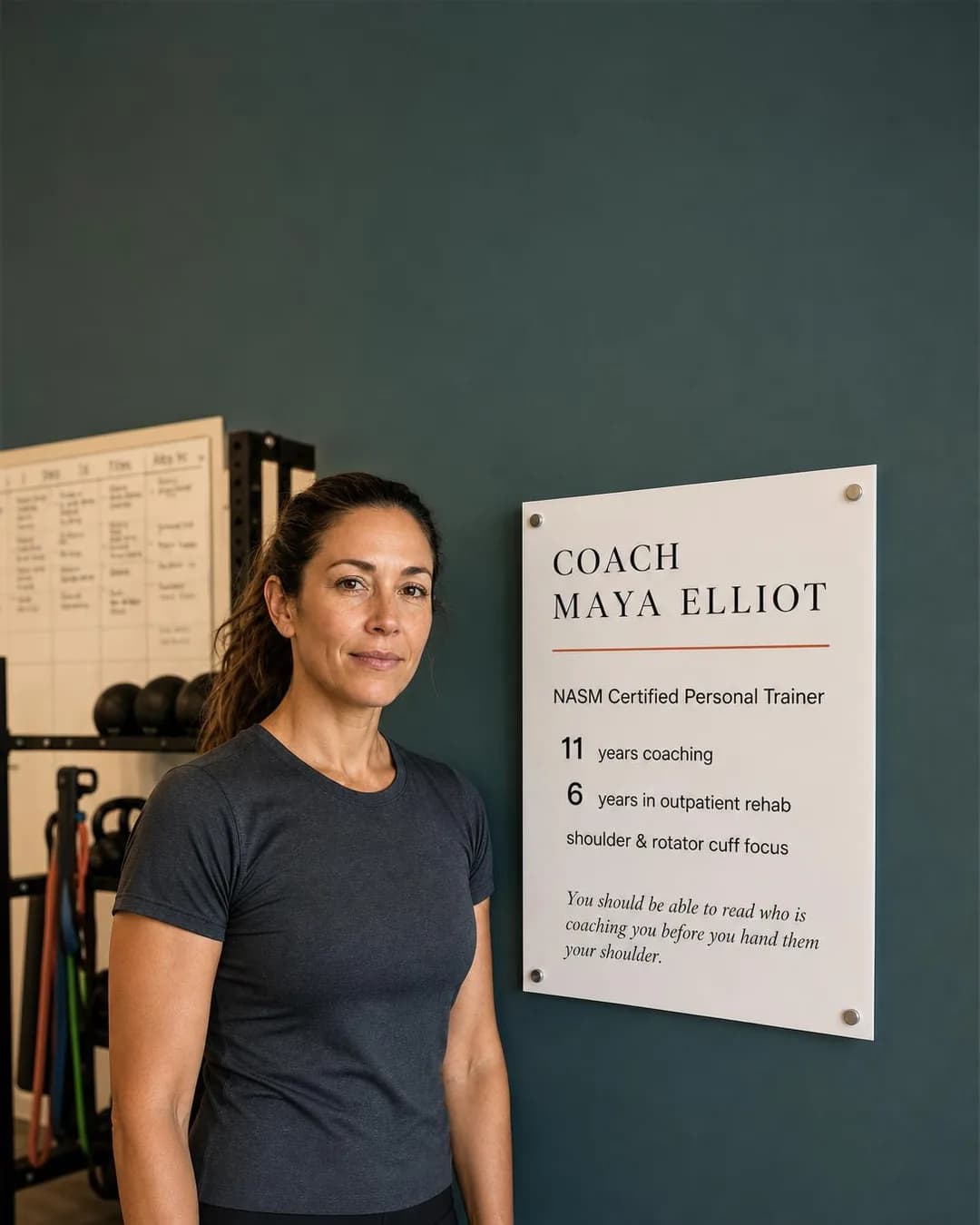
Proof & Trust · 4:5 · Leads
Read her credentials before she coaches you
Written for: People training around an old injury.
How this one was made →
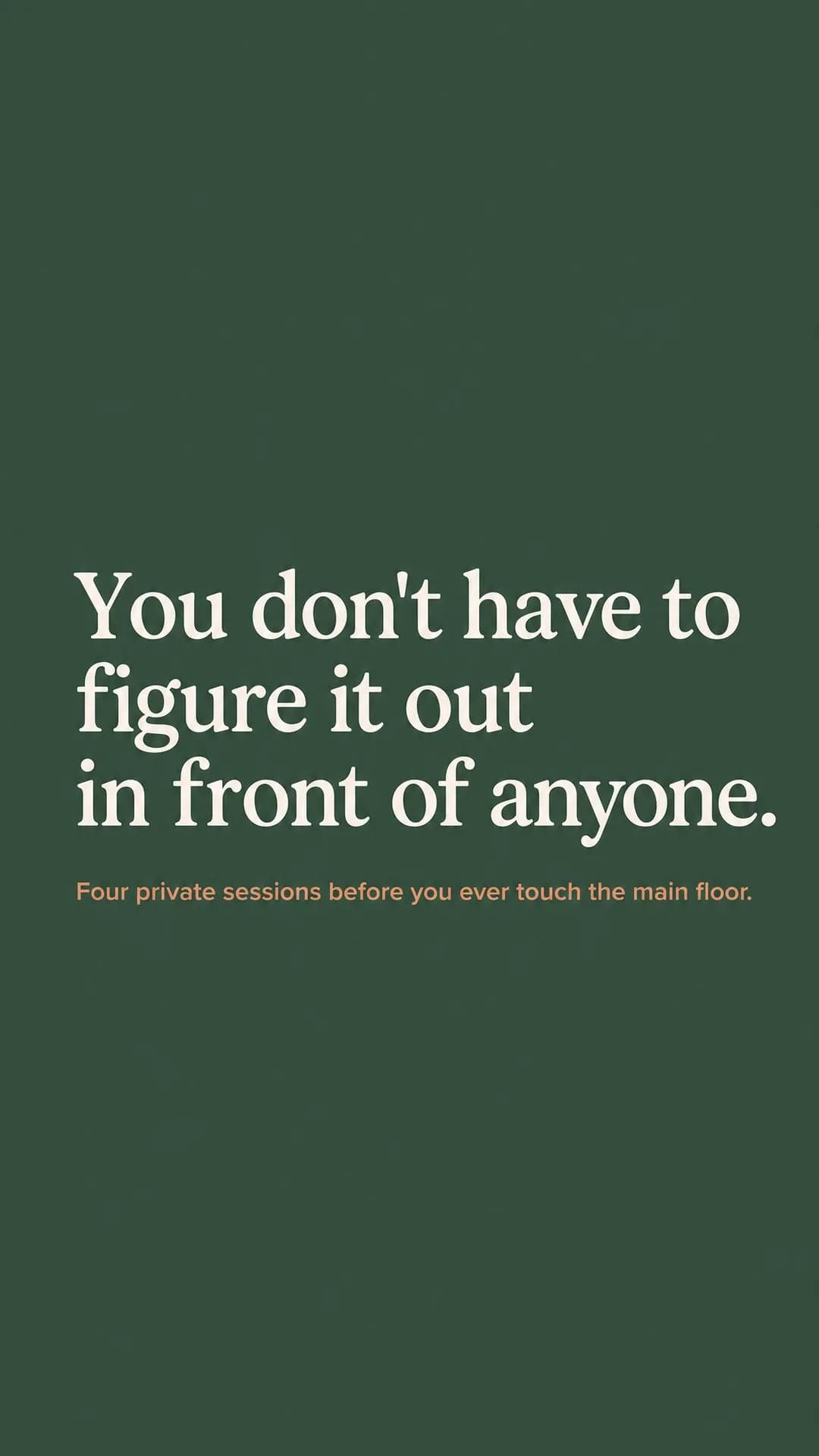
Identity & Emotion · 9:16 · Leads
The confusion happens in private
Written for: Adults who have not trained in several years.
How this one was made →
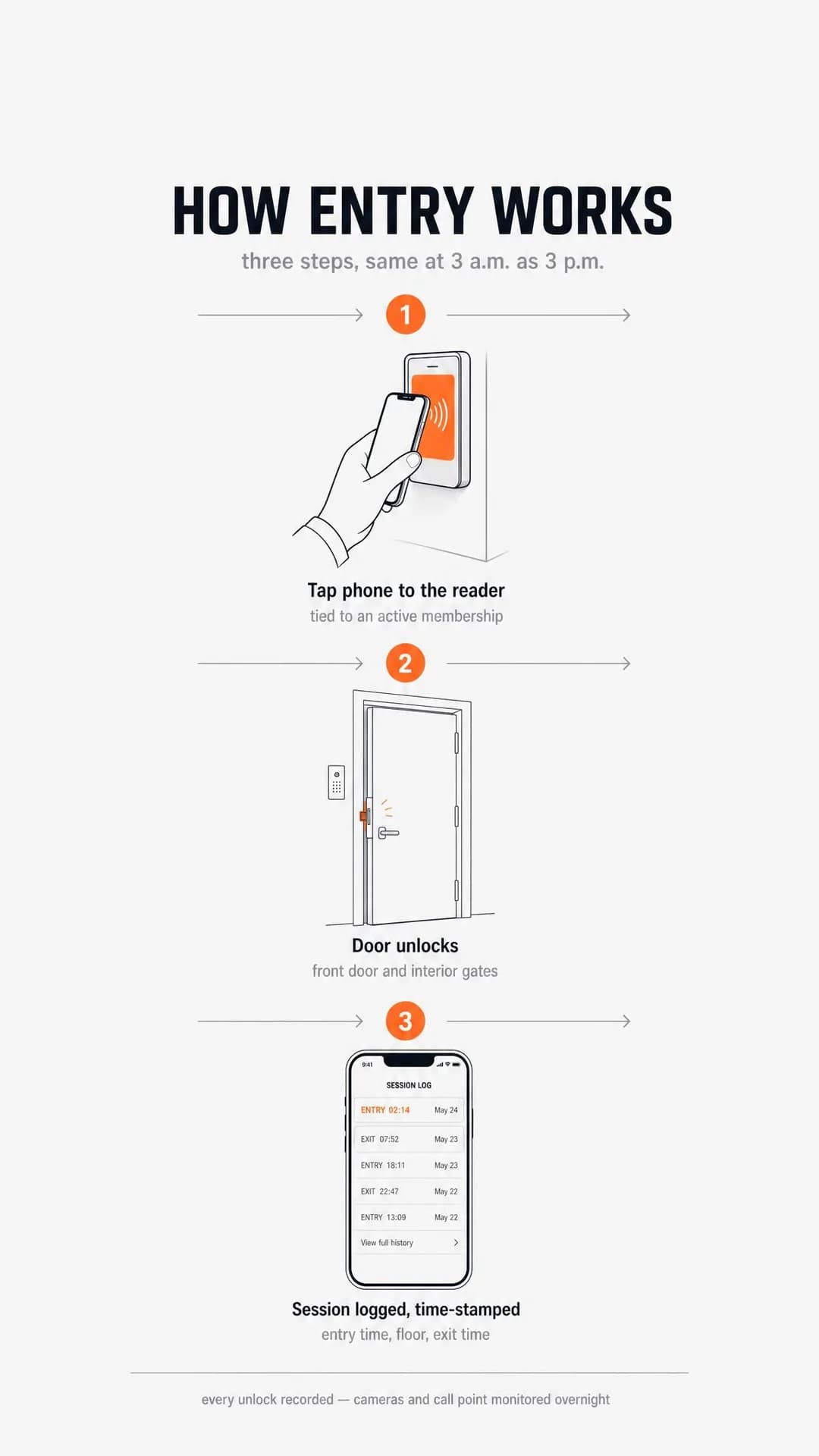
Product & Mechanism · 9:16 · Traffic
Phone tap, door unlock, logged
Written for: Night-shift and early-start workers.
How this one was made →
The offers it will propose
Which half of this list it proposes depends on which business your site turns out to be. Each one has a row on the Instagram guide, which labels every row studio, access gym or either and explains which argument wins it.
- The class pack that does not expire
- The same coach for a whole block
- The thirty-minute lunch class
- Published coach qualifications
- The strength-over-cardio argument
- Cancel in the app, in two taps
- The rack that is free at six
- How 24/7 access actually works
- The price lock before January
- The quiet re-start
- The intro offer
- The off-peak membership
Look at the image before you read a single line of copy.
Every other caution on this site is about a sentence. This one is about a pixel. On our own examples page, ten briefs were written to sell schedule, contract, coaching and access rather than a body — and the single brief that came closest to training outcomes came back with “TEN YEARS ON THE TREADMILL. SAME BODY.” and “Neither does the mirror.” rendered into the image. The brief argued for strength work over treadmill volume; the argument that arrived was about the person, which is precisely the statement of inferiority about physical appearance Meta's Health and Wellness standards prohibit — baked into a finished asset that no alternate headline can reach.
Steering the brief is not the same as controlling the output. In most categories that gap costs a rewrite; in this one it is a policy rejection inside a file.
So the check has two halves, and the second is the one this page exists to say. Every line about the numbers in the logbook, never about the person in the mirror — “same numbers for years” is the identical argument and it passes. And look at the rendered image before you judge the copy, because that is where the failure above lived: the five alternate headlines are written to replace lines of text, and none of them can reach a pixel. The ads land paused for that reason — the pause is where you look.
Then the word that changes the rulebook, which the generator does not track. An ad that markets weight loss — as opposed to training — must be targeted to adults 18 and over.
And an ad in a health or weight-loss context that promises a specific outcome by a date is inside the standards' clickbait clause. Those are two different lines, and a generated ad will cross either one cheerfully if the brief was loose about what the membership is actually for. Decide which ad you are writing before you generate, not after.
Two more things the output will produce and you have to catch.
Invented people: two of the ten ads on our own page carry a coach who does not exist, one holding an invented client's loading card — the card recording a client's weights, for a client who is not real. The format is excellent and the fix is your coach, your card, and a member who agreed to appear, but an invented rehabilitation background on someone who will handle an injured shoulder is a claim, not a mock-up.
Invented evidence: three ads rendered the object that carried their claim and all three got it wrong — a session log out of order, a calendar with two 1sts, an occupancy board reading full in an ad about open racks. If a number, a clock, a calendar or a screen is the proof, rebuild it from a photo of the real thing.
Last, the specifics are promises your operations have to keep: “back by 1pm, showered” — the lunch-class ad's promise on the examples page — is kept by the timetable; “two taps, no phone call” by the app; a locked rate by the billing system. The generator only knows what your site says, so replace every specific with the one your business honours — advertising a cancellation you do not have is the one ad in this category guaranteed to find its own rebuttal.
Questions
- Does it follow the Health and Wellness rules for weight-loss claims?
- It writes creative; it does not configure your campaign or police your copy. The rule attaches to what the ad markets: a membership sold as training is exempt from the 18+ floor, the same membership sold as weight loss is not — and the caution above is where that line gets crossed, in a word of copy or in the image. Decide which ad you are writing before you generate.
- We run classes and 24/7 access at the same gym. Can it do both?
- Yes — most gyms are partly both, and the page does not make you choose in advance. It reads which business your site leads with and proposes from that half; a class grid with named instructors reads as a studio, a door code and an online join page as an access gym. The two get separate ads, never one blended — their offers share nothing but the word gym — so run a second generation when you want the other half.
- Will it publish ads to my account on its own?
- No. It publishes into an ad set you choose in your own Meta Ads Manager account, and every ad lands paused. It never creates campaigns or ad sets, never edits ads you already have, and never spends budget. In this category the pause is where the image check and the weight-word check happen — see the caution above for what happens when that step is skipped.
- Can I see what it produces before signing up?
- Yes. The gym and studio Instagram examples page has ten finished ads published exactly as they were generated, for gyms that do not exist — including the two that must not be run as they stand, named as such on the page. Four of the ten are on this page.
Not ready to generate anything yet?
- Instagram ads for gyms and fitness studios → the playbook: objectives, offers, targeting and the mistakes specific to this trade.
- Facebook ads for gyms and fitness studios → the playbook: objectives, offers, targeting and the mistakes specific to this trade.
- Gym and fitness studio Instagram ad examples → every ad above and the rest of the batch, each with the audience, angle and objective it was written for.
- Gym and fitness studio Facebook ad examples → every ad above and the rest of the batch, each with the audience, angle and objective it was written for.
Enter your gym or studio website
That is the whole brief. No questionnaire, no uploads, no brand kit to fill in. Free to start, no card — and every ad lands paused, which in this category is a requirement rather than a preference.