
Ad Generator · Fashion & Apparel
Facebook & Instagram ad generator for clothing brands
Paste your store. It reads your products, your customers and your look, then writes the concepts, renders the images and drafts the copy — for the one feed already full of clothes.
Enter your store's website
That is the whole brief. No questionnaire, no uploads, no brand kit to fill in. Free to start, no card — and every ad lands paused, so nothing goes live until you flip it.
No credit card · 50 free credits (about 5 ads or Instagram posts)
What it takes off an apparel website
- Your product pages — what you actually sell, at what price, and in which sizes. The size range is the single most under-used argument in this category and it is sitting on your PDPs already.
- Your size guide and fit notes. Whether you draft for height, cut for a longer torso, or run true to size is a claim a competitor cannot copy, and it is the answer to the objection that stops most apparel purchases.
- The returns and exchanges page, because that is the second objection — and because a brand with a genuinely easy return has a selling point most of the category is too embarrassed to lead with.
- Your reviews, if they are on the page. Real ones, with real names and real sizes, are the raw material for the strongest format in this industry.
- Materials, care and manufacturing detail. A named specification — a fibre, a micron count, a repair guarantee — is checkable, and checkability is what separates you from a category built on adjectives.
- Your photography, colours and type, so the ads look like your label rather than like every other label on the feed.
What one click gives you
A concept that argues something
Not a garment photographed nicely — the feed is already full of those, posted for free. It writes an argument: what the size chart got wrong, what the cheap version really costs across four years, what the fibre actually costs and where the rest of the price went.
A finished image
Rendered in a visual direction chosen for the argument, in your brand's colours and type — a review wall, a comparison table, a closet-maths confession, a batch card. Several of the strongest formats in this category are not product photography at all.
All four Meta shapes
The same image re-framed for every placement, so one concept runs in a 4:5 feed, a 9:16 story or reel, and Facebook's 1.91:1 right-column and search surfaces. Catalogue formats are a campaign-type decision and sit alongside these rather than replacing them.
Five headlines, five body texts, a description
One run, so you are choosing between versions of the same argument. In apparel the alternates are where you check that nothing has promised a fit you cannot deliver — see below for why that check is worth more than it looks.
Published paused, into an ad set you pick
It never creates campaigns or ad sets, never edits your existing ads, and never spends. It also does not touch your catalogue or your pixel, which are what an Advantage+ shopping campaign actually runs on — the guide covers what those need.
The step-by-step path swaps the one click for choosing the audience, the angle, the concept and the image style from a gallery of 66 — same output, more decisions.
What it made for four labels that do not exist
Generated by best-in-slot. Published exactly as they came back — nothing retouched, no headline rewritten, the flaws named on the page they came from. Every one of them argues something rather than just showing the garment.
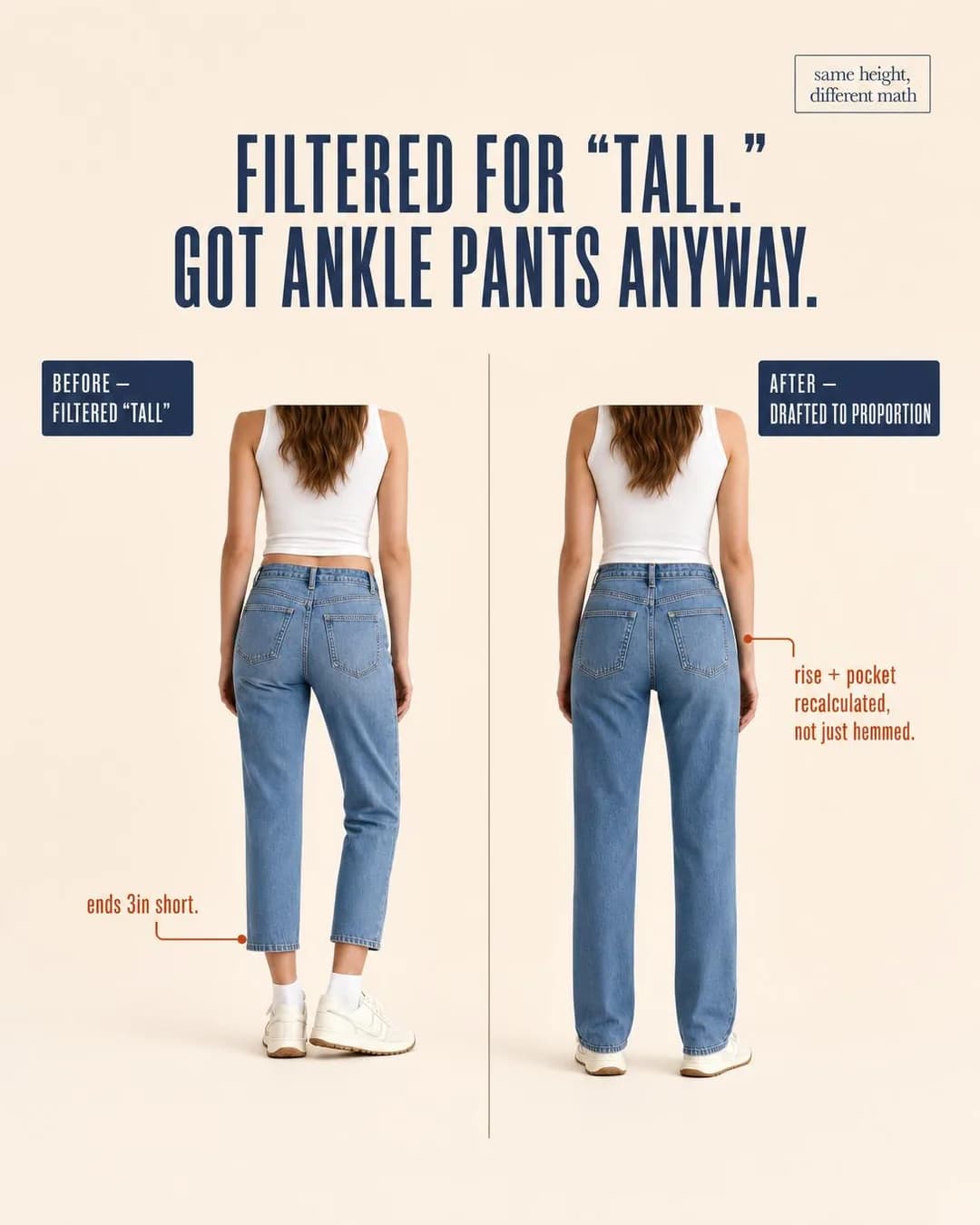
Problem & Pain · 4:5 · Sales
Jeans drafted by height, not hemmed longer
Written for: Tall women, 5'10" and up.
How this one was made →
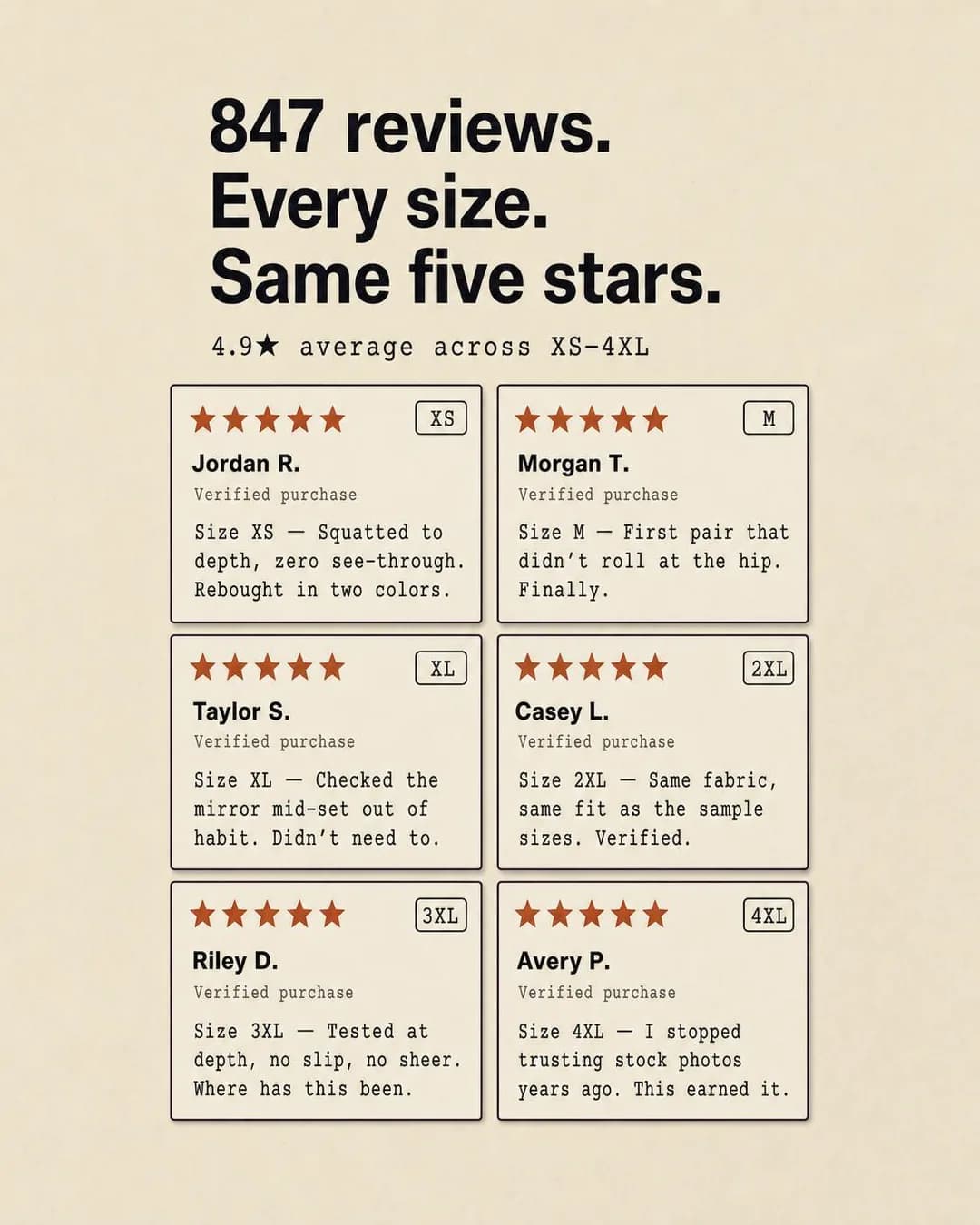
Proof & Trust · 4:5 · Sales
4.9★ across every size we carry
Written for: Women lifting in commercial gyms.
How this one was made →
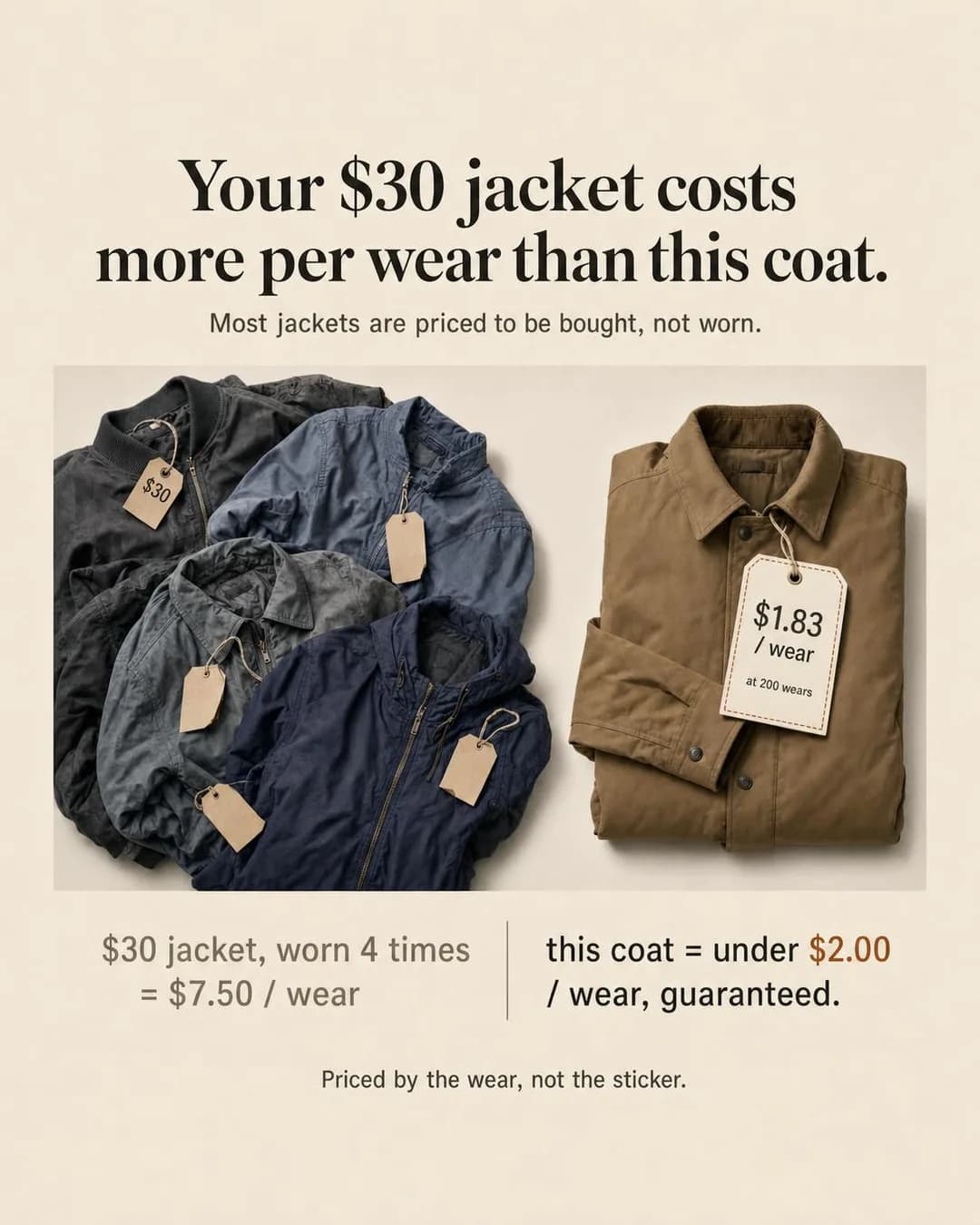
Offer & Economics · 4:5 · Sales
Under $2/wear, guaranteed in 24 months
Written for: Women pruning their wardrobes.
How this one was made →
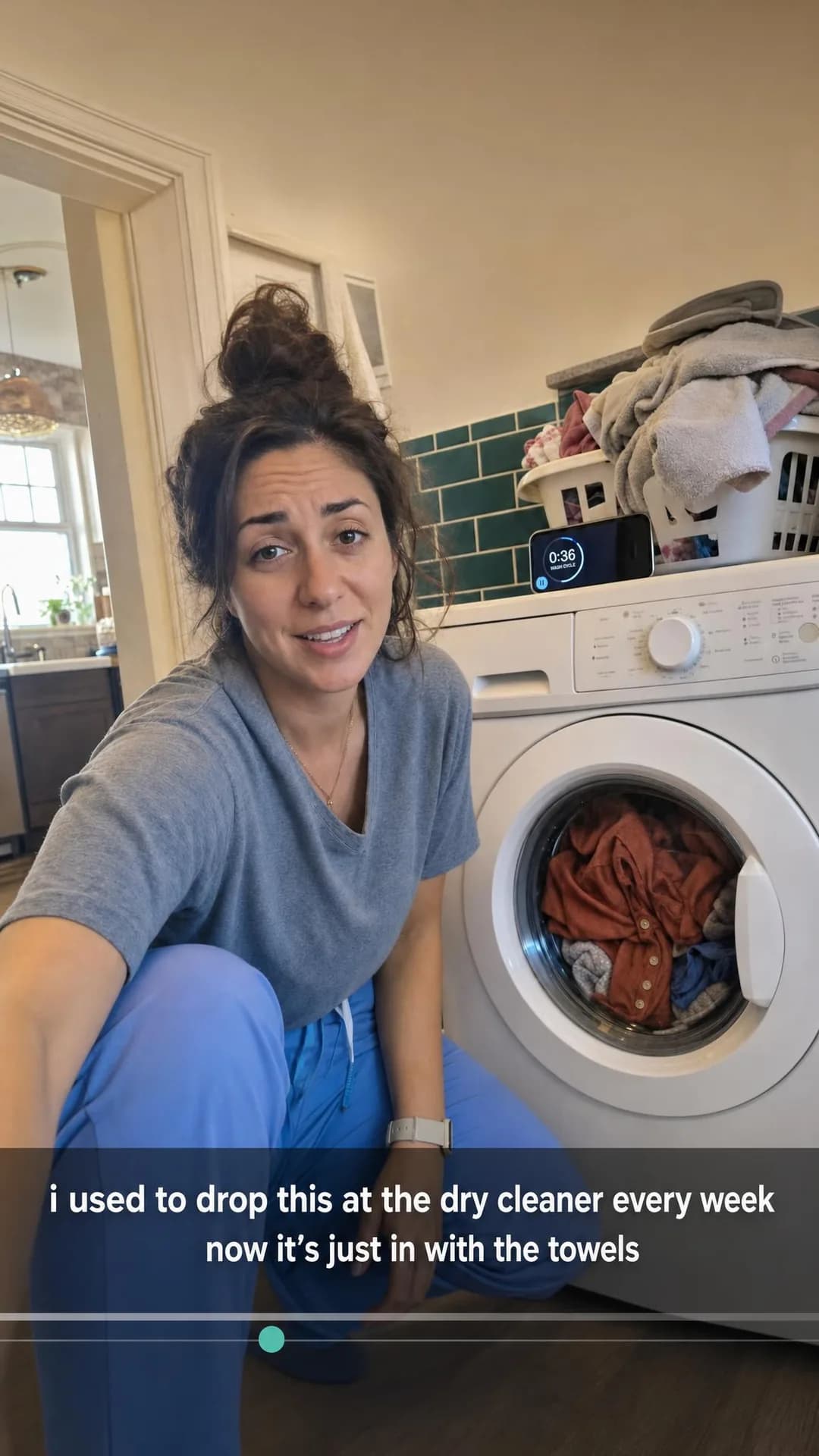
Benefit & Outcome · 9:16 · Sales
Wash it Sunday. Wear it Monday.
Written for: Teachers and nurses.
How this one was made →
The arguments it will propose
Read off your own product pages rather than from a list of fashion clichés. Each has a row in the Instagram guide explaining who it is for and which angle wins it.
- The size chart that lied
- The size-labelled review wall
- Cost per wear
- What the cheap version really costs
- The size range as an identity claim
- The garment that removes a chore
- The material claim, in numbers
- The fit objection, answered physically
- The drop
- The sustainability teardown
- Why the brand exists
- End of season and the real deadline
Check the fit claim and check the reviewers. Both cost real money.
Apparel is the one category on this site where an unchecked sentence has a physical price, and it does not appear for about three weeks. If an ad promises a fit your pattern does not deliver — drafted for height, true to size, cut for a longer torso — the garment sells, arrives, does not fit, and comes back at your expense. The campaign will have been declared a success by then, because reported ROAS is measured at checkout and returns land afterwards. A high return rate on one specific ad is almost always a creative fault rather than a logistics one: the ad oversold the fit, and the warehouse paid for it. So read every fit and sizing claim against your own size guide before anything runs, and reconcile the campaign on net revenue on a lag rather than on the number the dashboard shows you.
The second one is legal rather than logistical, and we have published the worked example. On our fashion examples page there is a review-wall ad — six review cards, one per size from XS to 4XL, arguing size consistency rather than star volume. It is the single best format in this industry and it is the one ad on that page that must not be run as generated, because Jordan R., Morgan T. and the rest do not exist and their verified purchases never happened. A review grid works precisely because the reader assumes real customers are behind it, so shipping it with invented ones is fabricated social proof: a policy violation on Meta and a legal problem in most markets. Take the structure, which is the valuable part. Fill it with customers who exist and agreed to appear.
Everything else the model produces as evidence deserves the same treatment. Prices, cost-per-wear arithmetic, batch numbers, repair guarantees, fibre specifications — all of them are the right shape of claim and all of them are placeholders until you replace them with your own. In a category where a repair guarantee is a contract and a published price is honoured at checkout, that is not pedantry.
One thing that is not about copy. This product writes and publishes creative; it does not touch your product catalogue or your pixel. An Advantage+ shopping campaign runs on those — it requires the sales objective, accepts only geography in its targeting, and allows exactly one ad set — so if that is where you plan to run these ads, get the catalogue and the ViewContent, AddToCart and Purchase events with matching product IDs sorted out first. The guide has the specifics.
Questions
- Will it just make pretty pictures of my clothes?
- Deliberately not. Instagram's feed is already full of well-photographed clothes posted for free by competitors, creators and the reader's own friends, so a beautiful garment shot is camouflage — indistinguishable from organic content, and therefore invisible as an ad. It writes an argument instead: fit, sizing, durability, cost per wear, what the fibre actually costs.
- Will it publish ads to my account on its own?
- No. It publishes into an ad set you choose and every ad lands paused. It never creates campaigns or ad sets, never edits ads you already have, and never spends budget. That pause is where the fit-claim check above belongs.
- Does it work with my product catalogue for dynamic ads?
- It writes and publishes creative; it does not manage your catalogue or your pixel. Advantage+ catalog ads and shopping campaigns run on those, and they have real requirements — a catalogue, and ViewContent, AddToCart and Purchase events carrying product IDs that match it. Get those right and these ads work alongside them; the Instagram guide covers exactly what is needed.
- Can I see what it produces for a clothing brand first?
- Yes. The fashion Instagram examples page has ten finished ads published exactly as generated, for labels we invented — including the review-wall ad with the fabricated reviewers, left up and labelled rather than quietly deleted. Four of them are on this page.
Not ready to generate anything yet?
- Instagram ads for clothing brands → the playbook: objectives, offers, targeting and the mistakes specific to this trade.
- Facebook ads for clothing brands → the playbook: objectives, offers, targeting and the mistakes specific to this trade.
- Fashion & Apparel Instagram ad examples → every ad above and the rest of the batch, each with the audience, angle and objective it was written for.
- Fashion Facebook ad examples → every ad above and the rest of the batch, each with the audience, angle and objective it was written for.
Enter your store's website
That is the whole brief. No questionnaire, no uploads, no brand kit to fill in. Free to start, no card — and every ad lands paused, so nothing goes live until you flip it.